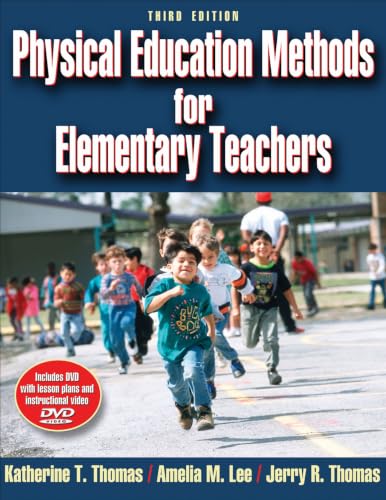

Physical education methods for elementary teachers Katherine T. Thomas, Amelia M. Lee, Jerry R. Thomas.
Detalles de publicación: Champaign, IL Human Kinetics c2008.Edición: 3rd edDescripción: xvii, 453 p. ill. 29 cm. + 1 DVD-ROM (4 3/4 in.)ISBN:- 9780736067041
- 372.86 T4541p2 21
- GV443 .T495 2008
| Imagen de cubierta | Tipo de ítem | Biblioteca actual | Biblioteca de origen | Colección | Ubicación en estantería | Signatura topográfica | Materiales especificados | Info Vol | URL | Copia número | Estado | Notas | Fecha de vencimiento | Código de barras | Reserva de ítems | Prioridad de la cola de reserva de ejemplar | Reservas para cursos | |
|---|---|---|---|---|---|---|---|---|---|---|---|---|---|---|---|---|---|---|
| Libro | Biblioteca de Mayagüez Colección General mb | GV443 .T495 2008 (Navegar estantería(Abre debajo)) | Disponible | 50000003192571 | ||||||||||||||
| Audiovisual | Biblioteca de Mayagüez sala de audiovisual | GV443 .T495 2008 (Navegar estantería(Abre debajo)) | DVD | Disponible | 50000002154374 |
Descripciones mejoradas de Syndetics:
Children face many serious health concerns, including obesity and type 2 diabetes. Teachers can use Physical Education Methods for Elementary Teachers, Third Edition, to help children avoid these and other health issues and steer them to better health.
Many new guidelines and mandates have arisen in recent years, including new dietary guidelines for Americans, an updated food guide pyramid system, a federally mandated school wellness policy, and coordinated school health legislation. This text is thoroughly revised to keep in step with these guidelines and mandates, and it will help preservice and in-service classroom teachers and physical education specialists provide best practices in physical education, physical activity, and healthy eating.
This third edition extends existing information on integrating academics and physical activity. New material includes sections on character development and the positive youth development model as well as more practical tools for developing teaching skills. In addition, the authors place more emphasis on goal orientation and motivational climate, two factors associated with maintaining physical activity. They outline strategies for creating an environment where students choose to participate in physical activity with confidence, enthusiasm, and a desire to learn.
Teachers who are not accustomed to teaching in the gym environment will find the video clips on the DVD-ROM especially useful, and they can use the lesson plans also provided on the DVD-ROM in concert with the video clips to apply the concepts in their own teaching. Teachers can use these lesson plans as is or as models for writing their own lesson plans. Each plan illustrates a key concept or method in the book, thus reinforcing and extending readers' understanding and enhancing their teaching practice.
Written in an engaging, informal style, the text helps teachers learn what they need to know without having to decipher jargon or being overloaded with excessive information. Accessible, interesting, current, and practical, Physical Education Methods for Elementary Teachers, Third Edition , will help beginning teachers to create healthier schools and to feel confident in presenting essential information and creating exciting learning activities for their students.
Includes bibliographical references and index.
English
Include DVD available in Audiovisual Collection.
DVD time duration:98 min.
gccmar2009
Tabla de contenidos provista por Syndetics
- Preface
- Lesson Plan Finder
- Part I Introduction to Physical Education
- Chapter 1 Health and Developmental Benefits of Physical Education
- Learner Outcomes
- Glossary Terms
- Why Value Physical Activity?
- Model for This Book
- Summary
- Mastery Learning Activities
- References
- Resources
- Chapter 2 Meeting the Mission of the Elementary School
- Learner Outcomes
- Glossary Terms
- The Foundation
- Mission Statements
- Characteristics of Successful Schools
- Physical Activity and the Elementary School Mission
- Integrating the Domains
- Teaching the Whole Child
- Mission: Possible
- Summary
- Mastery Learning Activities
- References
- Resources
- Lesson Plans
- Part II Addressing the Child's Needs
- Chapter 3 Physical Growth and Maturation
- Learner Outcomes
- Glossary Terms
- The Four Guiding Principles
- Providing Great Detail
- Growth and Motor Performance
- Summary
- Mastery Learning Activities
- References
- Resources
- Lesson Plans
- Chapter 4 Motor Performance During Childhood
- Learner Outcomes
- Glossary Terms
- The Four Guiding Principles
- Reflexes and Reactions
- Fundamental Motor Skills
- Motor Abilities Underlying Performance
- Modifying Task Demands
- Summary
- Mastery Learning Activities
- References
- Resources
- Lesson Plans
- Chapter 5 Cognition, Learning, and Practice
- Learner Outcomes
- Glossary Terms
- The Four Guiding Principles
- Cognition, Learning, and Memory
- Attention
- Information Processing
- Feedback
- Motor Programs
- Designing Practice
- Variability
- Expertise
- Summary
- Mastery Learning Activities
- References
- Resources
- Lesson Plans
- Chapter 6 Physical Activity for Children
- Learner Outcomes
- Glossary Terms
- The Four Guiding Principles
- Benefits From Being Physically Active
- Physical Fitness
- Biological and Physiological Differences in Children
- Musculoskeletal Function
- Body Composition
- Summary
- Mastery Learning Activities
- References
- Resources
- Lesson Plans
- Chapter 7 Psychosocial Factors in Physical Education
- Learner Outcomes
- Glossary Terms
- The Four Guiding Principles
- Motivation
- Attribution
- Goals
- Competition
- Cooperation
- Self-Concept and Self-Efficacy
- Exercise Adherence and Affect
- Summary
- Mastery Learning Activities
- References
- Lesson Plans
- Part III Preparing to Teach Physical Education
- Chapter 8 Planning Your Curriculum
- Learner Outcomes
- Glossary Terms
- Curriculum Planning
- Selecting Desired Outcomes
- Program of Physical Activity and Fitness
- Summary
- Mastery Learning Activities
- References
- Resources
- Lesson Plans
- Chapter 9 Organizing for Teaching
- Learner Outcomes
- Glossary Terms
- Teaching Approaches
- Summary
- Mastery Learning Activities
- References
- Resources
- Lesson Plans
- Chapter 10 Managing Students
- Learner Outcomes
- Glossary Terms
- Management Components
- Legal Liability
- Summary
- Mastery Learning Activities
- References
- Resources
- Lesson Plans
- Chapter 11 Teachers' Rights, Responsibilities, and Best Practices
- Learner Outcomes
- Glossary Terms
- Criminal Code
- Contracts
- Statutes
- Torts
- Standard of Care (Duty of Care)
- Responding to Injuries
- Professional Responsibility
- Best Practices and Beyond
- Summary
- Mastery Learning Activities
- References
- Resources
- Lesson Plans
- Chapter 12 Equipment and Facilities
- Learner Outcomes
- Glossary Terms
- Small Equipment
- Homemade Equipment
- Large Equipment
- Facilities
- Safety
- Recess
- Summary
- Mastery Learning Activities
- References
- Resources
- Lesson Plans
- Part IV Teaching Physical Education
- Chapter 13 Instructing Students
- Learner Outcomes
- Glossary Terms
- Practice
- Personality Variables
- Teaching Behaviors
- Observation for Skill and Confidence
- Strategies for Improvement
- Effective and Expert Teachers
- About Expert Teachers
- Summary
- Mastery Learning Activities
- References
- Resources
- Lesson Plans
- Chapter 14 Evaluating Students
- Learner Outcomes
- Glossary Terms
- Validity in Evaluation
- Knowing: Traditional Assessment
- Applying Authentic Assessment
- Feedback to Children and Parents
- Using Tests
- Grading
- Sample Instruments for Evaluation
- Portfolios and Journals
- Summary
- Mastery Learning Activities
- References
- Resources
- Lesson Plans
- Chapter 15 Growing as a Teacher
- Learner Outcomes
- Glossary Terms
- Reflection
- Portfolios
- Lifelong Learning
- Collaboration
- Outreach
- Professionalism
- Summary
- Mastery Learning Activities
- References
- Resources
- Glossary
- Index
- About the Authors
- How to Use the DVD-ROM
Notas de autor provistas por Syndetics
Katherine T. Thomas, PhD, is an associate professor of health and human performance at Iowa State University, where she teaches a variety of teacher education and motor development courses. Dr. Thomas also has taught at Arizona State University, Southeastern Louisiana University, and Southern University at Baton Rouge. Her research and numerous publications focus on skill acquisition in sport and exercise and the relation of physical activity to health. She has external grant funding in excess of $1,000,000 to study physical activity and is the physical activity consultant for the USDA's Team Nutrition. However, Dr. Thomas says that the most relevant experiences to the writing of this book were her early positions as a graduate assistant and as an instructor in elementary schools and a college teaching laboratory. Those experiences enabled her to find out firsthand what does and does not work in a physical education class.
Dr. Thomas is a member of the American Alliance for Health, Physical Education, Recreation and Dance (AAHPERD) and the North American Society for the Psychology of Sport and Physical Activity (NASPSPA). She received her doctorate in physical education from Louisiana State University in 1981.
Amelia M. Lee, PhD, is a professor and chair of the department of kinesiology at Louisiana State University. In addition to her 30 years as a teacher educator, Dr. Lee has 10 years of experience as a physical educator at elementary schools in Louisiana and Texas. She has published many articles on children's learning and motivation in physical education and has served as a physical education consultant to more than 20 school districts. Dr. Lee is a member of the American Educational Research Association (AERA), and she has received the Scholar Lecture Award from the AERA's Special Interest Group on Learning and Instruction in Physical Education. She is a member of AAHPERD, received an Honor Award from AAHPERD's Curriculum and Instruction Academy, was selected to present the Research Consortium McCloy Lecture, and was named the 2003-04 Alliance Scholar. Dr. Lee earned her doctorate in physical education from Texas Woman's University in 1972.
Jerry R. Thomas, EdD, has taught elementary physical education methods and children's motor development for more than 30 years. He is a professor and chair of the department of health and human performance at Iowa State University. Dr. Thomas also has been a professor at Florida State, Louisiana State, and Arizona State Universities. He has written more than 125 published papers, including many on children's motor skills. Dr. Thomas is former president of the American Academy of Kinesiology and Physical Education and NASPSPA. In addition, his scholarly work in physical activity has earned him the titles of C.H. McCloy Lecturer for children's control, learning, and performance of motor skills; Alliance Scholar for AAHPERD; and Southern District AHPERD Scholar.