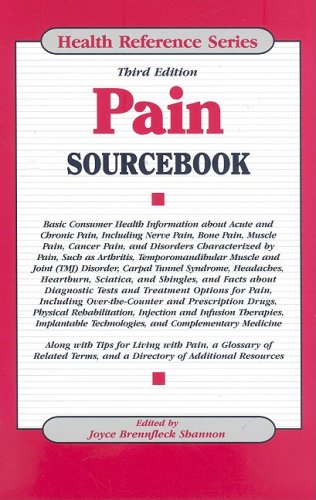

Pain sourcebook basic consumer health information about acute and chronic pain, including nerve pain, bone pain, muscle pain, cancer pain, and disorders characterized by pain, such as arthritis, temporomandibular muscle and joint (TMJ) disorder, carpal tunnel syndrome, headaches, heartburn, sciatica, and shingles, and facts about diagnostic tests and treatment options for pain, including over-the-counter and prescription drugs, physical rehabilitation, injection and infusion therapies, implantable technologies, and complementary medicine; along with tips for living with pain, a glossary of related terms, and a directory of additional resources edited by Joyce Brennfleck Shannon.
Series Health reference series (Unnumbered)Detalles de publicación: Detroit, MI Omnigraphics c2008.Edición: 3rd edDescripción: xvi, 671 p. ill. 24 cmISBN:- 9780780810068 (hardcover : alk. paper)
- 616.0472 P144 2008 22
- RB127 .P346 2008
| Imagen de cubierta | Tipo de ítem | Biblioteca actual | Biblioteca de origen | Colección | Ubicación en estantería | Signatura topográfica | Materiales especificados | Info Vol | URL | Copia número | Estado | Notas | Fecha de vencimiento | Código de barras | Reserva de ítems | Prioridad de la cola de reserva de ejemplar | Reservas para cursos | |
|---|---|---|---|---|---|---|---|---|---|---|---|---|---|---|---|---|---|---|
| Referencia | Biblioteca Encarnación Valdés Sala de Referencia bev | 616.0472 P144 2008 (Navegar estantería(Abre debajo)) | Disponible | 80000002372434 |
Descripciones mejoradas de Syndetics:
Virtually everyone has experienced pain-the human nervous system's natural response to injury. For most, it occurs for a specific reason, and then it subsides. For others, however, it lingers long after the cause has been removed. Or, its cause persists. Or, the pain comes even in the absence of an identifiable cause. When all its sources are considered, pain is the number-one reason for unscheduled doctor visits in the United States, and more than 76 million Americans suffer from chronic pain that affects employment, mobility, mood, sleep, concentration, and overall quality of life. Fortunately, new treatment options can minimize and relieve the suffering associated with pain. Furthermore, active personal involvement in pain management offers people the best prognosis for pain relief.
Includes bibliographical references and index.
"Provides basic consumer health information about the causes and treatment of various types of acute and chronic pain, along with prevention and coping strategies. Includes index, glossary of related terms, and other resources"--Provided by publisher.
Tabla de contenidos provista por Syndetics
- Preface(p. xi)
- Part I A Universal Disorder
- Chapter 1 Pain Primer: What Do We Know about Pain?(p. 3)
- Chapter 2 Prevalence and Duration of Pain among U.S. Adults(p. 11)
- Chapter 3 Disparities in Pain Management for Minority Populations(p. 25)
- Chapter 4 Chronic Pain and Psychological Well-Being(p. 29)
- Chapter 5 Pain Research(p. 35)
- Section 5.1 Treatment Blocks Pain without Disrupting Other Functions(p. 36)
- Section 5.2 Gene Variation Affects Pain Sensitivity and Risk of Chronic Pain(p. 39)
- Part II Types of Pain and Disorders Characterized by Pain
- Chapter 6 Arthritis(p. 45)
- Chapter 7 Back Pain(p. 49)
- Chapter 8 Burns(p. 57)
- Chapter 9 Bursitis and Tendonitis(p. 63)
- Chapter 10 Cancer Pain Management(p. 71)
- Chapter 11 Carpal Tunnel Syndrome(p. 79)
- Chapter 12 Chest Pain(p. 85)
- Chapter 13 Childbirth: Pain during Labor and Delivery(p. 91)
- Chapter 14 Chronic Fatigue Syndrome(p. 97)
- Chapter 15 Complex Regional Pain Syndrome (Reflex Sympathetic Dystrophy Syndrome)(p. 101)
- Chapter 16 Earaches: A Painful Problem for Many Children(p. 105)
- Chapter 17 Fibromyalgia(p. 109)
- Chapter 18 Gout(p. 117)
- Chapter 19 Gynecological Pain(p. 123)
- Section 19.1 Menstrual Pain(p. 124)
- Section 19.2 Pelvic Pain from Uterine Fibroids, Endometriosis, or Vulvodynia(p. 128)
- Section 19.3 Dyspareunia: Painful Sexual Intercourse(p. 134)
- Chapter 20 Headache(p. 137)
- Chapter 21 Heartburn, Gastroesophageal Reflux (GER), and Gastroesophageal Reflux (Disease GERD)(p. 153)
- Chapter 22 Hip Pain(p. 161)
- Chapter 23 Inflammatory Bowel Disease(p. 165)
- Chapter 24 Interstitial Cystitis and Painful Bladder Syndrome(p. 171)
- Chapter 25 Irritable Bowel Syndrome(p. 179)
- Chapter 26 Kidney Stones(p. 187)
- Chapter 27 Knee Problems(p. 193)
- Chapter 28 Muscle Pain(p. 199)
- Chapter 29 Neck Pain(p. 203)
- Chapter 30 Nerve Pain(p. 207)
- Section 30.1 Peripheral Neuropathy(p. 208)
- Section 30.2 Diabetic Neuropathy(p. 218)
- Section 30.3 Glossopharyngeal Neuralgia(p. 228)
- Section 30.4 Paresthesia(p. 229)
- Chapter 31 Osteonecrosis (Avascular Necrosis)(p. 231)
- Chapter 32 Paget Disease of Bone(p. 237)
- Chapter 33 Pancreatitis(p. 243)
- Chapter 34 Pediatric Pain(p. 249)
- Section 34.1 Growing Pains(p. 250)
- Section 34.2 Abdominal Pain(p. 252)
- Chapter 35 Podiatric Pain(p. 257)
- Section 35.1 Foot Pain(p. 258)
- Section 35.2 Heel Pain(p. 262)
- Chapter 36 Polymyalgia Rheumatica and Giant Cell Arteritis(p. 267)
- Chapter 37 Post-Amputation Pain(p. 273)
- Chapter 38 Sciatica(p. 283)
- Chapter 39 Shingles and Postherpetic Neuralgia(p. 287)
- Chapter 40 Shoulder Pain(p. 295)
- Chapter 41 Sickle Cell Anemia and Sickle Cell Crisis(p. 301)
- Chapter 42 Somatization Disorder(p. 311)
- Chapter 43 Sports Injuries: Acute and Chronic Pain(p. 315)
- Chapter 44 Temporomandibular Muscle and Joint (TMJ) Disorders(p. 319)
- Chapter 45 Tooth Pain(p. 327)
- Chapter 46 Trigeminal Neuralgia(p. 335)
- Part III Diagnosing and Treating Pain
- Chapter 47 Talking with Your Doctor about Pain(p. 343)
- Chapter 48 Keeping a Pain Notebook(p. 347)
- Chapter 49 Neurological Diagnostic Tests and Procedures(p. 355)
- Chapter 50 Over-the-Counter Medicines: What Is Right for You?(p. 363)
- Chapter 51 Benefits and Risks of Non-Steroidal Anti-Inflammatory Drugs (NSAIDs)(p. 371)
- Chapter 52 Opioid Analgesics Treat Pain(p. 379)
- Chapter 53 Antidepressants, Anticonvulsants, and Adjuvant Medications Used to Treat Pain(p. 385)
- Chapter 54 Prescription Drugs: Abuse and Addiction(p. 391)
- Chapter 55 Fentanyl Pain Patches and Topical Compounded Pain Products(p. 399)
- Chapter 56 Physical Rehabilitation for Pain Management(p. 405)
- Chapter 57 Injection and Infusion Therapies for Pain(p. 417)
- Chapter 58 Painless Drug Delivery(p. 431)
- Chapter 59 Joint Replacement Surgery May Help Relieve Pain(p. 435)
- Chapter 60 Pain Control after Surgery(p. 441)
- Chapter 61 Psychosocial Interventions Can Alleviate Pain(p. 451)
- Chapter 62 Complementary Therapy for Pain Relief(p. 457)
- Section 62.1 Complementary Therapy Overview(p. 458)
- Section 62.2 Acupuncture(p. 461)
- Section 62.3 Mind-Body Medicine(p. 465)
- Section 62.4 Massage Therapy and Chiropractic Care(p. 473)
- Section 62.5 Glucosamine/Chondroitin Arthritis Intervention Trial (GAIT) Results(p. 482)
- Chapter 63 Placebo Effect and Pain Relief(p. 487)
- Chapter 64 Virtual Reality and Pain Reduction(p. 491)
- Chapter 65 Clinical Research Trials: Trying New Medications and Devices for Pain Relief(p. 495)
- Part IV Living with Pain
- Chapter 66 Coping with Chronic Pain(p. 505)
- Chapter 67 Choosing a Multidisciplinary Pain Program(p. 509)
- Chapter 68 Managing Breakthrough Pain(p. 513)
- Chapter 69 Palliative Care: Symptom Management and End-of-Life Care(p. 517)
- Section 69.1 Palliative Care at Home(p. 518)
- Section 69.2 Helping Cancer Patients Help Themselves(p. 530)
- Chapter 70 Pain Affects Sleep: What You Can Do(p. 537)
- Chapter 71 Positive Thinking Impacts the Pain Experience(p. 545)
- Chapter 72 Managing Stress to Help Manage Pain(p. 549)
- Chapter 73 Avoid Mixing Alcohol with Pain Medicines(p. 555)
- Chapter 74 Exercise Benefits for People with Chronic Pain(p. 559)
- Section 74.1 Physical Activity(p. 560)
- Section 74.2 Self-Management of Daily Physical Activities(p. 563)
- Chapter 75 Pain and Travel(p. 573)
- Chapter 76 Using Ergonomics to Avoid Pain(p. 577)
- Section 76.1 Computer Workstation Guidelines(p. 578)
- Section 76.2 Maintaining a Healthy Back(p. 582)
- Chapter 77 Guidelines for Caregivers of Adults Needing Pain Relief(p. 585)
- Part V Additional Help and Information
- Chapter 78 Glossary of Terms Related to Pain(p. 597)
- Chapter 79 Additional Resources for Information about Pain(p. 607)
- Index(p. 619)