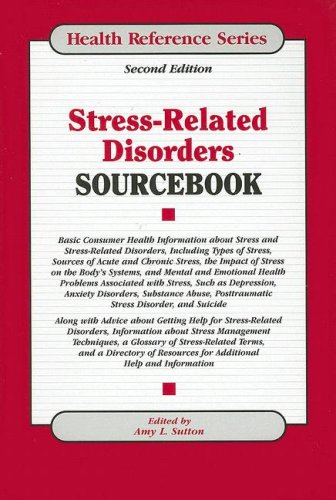

Stress-related disorders sourcebook edited by Amy L. Sutton.
Series Health reference series UnnumberedDetalles de publicación: Detroit, MI Omnigraphics c2007.Edición: 2nd edDescripción: xviii, 635 p. 23 cmISBN:- 9780780809963 (alk. paper)
- 0780809963 (alk. paper)
- 616.98 S9158 2007 22
- RA785 .S78 2007
| Imagen de cubierta | Tipo de ítem | Biblioteca actual | Biblioteca de origen | Colección | Ubicación en estantería | Signatura topográfica | Materiales especificados | Info Vol | URL | Copia número | Estado | Notas | Fecha de vencimiento | Código de barras | Reserva de ítems | Prioridad de la cola de reserva de ejemplar | Reservas para cursos | |
|---|---|---|---|---|---|---|---|---|---|---|---|---|---|---|---|---|---|---|
| Referencia | Biblioteca Encarnación Valdés Sala de Referencia bev | 616.98 S9158 2007 (Navegar estantería(Abre debajo)) | Disponible | 80000002372442 |
Descripciones mejoradas de Syndetics:
Nearly half of U.S. adults report concern about the stress in their lives, with work and money leading the list of major stressors. Stress is sometimes caused by traumatic events such as death, divorce, or mass disaster, but it often develops due to everyday frustrations with career, financial difficulties, technology, or caregiving. Stress impacts both physical and mental health by contributing to such problems as sleeplessness, reduced immunity, diabetes, depression, and anxiety. In severe cases, untreated or chronic stress may even lead to substance abuse, posttraumatic stress disorder, or suicide. Stress-Related Disorders Sourcebook, Second Edition provides information about the origins and types of stress and describes physical and mental health disorders that may develop during and after stressful situations. Readers will learn about the link between stress and chronic pain, cardiovascular disease, and digestive disorders. The Sourcebook also discusses how stress contributes to mental health problems, including depression, anxiety disorders, posttraumatic stress disorder, and addition to tobacco, alcohol, and drugs. Information about trauma, loss, and grief is presented, along with comprehensive facts about stress management techniques, such as relaxation training, meditation, exercise, and anger management. Tips on helping children and teens cope with stress are also offered, along with a glossary of related terms and a directory of resources. Book jacket.
Basic consumer health information about stress and stress-related disorders, including types of stress, sources of acute and chronic stress, the impact of stress on the body's systems, and mental and emotional health problems associated with stress, such as depression, anxiety disorders, substance abuse, posttraumatic stress disorder, and suicide; Along with advice about getting help for stress-related disorders, information about stress management techniques, a glossary of stress-related terms, and a directory of resources for additional help and information.
"Provides basic consumer health information about the physical and mental health effects of stress and trauma, along with stress management strategies. Includes index, glossary of related terms, and other resources"--Provided by publisher.
Includes bibliographical references and index.
Tabla de contenidos provista por Syndetics
- Preface(p. xiii)
- Part I Understanding Stress and the Stress Response
- Chapter 1 Overview of Stress, Its Causes, and Stress-Related Disorders(p. 3)
- Chapter 2 Stressed Out Nation: Many Americans Cope with Stress in Unhealthy Ways(p. 37)
- Chapter 3 Signs and Symptoms of Stress(p. 41)
- Chapter 4 The Effects of Stress on the Body and Mind(p. 49)
- Chapter 5 Statistics on Stress: Variations among Demographic Groups(p. 53)
- Chapter 6 Genes, Personality, and Anxiety-Related Traits(p. 65)
- Chapter 7 Gender Differences in Stress Management(p. 69)
- Section 7.1 Women, Stress, and Hormones(p. 70)
- Section 7.2 Relationship Conflicts Stress Men More Than Women(p. 73)
- Chapter 8 Stress at Work(p. 75)
- Section 8.1 Statistics on Stress and Anxiety in the Workplace(p. 76)
- Section 8.2 Causes of Job Stress and Effects on Productivity(p. 81)
- Section 8.3 Burnout: The Body's Response to Constant Levels of High Stress(p. 89)
- Chapter 9 Negative Health Effects of Financial Stress(p. 97)
- Chapter 10 Caregiver Stress(p. 103)
- Chapter 11 Social Isolation, Loneliness, and Chronic Stress(p. 111)
- Chapter 12 Childhood Stress(p. 115)
- Chapter 13 Adolescent Stress(p. 119)
- Chapter 14 Stress and Aging(p. 125)
- Part II The Physical Effects of Stress
- Chapter 15 How Stress Affects the Body: The Link to Serious, Life-Threatening Diseases(p. 131)
- Chapter 16 Stress and Sleep(p. 141)
- Chapter 17 The Dietary and Weight Consequences of Stress(p. 147)
- Section 17.1 Stress: The Number-One Emotional Eating Trigger(p. 148)
- Section 17.2 The Perils of Stress Eating(p. 151)
- Section 17.3 Binge Behavior and Addiction Linked to Stress(p. 154)
- Section 17.4 Night Eating Syndrome Caused or Triggered by Stress(p. 156)
- Chapter 18 Stress and Headaches(p. 159)
- Section 18.1 Stress, Mood, and Headaches(p. 160)
- Section 18.2 Tension Headaches Often Caused by Stress(p. 164)
- Section 18.3 Medications and Stress Management Most Effective for Treating Tension Headaches(p. 181)
- Chapter 19 Stress and Chronic Pain(p. 185)
- Section 19.1 Stress and Arthritis Pain(p. 186)
- Section 19.2 Mood and Stress Predict Pain in Children with Arthritis(p. 187)
- Section 19.3 Depression and Stress Linked to Neck, Shoulder, and Back Pain in Teens(p. 189)
- Chapter 20 Stress and the Brain and Nervous System(p. 191)
- Section 20.1 Stress and the Developing Brain(p. 192)
- Section 20.2 The Latest Research on Stress and Stroke Risk(p. 195)
- Section 20.3 Distress-Prone People More Likely to Develop Alzheimer's Risk(p. 196)
- Section 20.4 Stress and Multiple Sclerosis(p. 198)
- Chapter 21 The Cardiovascular Consequences of Stress(p. 201)
- Section 21.1 Stress and Heart Disease(p. 202)
- Section 21.2 Mental Stress Increases Risk of Death in People with Heart Disease(p. 208)
- Section 21.3 Does Stress Cause High Blood Pressure?(p. 210)
- Section 21.4 Stress Raises Cholesterol Levels(p. 213)
- Chapter 22 Stress, Diabetes, and Related Syndromes(p. 215)
- Section 22.1 Chronic Stress Increases Risk of Diabetes and Related Disorders(p. 216)
- Section 22.2 Stress at Work and the Metabolic Syndrome(p. 219)
- Section 22.3 Therapy Helps Kids with Type 1 Diabetes Reduce Stress(p. 222)
- Chapter 23 Stress and Digestive Diseases(p. 225)
- Section 23.1 Does Stress Cause Irritable Bowel Syndrome?(p. 226)
- Section 23.2 Does Stress Cause Peptic Ulcers?(p. 230)
- Chapter 24 Stress and the Immune System(p. 233)
- Section 24.1 What Happens When the Immune System Is under Stress?(p. 234)
- Section 24.2 Stress Wears down Human Immunity over Time(p. 239)
- Chapter 25 Stress, Sexuality, and the Reproductive System(p. 243)
- Section 25.1 Does Stress Hinder Conception?(p. 244)
- Section 25.2 Stress during Pregnancy: Maternal Effects(p. 246)
- Section 25.3 Anxiety Disorders and Pregnancy(p. 250)
- Section 25.4 Stress during Pregnancy May Increase Risk of Mental Illness in Children(p. 257)
- Section 25.5 Too Stressed for Sex: How Stress and Emotions Affect Sexuality in Later Life(p. 261)
- Chapter 26 The Relationship between Stress and Other Health Problems(p. 265)
- Section 26.1 Chronic Stress and Periodontal Disease(p. 266)
- Section 26.2 Stress and Asthma(p. 267)
- Section 26.3 Psychological Stress and Cancer: Is There a Link?(p. 270)
- Part III Stress and Mental Health Disorders
- Chapter 27 The Link between Stress and Depression(p. 275)
- Chapter 28 All about Depression(p. 281)
- Chapter 29 The Stress-Bipolar Disorder Link(p. 297)
- Chapter 30 Understanding the Link between Stress and Anxiety Disorders(p. 301)
- Section 30.1 What Is an Anxiety Disorder?(p. 302)
- Section 30.2 Anxiety Disorders: The Most Common Psychiatric Illness(p. 304)
- Chapter 31 Types of Anxiety Disorders(p. 307)
- Section 31.1 Panic Disorder(p. 308)
- Section 31.2 Obsessive-Compulsive Disorder(p. 310)
- Section 31.3 Social Phobia (Social Anxiety Disorder)(p. 312)
- Section 31.4 Specific Phobias(p. 313)
- Section 31.5 Generalized Anxiety Disorder(p. 314)
- Chapter 32 Getting Help for Anxiety Disorders(p. 317)
- Chapter 33 Tobacco Addiction and Stress(p. 325)
- Chapter 34 Alcohol Use, Addiction, and Stress(p. 329)
- Section 34.1 Alcohol and Stress(p. 330)
- Section 34.2 Study Links Receptor to Stress-Induced Alcohol Relapse(p. 334)
- Chapter 35 Drug Addiction and Stress(p. 337)
- Section 35.1 The Relationship between Drug Use and Stress(p. 338)
- Section 35.2 Opiate Drugs Increase Vulnerability to Stress(p. 343)
- Part IV Stress after Trauma, Loss, or Disaster
- Chapter 36 Trauma, Loss, and Traumatic Grief(p. 347)
- Chapter 37 Common Reactions to Trauma(p. 353)
- Chapter 38 Stress after Loss: The Effects of Traumatic Experiences(p. 357)
- Chapter 39 Mass Diasters, Trauma, and Loss(p. 365)
- Chapter 40 Severe Stress Reactions after Disaster(p. 371)
- Section 40.1 Managing Grief after a Disaster(p. 372)
- Section 40.2 Which Individuals Are at Risk for Severe Stress Responses?(p. 378)
- Chapter 41 Posttraumatic Stress Disorder: Chronic Stress after Trauma(p. 381)
- Chapter 42 Coping with Traumatic Stress Reactions(p. 385)
- Chapter 43 Helping Children and Adolescents with Traumatic Stress(p. 391)
- Section 43.1 Posttraumatic Stress Disorder and the Family(p. 392)
- Section 43.2 Helping Children Heal after a Traumatic Event(p. 399)
- Section 43.3 Tips on Helping Children Cope with Fear and Anxiety(p. 409)
- Section 43.4 Age-Specific Interventions for Your Traumatized Child or Adolescent(p. 410)
- Chapter 44 Posttraumatic Stress Disorder and the Risk of Suicide(p. 413)
- Chapter 45 Helping Friends in Trouble: Suicide Danger Signals(p. 423)
- Part V Controlling and Reducing Stress
- Chapter 46 Overview of Stress Management and Reduction Techniques(p. 431)
- Chapter 47 Alternative Approaches to Maintaining Mental Health(p. 437)
- Chapter 48 Mind-Body Medicine and Its Effect on Stress Levels(p. 443)
- Chapter 49 Massage Therapy(p. 451)
- Chapter 50 Meditation and Other Relaxation Techniques(p. 459)
- Section 50.1 Meditation for Health Purposes(p. 460)
- Section 50.2 Autogenic Training: Improving Body Awareness and Relaxation(p. 465)
- Chapter 51 Reducing Stress with Nutrition and Exercise(p. 467)
- Section 51.1 Handling Stress with Good Nutrition(p. 468)
- Section 51.2 Exercise for Stress Relief(p. 470)
- Chapter 52 Yoga and Tai Chi for Stress Relief(p. 473)
- Chapter 53 Herbs Used to Reduce Stress and Anxiety Symptoms(p. 481)
- Section 53.1 Kava(p. 482)
- Section 53.2 Valerian(p. 484)
- Chapter 54 Controlling Anger before It Controls You(p. 487)
- Chapter 55 Stress on the Road(p. 495)
- Section 55.1 What Is Aggressive Driving and Road Rage?(p. 496)
- Section 55.2 Tips for Reducing Aggressive Driving(p. 497)
- Chapter 56 Reducing Stress in the Workplace(p. 499)
- Section 56.1 What Employers and Managers Can Do to Reduce Stress at Work(p. 500)
- Section 56.2 Coping with Techno-Stress: Tips on Managing Cellular Phones, E-mail, and Other Gadgets in Your Life(p. 507)
- Chapter 57 Social Support Provides Stress Relief(p. 509)
- Section 57.1 Finding Support through Self-Help Groups(p. 510)
- Section 57.2 Religious Beliefs Can Protect Psychological Well-Being during Stressful Experiences(p. 512)
- Chapter 58 Strategies for Managing Family Stress(p. 515)
- Section 58.1 Make Time for Yourself So You Can Care for Others(p. 516)
- Section 58.2 Tips on Reducing Stress for Family Caregivers(p. 518)
- Section 58.3 Program for Parents of Preemies Reduces Stress(p. 524)
- Section 58.4 Controlling and Minimizing Holiday Stress(p. 526)
- Chapter 59 Helping Children and Teens Manage Stress(p. 529)
- Section 59.1 Adults Can Help Kids Cope with Stress(p. 530)
- Section 59.2 De-Stressing Strategies for Kids(p. 533)
- Section 59.3 Is Your Child Too Busy?(p. 536)
- Section 59.4 Dealing with Media Stress: How to Talk to Your Child about the News(p. 540)
- Section 59.5 What Parents Can Do about School-Related Stress(p. 543)
- Section 59.6 Tips for Teens about Test-Related Anxiety(p. 545)
- Chapter 60 Stress Management for People with Physical Disabilities(p. 549)
- Part VI Additional Help and Information
- Chapter 61 Glossary of Stress-Related Terms(p. 567)
- Chapter 62 Directory of Government and Private Agencies That Provide Information about Stress and Stress-Related Disorders(p. 573)
- Index(p. 587)