Imagen de portada de Amazon
Imagen de Amazon.com
Imagen de cubierta Syndetics
Portada de Syndetics
Imagen de OpenLibrary

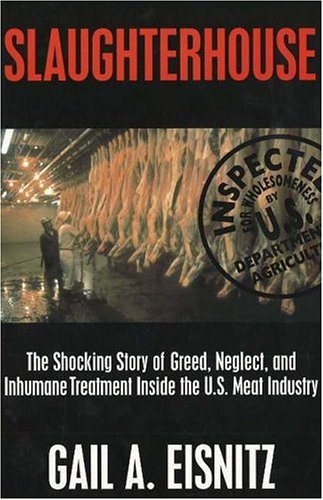
Slaughterhouse the shocking story of greed, neglect, and inhumane treatment inside the U.S. meat industry Gail A. Eisnitz.

Por: Detalles de publicación: Amherst, New York Prometheus Books, 1997.Descripción: 310 p. 23cmISBN:
  • 1573921661
Tema(s):
Valoración
    Valoración media: 0.0 (0 votos)
Existencias
Imagen de cubierta Tipo de ítem Biblioteca actual Biblioteca de origen Colección Ubicación en estantería Signatura topográfica Materiales especificados Info Vol URL Copia número Estado Notas Fecha de vencimiento Código de barras Reserva de ítems Prioridad de la cola de reserva de ejemplar Reservas para cursos
Libro Biblioteca Mons. Iñaki Mallona (Arecibo) Colección General ab 664.9029 E35s (Navegar estantería(Abre debajo)) Disponible 60000010040795
Total de reservas: 0

Descripciones mejoradas de Syndetics:

Explores the impact that unprecedented changes in the meat packing industry over the twenty-five years - particularly industry consolidation, increased line speeds, and deregulation - have had on workers, animals, and consumers. This book talks about what is really taking place behind the closed doors of America's slaughterhouses.

Includes index.

Reseñas proporcionadas por Syndetics

CHOICE Review

If a balanced treatise about animal slaughter and meat packing is desired, then visiting http://www.grandin.com would be a better choice than Eisnitz's book. Dr. Temple Grandin's data are based on visits to 24 randomly selected plants. Eisnitz interviewed employees at three plants (the one with the most egregious violations closed seven years ago); many statements show that the interviewees were misinformed or not credible. For instance, some claimed to have skin disorders resulting from handling acidic intestinal contents. Since bicarbonate is released immediately into the intestine to neutralize the acid, attribution of these problems to acid is erroneous. Eisnitz offers a panoply of misinformation, such as red color being added to fresh meat. She talks about problems of incomplete stunning, but her accounts of what happens are at variance with Grandin's. Her book is poorly organized; it jumps from slaughterhouse issues, a child ill from E. coli, stories of her own cancer, and frustration with her inability to get national media attention, to accounts of government conflicts of interest, attributing jobs on the killing floor as a cause of domestic violence, and allegations of selling horse meat as beef. It is a relief that she is not a more organized writer; otherwise this mixture of testimonies, half-truths, and exaggerations might be believed by more people. The tragedy is that there are some important issues this industry needs to address, and her book does not help distinguish real issues from red herrings. J. M. Jones; College of St. Catherine
Compartir
logopucpr-y-vive

Contáctanos

¡Queremos saber de ti!

Tel. 787.841.2000 Ext. 1801

bibliotecavaldes@pucpr.edu

⁣Búscanos en las redes

© 2026 Desarrollado por Ignite Online • All Rights Reserved • Powered by Koha.