Imagen de portada de Amazon
Imagen de Amazon.com
Imagen de cubierta Syndetics
Portada de Syndetics
Imagen de OpenLibrary

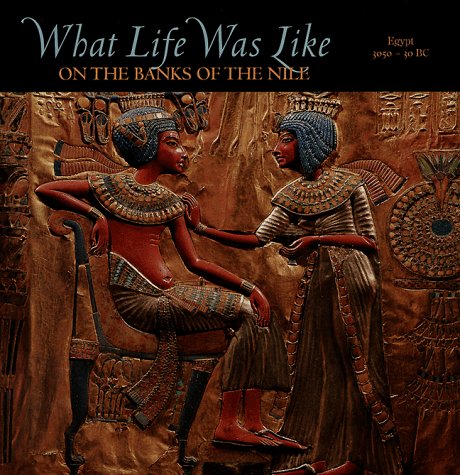
What life was like on the banks of the Nile Egypt, 3050-30 BC by the editors of Time-Life Books.

Colaborador(es): Series What life was like seriesDetalles de publicación: Alexandria, Va. Time-Life Books c1996.Descripción: 192 p. ill. (some col.), col. maps 26 cmISBN:
  • 0809493780
Otro título:
  • On the banks of the Nile
Tema(s): Clasificación CDD:
  • 932 20
Clasificación LoC:
  • DT61 .W467 1996
Valoración
    Valoración media: 0.0 (0 votos)
Existencias
Imagen de cubierta Tipo de ítem Biblioteca actual Biblioteca de origen Colección Ubicación en estantería Signatura topográfica Materiales especificados Info Vol URL Copia número Estado Notas Fecha de vencimiento Código de barras Reserva de ítems Prioridad de la cola de reserva de ejemplar Reservas para cursos
Libro Biblioteca de Mayagüez Colección General mb DT61 .W467 1996 (Navegar estantería(Abre debajo)) Disponible 50000003187803
Total de reservas: 0

Descripciones mejoradas de Syndetics:

This richly illustrated history recounts captivating tales of everyday life, of ambition and intrigue within the royal family, or adventures and conquest beyond Egypt's borders and the ultimate search for eternal fulfillment that preoccupied everyone from the pharaoh in his palace to the farmer in the fields.

Includes bibliographical references (p. 186-188) and index.

gccago2008

Reseñas proporcionadas por Syndetics

School Library Journal Review

Gr 6 Up-This book relies on hieroglyphics, charms, paintings, and even written prayers to re-create what life was like in the land of the pyramids. Rather than attempt to summarize the entire history of Egypt, the chapters focus on personal accounts of specific people who have been dead for thousands of years. For example, in 2002 B.C., a farmer named Hekanakht was sent away from his family to fulfill ceremonial and administrative duties. Through his letters home, readers learn of his struggles to settle domestic squabbles and maintain his farm from afar. Accounts of pharaohs, warriors, and commoners are included. Much emphasis is given to the role of women. These primary-source documents create a moving and immediate picture of these ancient people. Full-color photos work well with the text, showing carvings, sculpture, and portraits of the Egyptians whose stories are told along with artifacts relating to their lives. The text is meaty; nonreaders scared off by the adult format will miss the best part-reconfiguring in their imaginations the past as its participants described it. The best use of this book may be by teachers to supplement a study unit with succinct, shared passages transcribed from the past. A fascinating volume that can't help but make readers wonder if human emotions will survive as well on paper and e-mail as these amazing messages have done in clay and stone.-Cathryn A. Camper, Minneapolis Public Library (c) Copyright 2010. Library Journals LLC, a wholly owned subsidiary of Media Source, Inc. No redistribution permitted.

Booklist Review

Gr. 8^-12. This is not a supplement for middle-grade units on Egypt. Yes, it is full of information for report writers, and color pictures dot every page, but it is not traditionally organized, and the writing style is sophisticated, as is some of the material. For instance, an early chapter details an ancient papyrus letter, one that was written in 2002 B.C. A landowner, out of town during the harvest, is worried that his family is being cruel to his second wife and that a member of his household is sexually harassing her. It is also clear that he spoils his youngest child and disdains an older one. These peeks into the past make readers aware of the similarities between the people of ancient Egypt and ourselves. The book, which covers the time period from 3050 to 3030 B.C., also looks at the life of royalty, focusing on several kings, including Akhenaton and Ramses. There is information about the pyramids, mummification, religion, work and social life, and Tut's treasures as well. An interesting addition to Egyptology collections, one that puts a human face to an ancient civilization. --Ilene Cooper
Compartir
logopucpr-y-vive

Contáctanos

¡Queremos saber de ti!

Tel. 787.841.2000 Ext. 1801

bibliotecavaldes@pucpr.edu

⁣Búscanos en las redes

© 2026 Desarrollado por Ignite Online • All Rights Reserved • Powered by Koha.