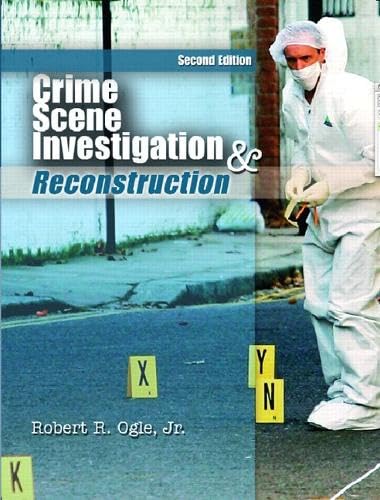

Crime scene investigation and reconstruction with guidelines for crime scene search and physical evidence collection Robert R. Ogle, Jr.
Detalles de publicación: Upper Saddle River, N.J. Pearson Education c2007.Edición: 2nd edDescripción: xviii, 389 p. ill. 28 cmISBN:- 013188607X
- 363.25 21
- HV8073 .O382 2007
| Imagen de cubierta | Tipo de ítem | Biblioteca actual | Biblioteca de origen | Colección | Ubicación en estantería | Signatura topográfica | Materiales especificados | Info Vol | URL | Copia número | Estado | Notas | Fecha de vencimiento | Código de barras | Reserva de ítems | Prioridad de la cola de reserva de ejemplar | Reservas para cursos | |
|---|---|---|---|---|---|---|---|---|---|---|---|---|---|---|---|---|---|---|
| Libro | Biblioteca de Mayagüez Colección General mb | HV8073 .O382 2007 (Navegar estantería(Abre debajo)) | Disponible | 50000003185906 |
Descripciones mejoradas de Syndetics:
This comprehensive text achieves the ultimate goal of crime scene investigation in answering -- What happened? -- Who was responsible for each action? -- What was the sequence of each action? Readers see the importance of each step through authentic photos, real life cases and full coverage of crime scene reconstruction. It also includes the most recent technological advances in the forensic sciences (i.e. database technologies, digital cameras, DNA analyses, and computer-aided crime scene reconstructions). Systematically organized to follow the same sequence in which crime scenes are processed, this is one of the most informative texts of its kind available.Introduces crucial concepts regarding collecting, examining and interpreting physical evidence. Comprehensive coverage of procedural methods for crime scene searches, photography, sketching, and collecting of all major physical evidence categories. Extensive coverage of sexual assault investigations including how to collect physical evidence from the crime scene, from the victim and from the suspect. Key information regarding homicide scene investigations, including the procedures essential to the forensic autopsy. Examines the various types of physical evidence used in reconstructions.Serves as comprehensive reference for those working in law enforcement.
Includes bibliographical references and index.
Introduction to physical evidence -- Crime scene search principles -- Crime scene photography -- Crime scene sketches -- Latent fingerprint evidence -- Hair and fiber evidence --Glass, paint, and soil evidence -- Arson accelerant evidence -- Biological fluid stain evidence : blood and semen -- Firearms evidence -- Impression evidence -- Drug and alcohol evidence -- Document evidence -- Vehicle scene investigations -- Sexual assault investigations -- Homicide crime scene investigations -- Crime scene reconstruction.
gccmay2008
Tabla de contenidos provista por Syndetics
- Foreword(p. xv)
- Preface(p. xvii)
- 1 Introduction to Physical Evidence(p. 1)
- Key words(p. 1)
- Types of Evidence(p. 1)
- Value of Physical Evidence(p. 2)
- Some Advantages of Physical Evidence(p. 5)
- Major Categories of Physical Evidence(p. 6)
- Class and Individual Characteristics of Physical Evidence(p. 6)
- Laboratory Analysis of Physical Evidence(p. 9)
- Comparison Standards and Controls(p. 11)
- Ethical, Legal, and Scientific Requirements for Evidence Collection(p. 13)
- Review Questions(p. 16)
- Further References(p. 16)
- 2 Crime Scene Search Principles(p. 17)
- Key words(p. 17)
- Department Orders Regarding Crime Scenes(p. 17)
- First Responder at the Scene(p. 18)
- Crime Scene Investigator(p. 22)
- Contact the First Officer at the Scene(p. 24)
- Establish a Command Center for the Operation(p. 24)
- Establish a Plan for Processing the Scene(p. 24)
- Data to be Compiled Before Collection Process(p. 25)
- Crime Scene Search: Be Systematic!(p. 27)
- Separate Areas/Collectors(p. 30)
- Systematic Search Methods(p. 30)
- Finishing the Crime Scene Search: Debriefing(p. 32)
- Final Survey of the Crime Scene(p. 33)
- Review Questions(p. 33)
- Further References(p. 33)
- Appendix 2-A Crime Scene Processing Guidelines(p. 34)
- Actions to be Taken by the First Responder(p. 34)
- Actions to be Taken by the Crime Scene Investigator(p. 34)
- Crime Scene Search(p. 34)
- Finishing the Crime Scene Search: Debriefing(p. 35)
- Appendix 2-B Customized Crime Scene Search Kits(p. 35)
- Level of Crime Scene Search Kit Needed(p. 35)
- 3 Crime Scene Photography(p. 38)
- Key words(p. 38)
- Objectives of Crime Scene Photography(p. 38)
- Number of Photographs at the Scene(p. 39)
- Conditions at the Scene(p. 39)
- Choice of Camera Type for Crime Scene Photography(p. 39)
- Type of Film for Crime Scene Photography(p. 40)
- Videotaping of Crime Scenes(p. 42)
- Suggested Systematic Approach(p. 42)
- Log of All Photographs Taken(p. 43)
- Types of Photographs of a Crime Scene(p. 43)
- Basic Camera and Photography Information(p. 47)
- Summary(p. 51)
- Review Questions(p. 52)
- Further References(p. 52)
- Appendix 3-A Basic Equipment List for Crime Scene Photography(p. 53)
- 4 Crime Scene Sketches(p. 54)
- Key words(p. 54)
- Value of Sketches(p. 54)
- Objectives of Crime Scene Sketches(p. 54)
- Rules of Thumb for Sketches(p. 55)
- Additional Points to Keep in Mind(p. 56)
- Types of Sketches(p. 57)
- Preparation of Sketches: Suggested Systematic Procedure(p. 65)
- Measurement Techniques(p. 66)
- Summary(p. 71)
- Review Questions(p. 71)
- 5 Latent Fingerprint Evidence(p. 73)
- Key words(p. 73)
- Introduction(p. 73)
- Types of Fingerprints and Impressions(p. 74)
- Inked Fingerprints(p. 74)
- Latent Fingerprints(p. 74)
- Patent Prints(p. 75)
- Age of the Latent Fingerprint(p. 77)
- Nature of the Latent Print Deposit(p. 77)
- Contributions from the Skin Glands(p. 77)
- Contributions from Contaminants(p. 78)
- Development of Latents(p. 78)
- General Considerations for Latent Prints(p. 78)
- Techniques Suitable for the Crime Scene(p. 80)
- Laser Light, Alternate Lights, and Ultraviolet Light(p. 81)
- Development with Powder and Brush(p. 81)
- Development with Cyanoacrylate(p. 82)
- Processing with Small Particle Reagent (SPR)(p. 83)
- Processing with Ninhydrin, Ninhydrin Analogues, or DFO(p. 83)
- Sequential Approaches to Latent Impression Detection and Collection(p. 83)
- Wet Surfaces: Dry at Room Temp; Treat as for Dry Surfaces(p. 85)
- Sequencing of Methods for Latent Development(p. 85)
- All Surface/Latent Deposit Combinations(p. 86)
- Nonabsorbent Surfaces(p. 86)
- Absorbent Surfaces(p. 88)
- Adhesive Tapes(p. 89)
- Fingerprints in Blood(p. 90)
- Latent and Patent Prints on Skin(p. 91)
- Submission of Latent Print Evidence to the Laboratory(p. 92)
- Marking of Evidence(p. 92)
- Collection of Elimination Prints(p. 92)
- Submission of Inked Fingerprints for Comparisons(p. 92)
- Preservation of Evidence(p. 93)
- Elimination Prints(p. 93)
- Special Considerations(p. 93)
- Review Questions(p. 94)
- Further References(p. 94)
- Glossary of Acronyms for Table 5-1(p. 94)
- Appendix 5-A Safety Precautions for Latent Print Development(p. 96)
- General Guidelines for Safety(p. 96)
- Guidelines for Safety at the Crime Scene(p. 96)
- Safety Guidelines in the Laboratory(p. 97)
- Guidelines for Biological Hazards(p. 98)
- Guidelines for Safety at Autopsies(p. 98)
- 6 Trace Evidence(p. 99)
- Key words(p. 99)
- Trace Evidence(p. 99)
- Hair Evidence(p. 99)
- Nature of Hair Evidence(p. 99)
- Significant Features of Hair(p. 101)
- Microscopic Features of Human Hair(p. 103)
- Other Comparison Characteristics in Hair(p. 104)
- Laboratory Examinations of Hair Evidence(p. 105)
- Collection of Hair Evidence(p. 106)
- Standard/Control Specimens of Hair(p. 108)
- Laboratory Reports Concerning Hair Examinations(p. 110)
- Fiber Evidence(p. 113)
- Nature of Fiber Evidence(p. 113)
- Occurrence of Fiber Evidence(p. 114)
- Laboratory Examinations of Fiber Evidence(p. 114)
- Collection of Fiber Evidence(p. 115)
- Standards/Controls Needed for Laboratory Analysis(p. 117)
- Glass Evidence(p. 117)
- Nature of Glass Evidence(p. 117)
- Laboratory Examinations of Glass Evidence(p. 118)
- Collection of Glass Evidence(p. 119)
- Paint Evidence(p. 120)
- Nature of Paint Evidence(p. 120)
- Hit-and-Run Cases: Vehicle to Pedestrian(p. 121)
- Hit-and-Run Cases: Vehicle to Vehicle(p. 121)
- Burglary Cases(p. 121)
- Laboratory Examinations of Paint Evidence(p. 122)
- Laboratory Reports Concerning Paint Evidence(p. 122)
- Collection of Paint Specimens(p. 122)
- Soil Evidence(p. 124)
- Nature of Soil Evidence(p. 124)
- Laboratory Examinations of Soil Evidence(p. 125)
- Collection of Soil Evidence(p. 126)
- Arson Accelerant Evidence(p. 128)
- Arson Investigations(p. 128)
- Nature of Volatile Flammables(p. 128)
- At the Scene(p. 129)
- Laboratory Analysis of Accelerant Residues(p. 132)
- Review Questions(p. 132)
- Further References(p. 133)
- 7 Biological Fluid Stain Evidence: Blood and Semen(p. 134)
- Key words(p. 134)
- Bloodstain Evidence(p. 134)
- Nature of Bloodstain Evidence(p. 134)
- Genetic Markers in Bloodstains(p. 135)
- Crime Scene Documentation of Bloodstains(p. 140)
- Collection of Bloodstain Evidence(p. 143)
- Blood Samples from Living Subjects(p. 144)
- Blood Samples from Postmortem Subjects(p. 145)
- General Comments(p. 145)
- Laboratory Analysis of Bloodstains(p. 145)
- DNA Analysis of Blood and Semen Stains(p. 146)
- Semen Evidence(p. 150)
- Nature of Semen Evidence(p. 150)
- Occurrence of Semen Evidence(p. 150)
- Collection of Semen Evidence(p. 151)
- Laboratory Examinations of Semen Evidence(p. 152)
- Review Questions(p. 154)
- Further References(p. 155)
- Appendix 7-A How to Make a Bindle(p. 155)
- Appendix 7-B Safety Precautions for Blood and Biological Fluids(p. 156)
- 8 Firearms Evidence(p. 157)
- Key words(p. 157)
- Introduction(p. 157)
- Firearm Cartridges(p. 157)
- Bulleted Cartridges(p. 157)
- Characteristics of Rifled Barrels(p. 162)
- Class Characteristics of Fired Bullets(p. 164)
- Field Comparisons of Bullet Class Characteristics(p. 164)
- Field Estimation of Bullet Caliber(p. 164)
- Laboratory Examinations of Firearms Evidence(p. 166)
- Collection of Firearms Evidence(p. 167)
- Introduction(p. 167)
- Unloading Revolvers(p. 168)
- Unloading Autoloading Firearms (Semiautomatics)(p. 168)
- Trace Evidence and Fingerprints(p. 168)
- Weapons Found in Water(p. 168)
- Transportation to the Laboratory(p. 169)
- Note-Taking and Evidence Marking(p. 169)
- Recovery of Fired Ammunition Components(p. 169)
- Bullets Embedded in Wood or Plaster(p. 169)
- Removal of Bullets from Deceased Persons(p. 170)
- Cartridge Cases(p. 170)
- Shot Wads(p. 170)
- Shot Pellets(p. 170)
- Live Shot Shells or Cartridges(p. 170)
- Gunshot Residues (GSR)(p. 171)
- Introduction(p. 171)
- Gunshot Residue Analysis in the Laboratory(p. 172)
- Collection of Gunshot Residues(p. 173)
- Review Questions(p. 177)
- Further References(p. 178)
- Appendix 8-A Class Characteristics for Some Handguns and Other Firearms(p. 178)
- 9 Impression Evidence(p. 191)
- Key words(p. 191)
- Nature of Impression Evidence(p. 191)
- Laboratory Examinations of Impression Evidence(p. 192)
- Examination of Footwear Impressions(p. 192)
- Examination of Tire Tread Impressions(p. 194)
- Examination of Toolmark Impressions(p. 194)
- Collection of Impression Evidence(p. 196)
- Collection of Footwear and Tire Tread Impressions(p. 196)
- Photography of Footwear and Tire Tread Impressions(p. 197)
- Vehicle Wheelbase and Width Measurements(p. 199)
- Casting and Lifting of Impressions(p. 199)
- Toolmark Evidence Collection(p. 206)
- Special Precautions for Toolmark Evidence(p. 206)
- Documentation of Toolmark Evidence(p. 207)
- Fracture Evidence(p. 209)
- Laboratory Examination of Fracture Evidence(p. 209)
- Review Questions(p. 212)
- Further References(p. 212)
- 10 Drug and Alcohol Evidence(p. 213)
- Key words(p. 213)
- Drug Evidence(p. 213)
- Introduction(p. 213)
- DEA Schedule of Controlled Substances(p. 214)
- Collection of Drug Evidence(p. 215)
- Field Testing of Drug Evidence(p. 215)
- Clandestine Laboratories(p. 216)
- Alcohol Evidence(p. 217)
- Introduction(p. 217)
- Tolerance to Effects of Alcohol(p. 218)
- Evidence in Driving Under the Influence Cases(p. 218)
- Collection and Preservation of Alcohol Specimens(p. 219)
- Laboratory Analysis of Blood Alcohol Specimens(p. 220)
- Review Questions(p. 220)
- Further References(p. 220)
- 11 Document Evidence(p. 221)
- Functions of the Document Examiner(p. 221)
- Collection of Document Evidence(p. 223)
- Review Questions(p. 224)
- Further References(p. 225)
- 12 Vehicle Scene Investigations(p. 226)
- Key words(p. 226)
- General Automobile Search(p. 226)
- Traffic Accident Investigations(p. 227)
- Photographs at the Accident Scene(p. 227)
- Accident Scene Sketches(p. 229)
- Hit-and-Run Investigations: Vehicle Versus Pedestrian(p. 229)
- Hit-and-Run Investigations: Vehicle Versus Vehicle(p. 233)
- Vehicle Lights(p. 234)
- Review Questions(p. 235)
- 13 Sexual Assault Investigations(p. 237)
- Key words(p. 237)
- Development of Modern Sexual Assault Investigation(p. 237)
- Introduction(p. 238)
- Role of Physical Evidence in Sexual Assault Investigations(p. 238)
- Evidence from the Crime Scene(p. 239)
- Evidence from the Victim(p. 242)
- Medical Examination of the Victim(p. 244)
- Evidence from the Suspect(p. 255)
- Examination of Adult Male Victim of Sexual Assault(p. 260)
- Child Sexual Abuse Examination(p. 262)
- Indications of Child Abuse(p. 265)
- Summary(p. 270)
- Review Questions(p. 270)
- Further References(p. 271)
- Appendix 13-A Swab Drying Box(p. 271)
- Appendix 13-B Chain of Custody Form(p. 272)
- Appendix 13-C Seal on Chain of Custody Envelopes(p. 273)
- 14 Homicide Crime Scene Investigations(p. 274)
- Key words(p. 274)
- Introduction(p. 274)
- Homicide Investigation Response Team (HIRT)(p. 274)
- Additional Personnel Often Needed at Homicide Crime Scenes(p. 275)
- At the Homicide Crime Scene(p. 276)
- Precaution(p. 276)
- Condition of Body/Clothing/Scene(p. 276)
- Protection of the Body During Removal(p. 278)
- Area Beneath the Body(p. 278)
- Postmortem Examination (Autopsy) Guide(p. 279)
- Preautopsy Conference(p. 279)
- Postmortem Examination Photography(p. 280)
- Trace Evidence(p. 281)
- Procedures for Nude Bodies(p. 281)
- Hair Standard Samples(p. 282)
- Fingernail Scrapings(p. 283)
- Gunshot Residues(p. 283)
- Gunshot Wounds(p. 283)
- Condition of Teeth/Dentures(p. 285)
- Fingerprints/Palm Prints/Footprints(p. 285)
- Sexual Assault Homicides(p. 285)
- Vehicular Homicides(p. 285)
- Decomposed Remains(p. 286)
- Body Fluids and Toxicology Specimens(p. 287)
- Wrap-Up Conference(p. 287)
- Summary(p. 270)
- Review Questions(p. 290)
- Further References(p. 291)
- Appendix 14-A Safety Precautions for Homicide Crime Scenes(p. 291)
- Appendix 14-B Safety Precautions for Postmortem Examinations (Autopsies)(p. 292)
- 15 Crime Scene Reconstruction(p. 293)
- Key words(p. 293)
- Introduction(p. 293)
- Establishment of Expertise(p. 293)
- Critical Thinking(p. 297)
- Foundations for Crime Scene Reconstruction(p. 298)
- Process of Crime Scene Reconstruction(p. 299)
- Types of Reconstructions(p. 302)
- Reconstructions Classified by Evidence Type Utilized(p. 304)
- Reconstructions Based on Bloodstain Pattern Evidence(p. 304)
- Information Obtained from Bloodstain Pattern Analysis(p. 304)
- Bloodstains: Shoe Prints, Tracks, and Trails(p. 310)
- Bloodstain Pattern Documentation(p. 311)
- Reconstructions Based on Firearms Evidence(p. 313)
- Introduction(p. 313)
- Information Available from a Shooting Incident Reconstruction(p. 314)
- Bullet Trajectories(p. 317)
- Bullet Ricochets(p. 322)
- Bullet Ricochets on Vehicles(p. 323)
- Identification of the Firearm that Fired Each Bullet or Cartridge Case(p. 328)
- Gunshot Residues on Suspected Shooters(p. 328)
- Distance Characteristics of Target Residues(p. 328)
- Laboratory Analysis of Firearm Evidence for Reconstructions(p. 331)
- Reconstructions Based on Other Evidence Types(p. 332)
- Direction of Force in Glass Pane Fractures(p. 332)
- Sequence of Firearm Projectile Impacts(p. 334)
- Evidence Showing Which Occupant of a Vehicle was the Driver(p. 334)
- Reconstructions Involving More Than One Type of Physical Evidence(p. 335)
- Review Questions(p. 339)
- Further References(p. 340)
- Appendix 15-A Crime Scene Reconstruction Checklist(p. 340)
- At the Scene(p. 340)
- Bloodstain Pattern Reconstructions(p. 340)
- Firearms Shooting Incidents(p. 340)
- Preparation for Reconstruction Effort(p. 341)
- Appendix I Crime Scene Report Writing(p. 342)
- Introduction(p. 342)
- Accuracy(p. 342)
- Brevity(p. 343)
- Clarity(p. 343)
- Sketches/Photo Logs/Evidence Lists(p. 344)
- Appendix II Courtroom Testimony(p. 346)
- Introduction(p. 346)
- Courtroom Procedures(p. 346)
- Helpful Hints for the Witness(p. 347)
- Testimony Dos and Don'ts(p. 349)
- Grand Juries(p. 350)
- Appendix III Forensic Science and Latent Fingerprint Texts(p. 351)
- Appendix IV Physical Evidence Chart(p. 353)
- General Instructions(p. 353)
- Appendix V Computer Evidence(p. 358)
- Conducting the Search and/or Seizure(p. 358)
- Appendix VI Entomological Evidence(p. 359)
- Introduction(p. 359)
- At the Scene(p. 359)
- Glossary(p. 361)
- Endnotes(p. 374)
- Index(p. 381)