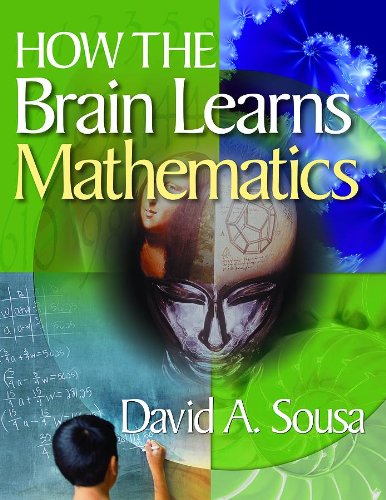

How the brain learns mathematics David A. Sousa.
Detalles de publicación: Thousand Oaks, CA Corwin Press c2008.Descripción: xii, 244 p. ill. 29 cmISBN:- 9781412953054 (cloth)
- 1412953057 (cloth)
- 9781412953061 (pbk.)
- 1412953065 (pbk.)
- 510.71 22
- QA13 .S66 2008
| Imagen de cubierta | Tipo de ítem | Biblioteca actual | Biblioteca de origen | Colección | Ubicación en estantería | Signatura topográfica | Materiales especificados | Info Vol | URL | Copia número | Estado | Notas | Fecha de vencimiento | Código de barras | Reserva de ítems | Prioridad de la cola de reserva de ejemplar | Reservas para cursos | |
|---|---|---|---|---|---|---|---|---|---|---|---|---|---|---|---|---|---|---|
| Libro | Biblioteca de Mayagüez Colección General mb | QA13 .S66 2008 (Navegar estantería(Abre debajo)) | Disponible | 50000003183422 |
Descripciones mejoradas de Syndetics:
"I am so impressed with this book that I believe it should be required reading for all teachers who teach math at any level." --Mary Thoreen, Mathematics TeacherWilson Middle School, Tampa, FL
"An excellent, well-organized, well-written book--practical advice grounded in solid research and presented in compelling language." --Robert Sylwester, Emeritus Professor of EducationUniversity of Oregon
Learn how the brain processes mathematical concepts and why some students develop math anxiety!
Highly respected author and researcher David A. Sousa explains the latest neuroscientific findings in practical, understandable terms and discusses the impact this information has for teaching mathematics at all grade levels. How the Brain Learns Mathematics covers the cognitive mechanisms for learning mathematics, the environmental and developmental factors that contribute to mathematics difficulties, and ways to differentiate mathematics instruction.
The text offers a unique and simplified four-step model for teaching mathematics to PreK-12 students that helps teachers consistently relate what learners experience in the classroom to concrete, real-world applications. Based on primary research, this award-winning text also examines:
Children′s innate number sense and how the brain develops an understanding of number relationships Rationales for modifying lessons to meet the developmental learning stages of young children, preadolescents, and adolescents How to plan lessons in PreK-12 mathematics Implications of current research for planning mathematics lessons, including discoveries about memory systems and lesson timing Methods to help elementary and secondary school teachers detect mathematics difficulties Clear connections to the NCTM standards and curriculum focal pointsTeachers of mathematics at all levels will find this book invaluable for making informed decisions about which instructional strategies and activities to use in creating a mathematics-friendly classroom.
Includes bibliographical references (p. 223-239) and index.
Developing number sense -- Learning to calculate -- Reviewing the elements of learning -- Teaching mathematics to the preschool and kindergarten brain -- Teaching mathematics to the preadolescent brain -- Teaching mathematics to the adolescent brain -- Recognizing and addressing mathematics difficulties -- Putting it all together : planning lessons in PreK-12.
gccmay2008
Tabla de contenidos provista por Syndetics
- About the Author
- Introduction
- 1 Developing Number Sense
- 2 Learning to Calculate
- 3 Reviewing the Elements of Learning
- 4 Teaching Mathematics to the Preschool and Kindergarten Brain
- 5 Teaching Mathematics to the Preadolescent Brain
- 6 Teaching Mathematics to the Adolescent Brain
- 7 Recognizing and Addressing Mathematics Difficulties
- 8 Putting It All Together: Planning Lessons in PreK-12 Mathematics
- Glossary
- References
- Resources
- Index