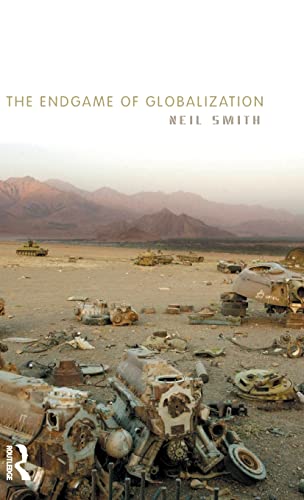
Imagen de portada de Amazon
Imagen de Amazon.com
Imagen de cubierta Syndetics
Portada de Syndetics
Imagen de OpenLibrary

The endgame of globalization Neil Smith.

Por: Detalles de publicación: New York Routledge 2005.Descripción: x, 227 p. 22 cmISBN:
  • 0415950120 (hb : alk. paper)
Tema(s): Clasificación LoC:
  • E 895 .S63 2005
Valoración
    Valoración media: 0.0 (0 votos)
Existencias
Imagen de cubierta Tipo de ítem Biblioteca actual Biblioteca de origen Colección Ubicación en estantería Signatura topográfica Materiales especificados Info Vol URL Copia número Estado Notas Fecha de vencimiento Código de barras Reserva de ítems Prioridad de la cola de reserva de ejemplar Reservas para cursos
Libro Biblioteca de Derecho Mons. Fremiot Torres Oliver Colección General biblioteca derecho E 895 .S63 2005 (Navegar estantería(Abre debajo)) Disponible 70000000774799
Total de reservas: 0

Descripciones mejoradas de Syndetics:

First Published in 2005. Routledge is an imprint of Taylor & Francis, an informa company.

Includes bibliographical references (p. [211]-218) and index.

Tabla de contenidos provista por Syndetics

  • Preface(p. vii)
  • 1 Endgame Geographies(p. 1)
  • 2 Liberalism and the Roots of American Globalism(p. 28)
  • 3 A Global Monroe Doctrine?(p. 53)
  • 4 "a Half Loaf": Bretton Woods, the Un, and the Second Moment of Us Ambition(p. 82)
  • 5 The Whole Loaf?: Globalization(p. 122)
  • 6 Guantánamo Conventions: the Bankruptcy of Liberalism(p. 149)
  • 7 The Endgame of Globalization: After Iraq(p. 177)
  • Endnotes(p. 211)
  • Index(p. 219)

Reseñas proporcionadas por Syndetics

CHOICE Review

Arguing that American liberalism is at the heart of the Iraq war, Smith (geography and anthropology, City Univ. of New York) is clearly angry at the Bush administration and the policies it has enacted since 9/11 and the social problems and ills he believes are caused or exacerbated by the spread of global capitalism. The book is filled with errors and twisting of facts. For example, Smith makes several false claims about German politics. Germany has not been swept by a neoliberal tide nor is there evidence that its opposition to the war in Iraq was anything other than motivated by broad popular consensus against it. Toward the end Smith states that US bombs killed more British soldiers in the first months of the Iraq war than Iraqi troops did. He implies that many British soldiers were killed by US mistakes, but the reality is that so few British soldiers were killed that any US mistake would have killed more than the Iraqis did. The most significant problem with this polemic is that Smith conflates globalization with marketization; they are not the same. Globalization is merely a process of connecting people and other actors across state boundaries. These connections may allow the spread of markets, but they may allow the spread of other things as well. ^BSumming Up: Not recommended. K. Buterbaugh Southern Connecticut State University

Notas de autor provistas por Syndetics

Neil Smith is Distinguished Professor of Geography and Anthropology at the City University of New York Graduate Center and Director of CUNY's Center for Place, Culture, and Politics. He is the author of Uneven Development, The New Urban Frontier, and American Empire: Roosevelt'sGeographer and the Prelude to Globalization,which received The Los Angeles Times Book Award for biography in 2003.
Compartir
logopucpr-y-vive

Contáctanos

¡Queremos saber de ti!

Tel. 787.841.2000 Ext. 1801

bibliotecavaldes@pucpr.edu

⁣Búscanos en las redes

© 2026 Desarrollado por Ignite Online • All Rights Reserved • Powered by Koha.