Imagen de Amazon.com

Portada de Syndetics
Imagen de OpenLibrary
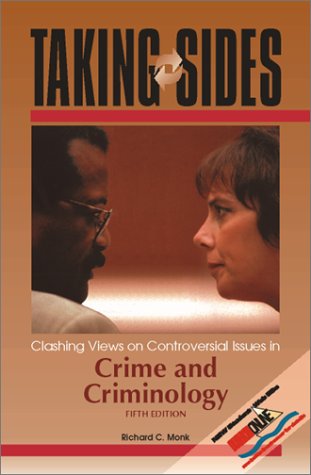
Taking sides clashing views on controversial issues in crime and criminology Richard C. Monk.
Detalles de publicación: New York Dushkin/McGraw-Hill c1998.Descripción: xxi, 360 p. 24 cmISBN:- 0697391094
| Imagen de cubierta | Tipo de ítem | Biblioteca actual | Biblioteca de origen | Colección | Ubicación en estantería | Signatura topográfica | Materiales especificados | Info Vol | URL | Copia número | Estado | Notas | Fecha de vencimiento | Código de barras | Reserva de ítems | Prioridad de la cola de reserva de ejemplar | Reservas para cursos | |
|---|---|---|---|---|---|---|---|---|---|---|---|---|---|---|---|---|---|---|
| Libro | Biblioteca de Mayagüez Colección General mb | HV6789 .T25 1998 (Navegar estantería(Abre debajo)) | Disponible | 50000003170429 |
Total de reservas: 0
Descripciones mejoradas de Syndetics:
This debate-style reader is designed to introduce students to controversies in crime and criminology. The readings, which represent the arguments of leading commentators, reflect a variety of viewpoints and are staged as "pro" and "con" debates. Issues debated include definitions and causes of crimes; race, gender and the criminal justice system; criminological research and public policy; and future trends. Copyright © Libri GmbH. All rights reserved.
adqnov2006
Includes bibliographical references and index.
gccnov2006
Tabla de contenidos provista por Syndetics
- Part 1 Definitions and Explanations of Crime
- Issue 1 Is Crime Always Functional? Yes: Emile Durkheim, from The Rules of Sociological Method No: Daniel Patrick Moynihan, from "Defining Deviancy Down,"
- The American Scholar Classic sociologist Emile Durkheim (1858-1917) theorizes that crime reaffirms moral boundaries and helps bring about needed social changes
- U.S. senator Daniel Patrick Moynihan (D-New York) argues that modern crime has gone way beyond the point of being functional
- Issue 2 Does Rap Music