Imagen de Amazon.com

Portada de Syndetics
Imagen de OpenLibrary
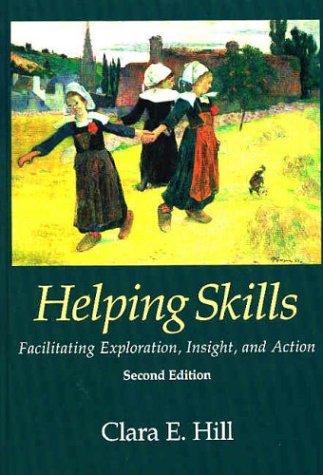
Helping skills facilitating exploration, insight, and action Clara E. Hill.
Detalles de publicación: Washington, DC American Psychological Association c2004.Edición: 2nd edDescripción: xxiv, 461 p. ill. 27 cmISBN:- 1591471044 (hardcover : alk. paper)
- 158.3 H6451h2 22
- BF637.C6 H46 2004
- 79.10
Recursos en línea:
Contenidos parciales:
Overview -- Exploration stage -- Insight stage -- Action stage -- Final thoughts.
| Imagen de cubierta | Tipo de ítem | Biblioteca actual | Biblioteca de origen | Colección | Ubicación en estantería | Signatura topográfica | Materiales especificados | Info Vol | URL | Copia número | Estado | Notas | Fecha de vencimiento | Código de barras | Reserva de ítems | Prioridad de la cola de reserva de ejemplar | Reservas para cursos | |
|---|---|---|---|---|---|---|---|---|---|---|---|---|---|---|---|---|---|---|
| Libro | Biblioteca Encarnación Valdés Colección General bev | 158.3 H6451h2 (Navegar estantería(Abre debajo)) | Disponible | 80000002289240 |
Total de reservas: 0
Descripciones mejoradas de Syndetics:
Intended for undergraduate or beginning graduate students, this textbook outlines a three-stage model of helping and presents basic skills used in each stage. Emphasizing the role of affect, cognition, and behavior in the process of change, the book presents an integrative approach grounded in clien
Includes bibliographical references (p. 421-432) and indexes.
Overview -- Exploration stage -- Insight stage -- Action stage -- Final thoughts.
Tabla de contenidos provista por Syndetics
- List of Labs(p. xv)
- Preface(p. xvii)
- Acknowledgments(p. xxiii)
- Part I. Overview
- 1 Introduction to Helping(p. 3)
- What Is Helping?(p. 4)
- When Do People Seek Help From Others?(p. 8)
- Is Helping Effective?(p. 10)
- On Becoming a Helper(p. 11)
- Organization of This Book(p. 14)
- Experiential Component of the Book(p. 15)
- Is This Book Right for You?(p. 20)
- Research on Helping Skills(p. 22)
- Concluding Comments(p. 22)
- 2 Theoretical Foundation of the Three-Stage Model of Helping(p. 25)
- Assumptions Underlying the Three-Stage Model(p. 26)
- Three-Stage Model(p. 28)
- Empathic Collaboration(p. 33)
- Culture(p. 34)
- Concluding Comments(p. 36)
- 3 A Model for the Process and Outcome of Helping(p. 39)
- Background Variables(p. 40)
- Context Variables(p. 44)
- Moment-by-Moment Interactional Sequence(p. 47)
- External World(p. 56)
- Outcome(p. 57)
- Empirical Research on the Three-Stage Model of Helping(p. 58)
- Concluding Comments(p. 59)
- 4 Ethical Issues in Helping(p. 61)
- An Overview of Ethics(p. 61)
- Ethical Standards Relevant for Beginning Helpers(p. 64)
- Working Through an Ethical Dilemma(p. 73)
- Concluding Comments(p. 76)
- Part II. Exploration Stage
- 5 Overview of the Exploration Stage(p. 81)
- Theoretical Background: Rogers's Client-Centered Theory(p. 82)
- Goals for the Exploration Stage(p. 91)
- Concluding Comments(p. 95)
- 6 Attending and Listening(p. 99)
- How to Attend and Listen(p. 101)
- Examples of Attending and Listening Skills(p. 111)
- Effects of Attending and Listening(p. 112)
- Difficulties Helpers Experience in Attending and Listening(p. 113)
- Concluding Comments(p. 114)
- 7 Open Questions and Probes(p. 117)
- Why Use Open Questions and Probes?(p. 118)
- How to Ask Open Questions and Probes(p. 120)
- Effects of Open Questions and Probes(p. 123)
- Difficulties Helpers Experience in Delivering Open Questions and Probes(p. 123)
- 8 Restatement(p. 129)
- Why Use Restatements?(p. 130)
- How to Restate(p. 132)
- Effects of Restatement(p. 135)
- Difficulties Helpers Experience in Restating(p. 135)
- 9 Reflection of Feelings(p. 143)
- Why Reflect Feelings?(p. 143)
- How to Reflect Feelings(p. 150)
- Effects of Reflection(p. 159)
- Difficulties Helpers Experience in Delivering Reflection of Feelings(p. 160)
- 10 Additional Skills for the Exploration Stage(p. 169)
- Information About the Helping Process(p. 170)
- Approval-Reassurance(p. 172)
- Closed Questions(p. 174)
- Self-Disclosures for Exploration(p. 177)
- Silence(p. 181)
- Concluding Comments(p. 183)
- 11 Integrating the Skills of the Exploration Stage(p. 185)
- Integrating the Exploration Skills(p. 186)
- Helper Self-Awareness(p. 193)
- Developing Hypotheses About Clients(p. 195)
- An Example of an Extended Interaction(p. 196)
- Difficulties Helpers Experience in the Exploration Stage(p. 199)
- Strategies for Overcoming the Difficulties and Managing Anxiety(p. 203)
- Part III. Insight Stage
- 12 Overview of the Insight Stage(p. 213)
- Theoretical Background: Psychoanalytic Theory(p. 215)
- How Psychoanalytic Theories Relate to the Three-Stage Model(p. 219)
- Goals for the Insight Stage(p. 220)
- Use of the Helper's Perspective(p. 223)
- Skills Used in the Insight Stage(p. 224)
- 13 Challenge(p. 227)
- Why Use Challenges?(p. 229)
- How to Challenge(p. 231)
- Effects of Challenge(p. 237)
- Difficulties Helpers Experience Using Challenges(p. 238)
- 14 Interpretation(p. 245)
- Why Give Interpretations?(p. 247)
- Sources of Data for Developing Interpretations(p. 250)
- Accuracy of Interpretations(p. 253)
- How to Interpret(p. 254)
- Examples of Interpretation(p. 259)
- Effects of Interpretation(p. 261)
- Potential Difficulties in Using Interpretation(p. 262)
- 15 Self-Disclosure of Insight(p. 269)
- Why Use Self-Disclosure of Insight?(p. 270)
- How to Self-Disclose About Insight(p. 273)
- Effects of Self-Disclosure of Insight(p. 276)
- Potential Difficulties in Disclosing Insight(p. 276)
- 16 Immediacy(p. 283)
- Why Use Immediacy?(p. 284)
- How to Use Immediacy(p. 287)
- Effects of Immediacy(p. 292)
- Difficulties Helpers Have in Using Immediacy(p. 292)
- 17 Integrating the Skills of the Insight Stage(p. 299)
- Integrating the Insight Skills(p. 299)
- Caveats About Using Insight Skills(p. 303)
- Developing Hypotheses About Client Dynamics(p. 305)
- Difficulties Helpers Experience in the Insight Stage(p. 306)
- Strategies for Overcoming Difficulties in Implementing the Insight Stage(p. 308)
- Part IV. Action Stage
- 18 Overview of the Action Stage(p. 319)
- Rationale for the Action Stage(p. 320)
- Theoretical Background: Behavioral and Cognitive Theories(p. 325)
- How Behavioral and Cognitive Theories Relate to the Three-Stage Model(p. 331)
- Goals of the Action Stage(p. 331)
- Skills Used in the Action Stage(p. 332)
- Steps of the Action Stage(p. 332)
- Concluding Comments(p. 333)
- 19 Skills of the Action Stage(p. 335)
- Giving Information(p. 336)
- Feedback About the Client(p. 340)
- Process Advisement(p. 343)
- Direct Guidance(p. 345)
- Disclosure of Strategies(p. 350)
- 20 The Steps of the Action Stage(p. 353)
- Step 1. Identify a Specific Problem(p. 354)
- Step 2. Explore the Idea of Action on This Problem(p. 356)
- Step 3. Assess Previous Change Attempts and Social Support(p. 358)
- Step 4. Help Client Decide About Making a Commitment to Change(p. 360)
- Step 5. Brainstorm Options(p. 361)
- Step 6. Choose Action Options(p. 362)
- Step 7. Implement In-Session Interventions(p. 363)
- Step 8. Choose Tasks for Outside the Session(p. 371)
- Step 9. Check on Progress and Modify Assignments(p. 373)
- Example of Action Stage Steps(p. 375)
- 21 Integrating the Skills of the Action Stage(p. 383)
- Integrating the Action Skills(p. 383)
- Difficulties Helpers Experience in the Action Stage(p. 384)
- Strategies for Overcoming the Difficulties(p. 387)
- Example of an Extended Interaction(p. 388)
- Part V. Final Thoughts
- 22 Integrating the Three Stages(p. 401)
- Using the Skills in Therapy(p. 402)
- Dealing With Difficult Clinical Situations(p. 411)
- Concluding Comments(p. 417)
- References(p. 421)
- Author Index(p. 433)
- Subject Index(p. 439)
- About the Author(p. 459)
- Feedback From(p. 461)