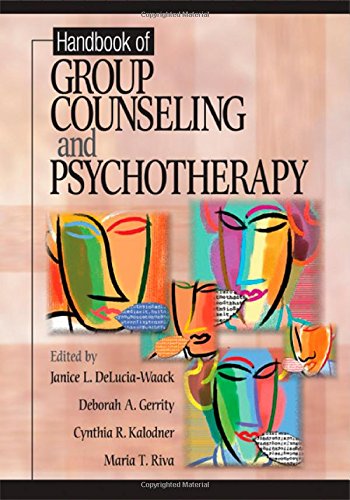

Handbook of group counseling and psychotherapy edited by Janice L. DeLucia-Waack ... [et al.].
Detalles de publicación: Thousand Oaks, Calif. Sage Publications c2004.Descripción: xvii, 663, [60] p. ill. 26 cmISBN:- 0761924698 (cloth : alk. paper)
- 616.89152 H2361 22
- RC488 .H353 2004
- 2004 B-559
- WM 430
| Imagen de cubierta | Tipo de ítem | Biblioteca actual | Biblioteca de origen | Colección | Ubicación en estantería | Signatura topográfica | Materiales especificados | Info Vol | URL | Copia número | Estado | Notas | Fecha de vencimiento | Código de barras | Reserva de ítems | Prioridad de la cola de reserva de ejemplar | Reservas para cursos | |
|---|---|---|---|---|---|---|---|---|---|---|---|---|---|---|---|---|---|---|
| Referencia | Biblioteca Encarnación Valdés Sala de Referencia bev | 616.89152 H2361 (Navegar estantería(Abre debajo)) | Disponible | 80000002285636 |
Descripciones mejoradas de Syndetics:
The Handbook of Group Counseling and Psychotherapy is a comprehensive reference guide for group practitioners and researchers alike. Each chapter reviews the literature and current research as well as offers suggestions for practice in the psycho educational arena, counseling, and therapy groups. The handbook encourages the notion that the field is improved through increased collaboration between researchers and practitioners. Through a review of cutting-edge research and practice, the handbook includes:
- 48 chapters by renowned experts in group work - The history and theory of group work - Topics across the lifespan - An entire section on multicultural issues - A variety of clinical problems and settings - Appendices include the Association for Specialists in Group Work Training Standards, Best Practice Standards, and Principles for Diversity-Competent Group Workers
The Handbook is divided into seven sections:
Current and Historical Perspectives on the Field of Group Counseling and Psychotherapy , reviews and analyzes the many contributions and contributors that have made group counseling and psychotherapy a vital and potent treatment method. The section reviews articles spanning four decades, and outlines the evolution of group themes over the last 100 years.
Best Practices in Group Counseling and Psychotherapy uses research, theory, and group counseling experience to provide group leaders and researchers with the most current and best practices in conducting group counseling and psychotherapy.
Multicultural Groups follows the ASGW Principles for Diversity-Competent Group Workers and is intended to provide group leaders with essential information about different cultural groups and their world views, perceptions of groups, naturalistic healing methods, suggested group interventions, and implications for groups. Chapters cover Native Americans, Latinos, Asians, African Americans, and disabled persons.
Groups Across Settings includes examples of psycho-educational, counseling, and psychotherapy groups in a variety of settings. This section presents readers with theoretical and empirical support for group work in such settings as the Veterans Administration system, university counseling centers, and more.
Groups Across the Lifespan consist of chapters across many age groups. For children and adolescents, cognitive and developmental issues are addressed. For adults, socialization and interpersonal issues are addressed, including separate chapters for male and female groups. Finally, a chapter on the elderly deals with cognitive, health, and life review issues.
Special Topics Groups presents a continuum of different types of groups used to treat people with interpersonal and developmental issues, such as grief, substance abuse, depression, and others. Each chapter in this section provides definitions and descriptions of the issues along with theoretical and empirical support.
Finally, Critical Issues and Emerging Topics attempts to reflect the zeitgeist and provide a glimpse into group interventions for the future. Emerging issues, such as on-line groups, prevention groups, and peer-led mutual help groups receive careful attention and analysis.
The Handbook of Group Counseling and Psychotherapy , the most comprehensive reference devoted to this rapidly growing field, is essential for graduate students, academics, researchers, professionals, and librarians serving the group therapy community.
Includes bibliographical references and indexes.
Current and historical perspectives on the field of group counseling and psychotherapy -- Best practices in groups -- Multicultural groups -- Groups across settings -- Groups across the life span -- Special topic groups -- Critical issues and emerging topics.
Tabla de contenidos provista por Syndetics
- Introduction
- Part 1 Current and Historical Perspectives on The Field of Group Counseling and Psychotherapy
- Introduction
- Ch 1 History of Group Counseling and Psychotherapy
- Ch 2 The Importance of Therapeutic Factors: A Typology of Therapeutic Factors Studies
- Ch 3 Effective Leadership in Group Counseling and Psychotherapy
- Ch 4 Process and Outcome in Group Counseling and Psychotherapy: A Perspective
- Part 2 Best Practices in Groups
- Introduction
- Ch. 5 An Overview of Current Research and Best Practices for Training Beginning Group Leaders
- Ch. 6 Conducting a Group: Guidelines for Choosing and Using Activities
- Ch. 7 Effective Leader Interventions for Counseling and Psychotherapy Groups
- Ch. 8 The Effective Use of Processing in Groups
- Ch. 9 Measurement of Group Process, Dynamics, Climate, Leadership Behaviors and Therapeutic Factors: A Review
- Ch.10 Effective Supervision of Group Leaders: Current Theory, Research, and Implications for Practice
- Ch. 11 Guidelines for Ethical and Legal Practice in Counseling and Psychotherapy Groups
- Part 3 Multicultural Groups
- Introduction
- Ch. 12 Sound of the Drum: Group Counseling with Native Americans
- Ch. 13 An Afrocentric Approach to Counseling Groups with African-Americans
- Ch. 14 Group Counseling with Asians
- Ch. 15 Psychoeducational and Counseling Groups with Latinos
- Ch. 16 Counseling Groups with Gay, Lesbian, Bisexual, and Transgendered Clients
- Ch. 17 Group Approaches for Persons with Disabilities
- Ch. 18 Guidelines for Facilitating Groups with International College Students
- Ch. 19 Considerations Related to Racial Identity Development or Group Leaders and Members
- Ch. 20 Language As It Impacts Group Dynamics in Counseling and Psychotherapy Groups
- Ch. 21 Multicultural Interventions in Groups: The Use of Indigenous Methods
- Part 4 Groups Across Settings
- Introduction
- Ch. 22 Group Counseling in Schools
- Ch. 23 Psychological Work with Groups in the Veterans Administration
- Ch. 24 Groups in Behavioral Health and Medical Settings
- Ch. 25 The Use of Groups in Inpatient Facilities
- Ch. 26 The Use of Groups in College and University Counseling Centers
- Ch. 27 Building the Foundation for Group Counseling and Psychotherapy in Private Practice
- Ch. 28 Groups with Offenders and Mandated Clients
- Ch. 29 Groups in the Workplace
- Ch. 30 Group Counseling and Group Therapy in Mental Health Settings and Health Maintenance Organizations
- Part 5 Groups Across The Lifespan
- Introduction
- Ch. 31 Group Counseling and Psychotherapy Children and Adolescents: Current Practice and Research
- Ch. 32 Practice Trends in Women's Groups: An Inclusive View
- Ch. 33 Counseling Men in Groups: The Role of Myths, Therapeutic Factors, Leaders, and Rituals in Men's Groups
- Ch. 34 Group Counseling with Older Adults
- Part 6 Special Topic Groups
- Introduction
- Ch. 35 Introduction to Special Topic Groups
- Ch. 36 Psychoeducational and Counseling Groups to Prevent and Treat Eating Disorders and Disturbances
- Ch. 37 Groups for Survivors of Childhood Sexual Abuse
- Ch. 38 Theory, Practice, and Research on Grief Groups
- Ch. 39 Group Treatment of Depression
- Ch. 40 Anger Management Group
- Ch. 41 Group Approaches in Substance Abuse Treatment
- Ch. 42 Groups with Men Who Have Committed Partner Abuse
- Ch. 43 Adventure Therapy with Groups
- Part 7 Critical Issues and Emerging Topics
- Introduction
- Ch. 44 On-Line Groups
- Ch. 45 Prevention Groups
- Ch. 46 The Role of Peer-led Mutual Help Groups in Promoting Health and Well-Being
- Ch. 47 Brief Group Therapy
- Ch. 48 Current Status and Future Directions of Group Counseling and Therapy Research
- Appendix A Association for Specialists in Group Work Training Standards
- Appendix B Association for Specialists in Group Work Best Practice Standards
- Appendix C Association for Specialists in Group Work Principles for Diversity-Competent Group Workers
Reseñas proporcionadas por Syndetics
CHOICE Review
Incorporating theory, practice, and research, the editors (psychology professors all) present a comprehensive and wide-ranging description of the field. Seventy-six authors contribute 47 chapters organized into seven parts: current and historical perspectives, best practices, multicultural groups, groups in the context of settings, groups across the life span, special topic groups, and critical issues and emerging topics. The first book to treat these subjects, it is encyclopedic in range, describing present knowledge and identifying expected future developments. The writing is consistently of a high standard. But despite its attention to many details of practice, the book does not address how to frame achievement goals for participants. In addition, the theoretical orientations of the contributors are unclear, particularly as to how each views group theory and practice in relation to psychological theory and one-on-one practice. The book includes chapter references and three appendixes--standards for training, principles for diversity-competent workers, best practice guidelines. ^BSumming Up: Essential for graduate and research collections, but not for undergraduates. D. Sydiaha emeritus, University of SaskatchewanNotas de autor provistas por Syndetics
Janice L. DeLucia-Waackis currently an Associate Professor and Program Director for School Counseling in the Department of Counseling, School, and Educational Psychology at the University at Buffalo, SUNY. She is also currently the Executive Director for the Association for Specialists in Group Work. She is the former editor of theJournal for Specialists in Group Work, and is a fellow in the American Counseling Association; Association for Specialists in Group Work (a division of ACA; and Group Psychology and Group Psychotherapy, a division of the American Psychological Association. She is author/editor of two books, Using Music in Children of Divorce Groups: A Session-By-Session Manual for Counselorsand Multicultural Counseling and Training: Implications and Challenges for Practice, and co-editor/author of three other books: The Practice of Multicultural Group Work: Visions and Perspectives from the Field(with Jeremiah Donigian); Group Work Experts Share Their Favorite Activities: A Guide to Choosing, Planning, Conducting, and Processing(with Karen Bridbord and Jennifer Kleiner) , School Counselors Share Their Favorite Activities: A Guide to Choosing, Planning, Conducting, and Processing(with Louisa Foss, Judy Green, Kelli Wolfe-Stiltner),How to Design a Group Plan(with Amy Nitza) as part of Robert Conyne Group Work Practice Kit: Improving the Everyday Practice of Group Work. Her current project is the fifth in theASGW Group Activity Book Seriesdue out in Fall 2013: School Counselors Share Their Favorite Classroom Guidance Activities.(with Faith Colvin, Sarah Korta, Katherine Maertin, Eric Martin, & Lily Zawadski. She received a bachelor''s degree in Psychology from Eisenhower College, a master''s degree in Family Studies from the University of Maryland, and a Ph.D. in Counseling Psychology from the Pennsylvania State University.
Deborah A. Gerrity has been an Assistant Professor in the Department of Counseling, School, and Educational Psychology at the University at Buffalo, SUNY since 2000. She is a faculty member in the Counseling Psychology, Counselor Education, and School Counseling programs. She teaches the Introduction to Group Counseling course for the master''s students in School and Rehabilitation Counseling and the doctoral students in Counseling Psychology. Her bachelors degree in Psychology, masters in Community Counseling, Ph.D. in Counseling Psychology, and doctoral internship were all completed at the University of Maryland at College Park. Her counseling and research interests are in the areas of group counseling and women''s issues, including sexual abuse, sexual harassment, infertility, and gender role socialization. Deborah has authored or co-authored 20 journal articles, research reports, manuscripts, and book chapters. In 2002, she received the Outstanding Research Article on GroupsAward from the Association For Specialists In Group Work.
Cynthia R. Kalodneris an Associate Professor in the Department of Psychology at Towson University in Towson, Maryland. She is the director of the masters program in Counseling Psychology and works closely with post-Masters students seeking licensure as a Licensed Clinical Professional Counselor. Dr. Kalodner teaches Advanced Group Counseling and supervises students on practicum and internship placements throughout Maryland, Washington, D.C., and northern Virginia. She received a bachelor''s degree in psychology from Rutgers University (1984), a master''s degree in Counselor Education (1986), and a Ph.D. in Counseling Psychology (1988) from the Pennsylvania State University. She completed her internship at the Counseling Center at the University of Texas at Austin. She is the author of the book, Eating Disorders and Disturbances: A Reference Guide,published by Greenwood Press. She has authored or co-authored more than 40 book chapters and journal articles and made numerous presentations at national meetings focused on eating disorders, cognitive-behavioral counseling theory and practice, and a variety of topics as diverse as health care issues in Appalachia to burnout among graduate students. She continues to conduct research on predictors of the development of eating disorders and media literacy groups focused on the prevention of eating problems in girls and women.
Maria T. Rivais a Professor in Counseling Psychology and Chair of the Department of School and Counseling Psychology at the University of Denver. She received her B.A. in psychology from Illinois Wesleyan University in 1976, her M.S. in behavior modification from Southern Illinois University in 1979, and her Ph.D. from the University of Pittsburgh in counseling psychology in 1990. Dr. Riva is currently the President of the APA Division 49, Group Psychology and Group Psychotherapy. She is a past president of the American Counseling Association Division of the Association for Specialists in Group Work (ASGW), a Fellow of ASGW, and a past Associate Editor of the Journal for Specialists in Gorup Work. She has written articles on supervision and teaching of group counseling, and group superivison, along with co-editing the Handbook of Group Counseling and Psychotherapy (with DeLucia-Waack, Gerrity, and Kalodner) and authoring the book Assessing Groups with Robin Lange. She teaches group counseling courses and courses in supervision. Her research interests are in group dynamics, group leadership, and ethical group supervision.