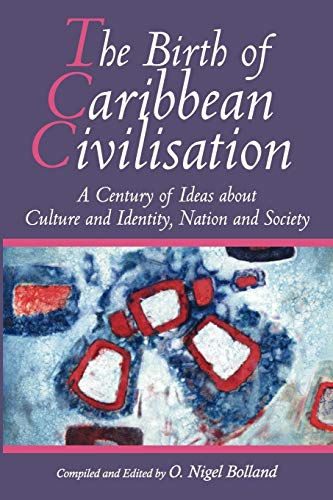

The birth of Caribbean civilisation a century of ideas about culture and identity, nation and society [edited by] O. Nigel Bolland.
Detalles de publicación: Kingston [Jamaica] Miami Ian Randle Publishers 2004.Descripción: xxvii, 665 p. 23 cmISBN:- 9766371091 (pbk.)
- 9766371490 (hbk.)
- Birth of Caribbean civilization
| Imagen de cubierta | Tipo de ítem | Biblioteca actual | Biblioteca de origen | Colección | Ubicación en estantería | Signatura topográfica | Materiales especificados | Info Vol | URL | Copia número | Estado | Notas | Fecha de vencimiento | Código de barras | Reserva de ítems | Prioridad de la cola de reserva de ejemplar | Reservas para cursos | |
|---|---|---|---|---|---|---|---|---|---|---|---|---|---|---|---|---|---|---|
| Libro | Biblioteca Encarnación Valdés Colección General bev | 305.8009729 B6198 (Navegar estantería(Abre debajo)) | Disponible | 80000002269838 |
Descripciones mejoradas de Syndetics:
For more than a century, Caribbean intellectuals have created a substantial body of work expressing their ideas about culture, identity and society in the region - ideas that have contributed to the development of a distinctive Caribbean civilisation. Many of them consciously contributed to the formation of their particular nation or, through forging links between their own national culture and others in the region, to the formation of a Caribbean nation. Many made wider connections with Latin America and Africa, or the African diaspora, and have contributed to leading ideas in the world about Pan-Africanism, negritude, nationalism and socialism. This collection shows some of the variety, commonalities, contrasts and connections in the ideas of these intellectuals, from J.J. Thomas and José Martí in the late nineteenth century to the present day. The book is edited to provide essential biographical and contextual introductions to each selection, and notes to clarify points and references in the texts that may not be clear. There is a general Introduction that explains the purpose of the book and briefly discusses the general intellectual and cultural context of Caribbean ideas in the twentieth and twenty-first centuries. A broad range of selections is made, including writings and speeches by famous and lesser known political and literary figures, women and men of very different opinions throughout the period and from most parts of the Caribbean.
Includes bibliographical references (p. [652]-654) and index.