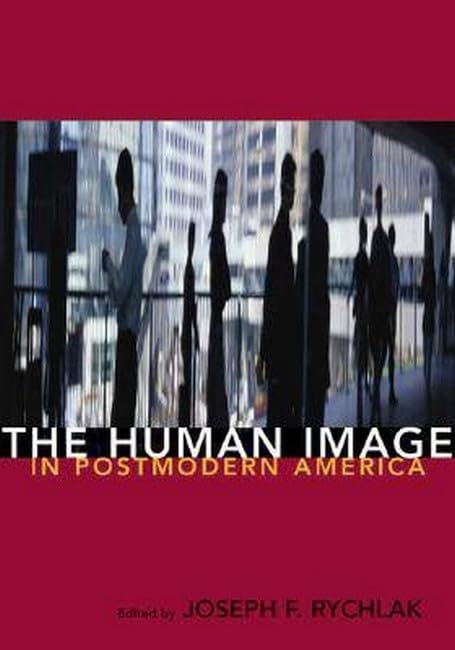

The human image in postmodern America Joseph F. Rychlak.
Detalles de publicación: Washington, DC American Psychological Association c2003.Descripción: xiii, 175 p. 27 cmISBN:- 1557989869 (hardcover : alk. paper)
- 150 R991h 21
- BF121 .R93 2003
| Imagen de cubierta | Tipo de ítem | Biblioteca actual | Biblioteca de origen | Colección | Ubicación en estantería | Signatura topográfica | Materiales especificados | Info Vol | URL | Copia número | Estado | Notas | Fecha de vencimiento | Código de barras | Reserva de ítems | Prioridad de la cola de reserva de ejemplar | Reservas para cursos | |
|---|---|---|---|---|---|---|---|---|---|---|---|---|---|---|---|---|---|---|
| Libro | Biblioteca Encarnación Valdés Colección General bev | 150 R991h (Navegar estantería(Abre debajo)) | Disponible | 80000002259078 |
Descripciones mejoradas de Syndetics:
A thought-provoking critique of the basic premises underlying the explanations of human behaviour frequently offered by psychologists. Despite its avowed shift away from behaviouristic ways of thinking, psychology today, according to Rychlak, is essentially mechanistic. But while biological and automatic processes clearly have vital uses, they are unable to fully account for such phenomena as free will and agency - the very qualities that make us human. Rychlak has written a short, accessible book, analysing an impressive range of social and cultural issues such as personal responsibility, individualism and collectivism, autonomy, anti-authoritarianism, postmodernism, racism and political correctness. In each case he demonstrates the teleological or non-mechanical nature of our behaviour in real-life situations. While this is not a ""how-to"" book in the usual sense of the word, its author does suggest that only when we come to understand what it really means to be human can we resolve the most pressing issues of our times.
Includes bibliographical references (p. 147-161) and indexes.
Tabla de contenidos provista por Syndetics
- Introduction(p. xi)
- Chapter 1. Being Human Collectively and Individually(p. 3)
- Basic Concepts to Begin With(p. 3)
- Sorting Out Individual and Collective Processing(p. 9)
- An Example Lifestyle(p. 11)
- Human Agency via Dialectical Reasoning(p. 13)
- Concluding Comment(p. 15)
- Chapter 2. Personality Theorizing as Describing Individuals or Collectives(p. 17)
- Psychoanalyzing Individuals(p. 18)
- Behaviorism: Forgoing the Individual(p. 24)
- From Individual to Collective Theorizing(p. 28)
- Concluding Comment(p. 30)
- Chapter 3. Collective Theorizing in the Third Millennium(p. 33)
- The Emergence of Postindustrial Society(p. 34)
- Postmodernism(p. 36)
- Social Constructionism(p. 40)
- Class Identities and the Marxian Argument(p. 42)
- Society Is Process and Culture Is Content(p. 45)
- Relativism and Evaluation in Reasoning(p. 46)
- Concluding Comment(p. 49)
- Chapter 4. A Missing Link in the Human Image(p. 51)
- The Computer Model: Strengths and Limitations(p. 52)
- Computer Explanation of Free Will(p. 54)
- Overlooking Dialectical Reasoning(p. 56)
- Existentialism, Oppositionality, and Behaviors That Shock or Invite Bigotry(p. 62)
- Oppositionality and Levels of Consciousness(p. 64)
- A Needed Change in the Human Image(p. 66)
- Concluding Comment(p. 67)
- Chapter 5. The Self Takes Over(p. 69)
- Self and Self-Reflexivity(p. 69)
- Self-Esteem(p. 70)
- Personal Responsibility Through Autonomy(p. 73)
- Politically Correcting Responsibility(p. 74)
- The Myth of Individualism(p. 75)
- Morality, Authoritophobia, and the Authority Within(p. 77)
- Autonomy and the Political Spectrum(p. 78)
- Homelessness as Autonomous Living(p. 80)
- Concluding Comment(p. 82)
- Chapter 6. Biology and Behavior(p. 83)
- Brain Structure: Some Facts(p. 84)
- Imaging Brain Function(p. 87)
- Genes, DNA, and Choice(p. 89)
- Emotions of Love and Lust in Our Time(p. 90)
- Addiction(p. 92)
- Racism(p. 95)
- Concluding Comment(p. 101)
- Chapter 7. Values at Every Turn(p. 103)
- Values and Virtues(p. 103)
- Receiving Versus Conceiving Values(p. 106)
- Religious Values(p. 107)
- Politics(p. 109)
- Culture as Multi- and Relative(p. 114)
- Confronting a "Left-Wing Conspiracy" in Academia?(p. 119)
- Concluding Comment(p. 122)
- Chapter 8. The Human Image in Postmodern America(p. 125)
- Collective Versus Individual Thinking(p. 126)
- The Postindustrial or Postmodern Person(p. 127)
- The Postmodern Family(p. 128)
- Postmodernism as Individualism or Collectivism(p. 132)
- The Role of Opposition in the Postmodern Image of Humanity(p. 134)
- The Challenge of Relativism(p. 135)
- What Is the Basic Function of Relativism?(p. 138)
- The Defeat of Blind Relativism(p. 139)
- The Imperfect Human Image(p. 141)
- Concluding Comment(p. 142)
- Afterword(p. 145)
- Notes(p. 147)
- Author Index(p. 163)
- Subject Index(p. 167)
- About the Author(p. 175)