Imagen de Amazon.com

Portada de Syndetics
Imagen de OpenLibrary
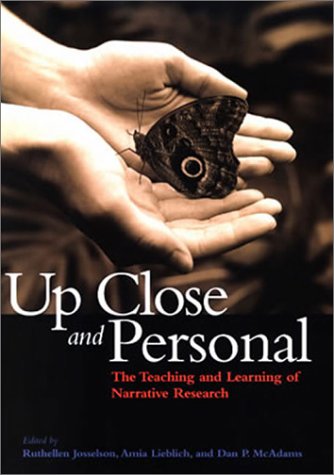
Up close and personal the teaching and learning of narrative research edited by Ruthellen Josselson, Amia Lieblich, and Dan P. McAdams.
Series The narrative study of livesDetalles de publicación: Washington, D.C. American Psychological Association c2003.Edición: 1st edDescripción: ix, 288 p. ill. 26 cmISBN:- 1557989400 (alk. paper)
- 808 U65 21
- PN212 .U68 2002
| Imagen de cubierta | Tipo de ítem | Biblioteca actual | Biblioteca de origen | Colección | Ubicación en estantería | Signatura topográfica | Materiales especificados | Info Vol | URL | Copia número | Estado | Notas | Fecha de vencimiento | Código de barras | Reserva de ítems | Prioridad de la cola de reserva de ejemplar | Reservas para cursos | |
|---|---|---|---|---|---|---|---|---|---|---|---|---|---|---|---|---|---|---|
| Libro | Biblioteca Encarnación Valdés Colección General bev | 808 U65 (Navegar estantería(Abre debajo)) | Disponible | 80000002257288 |
Total de reservas: 0
Descripciones mejoradas de Syndetics:
The Narrative Study of Lives series brings together a diverse group of scholars who, in engaging and personal voices, share their experiences in doing and teaching narrative research. In this volume, chapter authors challenge readers to think about narrative research in its own context through narrating their own struggles with the ambiguities of this approach. Reflecting on their work with both graduate and undergraduate students, these authors explore ways of managing common pitfalls and frustrations. At the same time, the authors relate professional triumphs that illustrate effective teaching of narrative research.
Includes bibliographical references and indexes.
Tabla de contenidos provista por Syndetics
- Acknowledgments(p. vii)
- Contributors(p. ix)
- Introduction(p. 3)
- Chapter 1. Painting Lessons(p. 13)
- Chapter 2. An Epistemological Approach to the Teaching of Narrative Research(p. 29)
- Chapter 3. Qualitative Research in Psychology: Teaching an Interpretive Process(p. 49)
- Chapter 4. Researchers as Protagonists in Teaching and Learning Qualitative Research(p. 61)
- Chapter 5. Learning to Listen: Narrative Principles in a Qualitative Research Methods Course(p. 79)
- Chapter 6. Listening to Holocaust Survivors: Interpreting a Repeated Story(p. 101)
- Chapter 7. Teaching Interpretation(p. 113)
- Chapter 8. Task, Process, and Discomfort in the Interpretation of Life Histories(p. 135)
- Chapter 9. The Prototypical Scene: A Method for Generating Psychobiographical Hypotheses(p. 151)
- Chapter 10. A Psychological Perspective on the Relationship of William and Henry James(p. 177)
- Chapter 11. Writers as Readers in Narrative Inquiry: Learning From Biography(p. 199)
- Chapter 12. Braiding Essence: Learning What I Thought I Already Knew About Teaching Qualitative Research(p. 215)
- Chapter 13. Dialogic Pedagogy: Developing Narrative Research Perspectives Through Conversation(p. 239)
- Chapter 14. A Framework for Narrative Research Proposals in Psychology(p. 259)
- Author Index(p. 275)
- Subject Index(p. 279)
- About the Editors(p. 287)