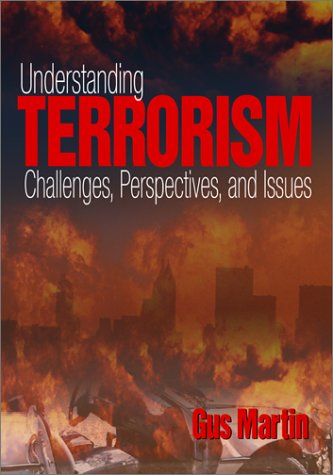

Understanding terrorism challenges, perspectives, and issues Gus Martin.
Detalles de publicación: Thousand Oaks Sage Publications c2003.Descripción: 1 v. (various pagings) ill., maps 26 cmISBN:- 0761926151 (cloth)
- 076192616X (pbk.)
- 303.625 M3791u 21
- HV6431 .M367 2003
| Imagen de cubierta | Tipo de ítem | Biblioteca actual | Biblioteca de origen | Colección | Ubicación en estantería | Signatura topográfica | Materiales especificados | Info Vol | URL | Copia número | Estado | Notas | Fecha de vencimiento | Código de barras | Reserva de ítems | Prioridad de la cola de reserva de ejemplar | Reservas para cursos | |
|---|---|---|---|---|---|---|---|---|---|---|---|---|---|---|---|---|---|---|
| Libro | Biblioteca Encarnación Valdés Colección General bev | 303.625 M3791u (Navegar estantería(Abre debajo)) | Disponible | 80000002249228 |
Descripciones mejoradas de Syndetics:
"I am very favorably impressed with this book. The author is well informed and an excellent writer. The recommended readings, Web sites, boxes, tables and the like provide very attractive features. There is an abundance of very good historical and current examples. I would adopt this book for my courses and look forward to its publication."
-- Frank Hagan, Mercyhurst College
The study of terrorism requires a review of the events, ideas, motivations, and histories that result in terrorist acts, as well as an examination of the theories that help explain this volatile behavior. Understanding Terrorism: Challenges, Perspectives, and Issues is a dynamic textbook for students who wish to explore the phenomenon of terrorism past and present. The text begins with a conceptual overview of terrorism, progresses to a focused discussion of the terrorists, investigates the nuances of the terrorist trade, and concludes with a final analysis of modern terrorism.
Understanding Terrorism is a primary source of information about terrorist typologies, the cause of terrorist violence, and responses to terrorism. The content emphasizes key perspectives and identifies critical issues, which also makes it an excellent resource for developing critical thinking on the subject. Accessibly written, each chapter has historical examples, case studies, discussion boxes, and Web exercises.
Features and Benefits:
Comprehensive yet Accessible. The text is written in an engaging style and includes appendixes that present focused information, including a chronology of historical events, a complete glossary, recommended Web sites and a list of relevant documentaries and dramatic films. Compelling. Cases in Point provide a "reality check" for important theoretical concepts discussed in the chapter and Perspectives are boxed topics of special interest for students. Stimulating. Discussion boxes present provocative information and pose challenging questions to promote critical thinking and further debate. Interactive. Web exercises are included for students and instructors to explore and discuss information found on the Internet.
Recommended for undergraduate and graduate students taking terrorism courses in criminal justice, criminology, sociology, political science, and public administration.
Includes bibliographical references and index.
An introduction to terrorism -- The nature of the beast : defining terrorism -- Beginnings : the causes of terrorism -- Terror from above : state terrorism -- Terror from below : dissident terrorism -- Class struggle and national liberation : the terrorist Left -- Race and order : the terrorist Right -- For the faith and profit : religious and criminal terrorism -- Terrorist spillovers : international terrorism -- Tools of the trade : tactics and targets of terrorists -- The Role of the media -- Terrorism in the United States -- Responding to terror : the options -- What next? the future of terrorism.
Tabla de contenidos provista por Syndetics
- Terrorism: A Conceptual Review
- Terrorism: First Impressions
- Chapter Introduction
- The Past as Prologue: Historical Perspectives on Terrorism
- First Considerations: Exploring Definitions, Sources, and Ideologies
- The Morality of Terrorist Violence: Four Quotations
- Terrorism and Criminal Skill: Three Cases in Point
- Terrorist Symbolism: Oklahoma City and September 11, 2001
- Chapter Summary
- The Nature of the Beast: Defining Terrorism
- Chapter Introduction
- Reactionaries and Radicals: Revisiting the Classical Ideological Continuum
- Understanding Extremism: The Foundation of Terrorism
- Defining Terrorism: An Ongoing Debate
- The American Context: Defining Terrorism in the United States
- A Definitional Problem: Perspectives on Terrorism
- The Political Violence Matrix
- Chapter Summary
- Beginnings: The Causes of Terrorism
- Chapter Introduction
- Extreme Convictions: Motives of Terrorists
- Extreme Circumstances: Explanations of Terrorism
- Chapter Summary
- The Terrorists
- Terror From Above: State Terrorism
- Chapter Introduction
- The Problem of Accountability: Monitoring State Terrorism
- The State as Terrorist: A State Terrorism Paradigm
- Violence Abroad: State Terrorism as Foreign Policy
- Violence at Home: State Terrorism as Domestic Policy
- Chapter Summary
- Terror From Below: Dissident Terrorism
- Chapter Introduction
- The Rebel as Terrorist: A Dissident Terrorism Paradigm
- Operational Shifts: The New Morality and the Rise of Terrorist Cells
- Warring Against the State: Antistate Dissident Terrorism
- Warring Against a People: Communal Terrorism
- Chapter Summary
- Violence in the Name of the Faith: Religious Terrorism
- Chapter Introduction
- Primary and Secondary Motives: The Idiosyncratic Quality of Religious Terrorism
- Historical Cases in Point: Fighting, Dying, and Killing in the Name of the Faith
- State-Sponsored Religious Terrorism in the Modern Era
- Dissident Religious Terrorism in the Modern Era
- The Future of Religious Terrorism
- Chapter Summary
- Violent Ideologies: Terrorism from the Left and Right
- Chapter Introduction
- Radicals and Reactionaries: A Comparison
- Left-Wing Ideologies and Activism
- Class Struggle and National Liberation: The Terrorist Left
- Right-Wing Ideologies and Activism
- Race and Order: The Terrorist Right
- Violent Ideologies in the New Era of Terrorism
- Chapter Summary
- Terrorist Spillovers: International Terrorism
- Chapter Introduction
- Defining International Terrorism
- Globalized Revolution: Reasons for International Terrorism
- Globalized Solidarity: International Terrorist Networks
- The New Era of International Terrorism
- Postscript: The "Stateless Revolutionaries"
- Chapter Summary
- Emerging Terrorist Environments: Gender-Selective Terrorism and Criminal Dissident Terrorism
- Chapter Introduction
- Culture and Conflict: Gender-Selected Victims of Terrorist Violence
- Protecting the Enterprise: Criminal Dissident Terrorism
- A Global Problem: Regional Cases of Criminal Terrorism
- Chapter Summary
- The Terrorist Trade
- Tools of the Trade: Tactics and Targets of Terrorists
- Chapter Introduction
- The Purpose: Terrorist Objectives
- The Means: Terrorist Methods
- The Focus: Terrorist Targets
- The Outcome: Is Terrorism Effective?
- Chapter Summary
- The Information Battleground: Terrorist Violence and the Role of the Media
- Chapter Introduction
- Two Perspectives: The Media and Governments
- A New Battleground: The War for the Information High Ground
- The Public's Right to Know: Regulating the Media
- Chapter Summary
- Final Analysis
- The American Case: Terrorism in the United States
- Chapter Introduction
- An Introduction to the American Case
- Background to Terrorism: Leftist Activism and Ideological Extremism in America
- Left-Wing Terrorism in the United States
- Background to Terrorism: Rightist Activism and Ideological Extremism in America
- Right-Wing Terrorism in the United States
- The New Millennium and International Terrorism in the United States
- Chapter Summary
- Responding to Terror: The Options
- Chapter Introduction
- Background: An Overview of Options
- Warlike Operations: Counterterrorism and the Use of Force
- Operations Other Than War: Repressive Options
- Operations Other Than War: Conciliatory Options
- Applying the Rule of Law: Legalistic Options
- Chapter Summary
- What Next? The Future of Terrorism
- Chapter Introduction
- An Overview of Near-Term Projections
- The Future of Terrorism: New Threats in the New Millennium
- Controlling Terrorism: New Challenges for a New Millennium
- Prospects for Terrorism in the United States
- Chapter Summary
- Appendixes
- Glossary
- Index