Existencias
Imagen de cubierta
Tipo de ítem
Biblioteca actual
Biblioteca de origen
Colección
Ubicación en estantería
Signatura topográfica
Materiales especificados
Info Vol
URL
Copia número
Estado
Notas
Fecha de vencimiento
Código de barras
Reserva de ítems
Prioridad de la cola de reserva de ejemplar
Reservas para cursos
Libro
Colección General bev
701.85 B1871b
(Navegar estantería(Abre debajo) )
Disponible
80000002214560
Horario:
lunes a jueves : 8:00 a.m. a 6:00 p.m.
viernes: 8:00 a.m. a 4:00 a.m.
Total de reservas: 0
Descripciones mejoradas de Syndetics:
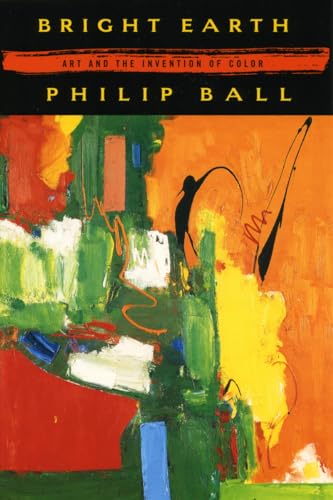
From Egyptian wall paintings to the Venetian Renaissance, impressionism to digital images, Philip Ball tells the fascinating story of how art, chemistry, and technology have interacted throughout the ages to render the gorgeous hues we admire on our walls and in our museums.
Originally published: Great Britain : Penguin, 2001.
Includes bibliographical references (p. 355-360) and index.
Tabla de contenidos provista por Syndetics
Preface 1 The Eye of the Beholder The Scientist in the Studio 2 Plucking the Rainbow The Physics and Chemistry of Color 3 The Forge of Vulcan Color Technology in Antiquity 4 Secret Recipes Alchemy's Artistic Legacy 5 Masters of Light and Shadow The Glory of the Renaissance 6 Old Gold The Revival of an Austere Palette 7 The Prismatic Metals Synthetic Pigments and the Dawn of Color Chemistry 8 The Reign of Light Impressionism's Bright Impact 9 A Passion for Purple Dyes and the Industrialization of Color 10 Shades of Midnight The Problem of Blue 11 Time As Painter The Ever-Changing Canvas 12 Capturing Color How Art Appears in Reproduction 13 Mind Over Matter Color as Form in Modernism 14 Art for Art's Sake New Materials, New Horizons Notes Bibliography Index
Extracto provisto por Syndetics
Chapter One THE EYE OF THE BEHOLDER THE SCIENTIST IN THE STUDIO * * * "The starting point is the study of color and its effects on men." --Wassily Kandinsky (1912), Concerning the Spiritual in Art "Then the man in the blue suit reaches into his pocket and takes out a large sheet of paper, which he carefully unfolds and hands to me. It is covered with Picasso's handwriting--less spasmodic, more studied than usual. At first sight, it resembles a poem. Twenty or so verses are assembled in a column, surrounded by broad white margins. Each verse is prolonged with a dash, occasionally a very long one. But it is not a poem; it is Picasso's most recent order for colors ... "For once, all the anonymous heroes of Picasso's palette trooped forth from the shadows, with Permanent White at their head. Each had distinguished himself in some great battle--the blue period, the rose period, cubism, 'Guernica' ... Each could say: 'I too, I was there ...' And Picasso, reviewing his old comrades-in-arms, gives to each of them a sweep of his pen, a long dash that seems a fraternal salute: 'Welcome Persian red! Welcome emerald green! Cerulean blue, ivory black, cobalt violet, clear and deep, welcome! Welcome!'" --Brassaï (1964), Picasso and Company I believe that in the future, people will start painting pictures in one single color, and nothing else but color." The French artist Yves Klein made this remark in 1954, before embarking on a "monochrome" period in which each work was composed from just a single glorious hue. This adventure culminated in Klein's collaboration with Paris paint retailer Édouard Adam in 1955 to make a new blue paint of unnerving vibrancy. In 1957 Klein launched his manifesto with an exhibition, "Proclamation of the Blue Epoch," that contained eleven paintings in his new blue. By saying that Yves Klein's monochrome art was the offspring of chemical technology, I mean something more than that his paint was a modern chemical product. The very concept of this art was technologically inspired. Klein did not just want to show us pure color; he wanted to display the glory of new color, to revel in its materiality. His striking oranges and yellows are synthetic colors, inventions of the twentieth century. Klein's blue was ultramarine, but not the natural, mineral-based ultramarine of the Middle Ages: it was a product of the chemical industry, and Klein and Adam experimented for a year to turn it into a paint with the mesmerizing quality the artist was seeking. By patenting this new color, Klein was not simply protecting his commercial interests but also hallmarking the authenticity of a creative idea. One could say that the patent was a part of his art. Yves Klein's use of color became possible only when chemical technology had reached a certain level of maturity. But this was nothing new. For as long as painters have fashioned their visions and dreams into images, they have relied on technical knowledge and skill to supply their materials. With the blossoming of the chemical sciences in the early nineteenth century it became impossible to overlook this fact: chemistry was laid out there on the artist's palette. And the artist rejoiced in it: "Praise be to the palette for the delights it offers ... It is itself a 'work,' more beautiful, indeed, than many a work," said Wassily Kandinsky in 1913. The Impressionist Camille Pissarro made the point forcefully in his Palette with a Landscape (1878), a pastoral scene constructed directly on his palette by pulling down the bright colors dotted around its edges. The Impressionists and their descendants--van Gogh, Matisse, Gauguin, Kandinsky--explored the new chromatic dimensions opened up by chemistry with a vitality that has arguably not been equaled since. Their audiences were shocked not only by the breaking of the rules--the deviation from "naturalistic" coloration--but by the sight of colors never before seen on canvas: glowing oranges, velvety purples, vibrant new greens. Van Gogh dispatched his brother to acquire some of the brightest, most striking of the new pigments available and wrought them into disturbing compositions whose strident tones are almost painful to behold. Many people were dumbfounded or outraged by this new visual language: the conservative French painter Jean-Georges Vibert rebuked the Impressionists for painting "only with intense colors." It was a complaint that echoes back through the ages, to be heard whenever chemistry (or foreign trade, which also broadens a culture's repertoire of materials) has made new or superior colors available to painters. When Titian, Henry James's "prince of colorists," took advantage of having the first pick of the pigments brought to the thriving ports of Venice to cover his canvases with sumptuous reds, blues, pinks, and violets, Michelangelo remarked sniffily that it was a pity the Venetians were not taught to draw better. Pliny bemoaned the influx of bright new pigments from the East to corrupt the austere coloring scheme that Rome inherited from classical Greece: "Now India contributes the ooze of her rivers and the blood of dragons and of elephants." That the invention and availability of new chemical pigments influenced the use of color in art is indisputable. As art historian Ernst Gombrich says, the artist "cannot transcribe what he sees; he can only translate it into the terms of his medium. He, too, is strictly tied to the range of tones which his medium will yield." So it is surprising that little attention has been given to the matter of how artists obtained their colors, as opposed to how they used them. This neglect of the material aspect of the artist's craft is perhaps a consequence of a cultural tendency in the West to separate inspiration from substance. Art historian John Gage confesses that "one of the least studied aspects of the history of art is art's tools." Anthea Callen, a specialist on the techniques of the Impressionists, makes a stronger criticism: Ironically, people who write on art frequently overlook the practical side of their craft, often concentrating solely on stylistic, literary or formal qualities in their discussion of painting. As a result, unnecessary errors and misunderstandings have grown up in art history, only to be reiterated by succeeding generations of writers. Any work of art is determined first and foremost by the materials available to the artist, and by the artist's ability to manipulate those materials. Thus only when the limitations imposed by artists' materials and social conditions are taken fully into account can aesthetic preoccupations, and the place of art in history, be adequately understood. One might expect the "craft" aspects of art to suffer less neglect when the use of color is under discussion, for surely the nature of materials should then come naturally to the fore. But it is not always so. Faber Birren admits in his classic History of Color in Painting that "the choice of colors for a palette or palettes is not in any way concerned with chemistry, or with permanence, transparency, opacity, or any of the material aspects of art." This extraordinary omission of the substantial dimension of color is surely the precondition for such absurdities as Birren's assigning cobalt blue to the palette of Rubens and his contemporaries almost two centuries before its invention. In view of the attention that Birren gives to the hues required for a "balanced palette," it is indeed odd how little concerned he is with whether artists of different eras had access to them. PAINT AND THE PAINTER Every painter must confront the question: What is color for ? Bridget Riley, one of the modern artists most concerned with color relationships, has expressed the dilemma very clearly: For painters, colour is not only all those things which we all see but also, most extraordinarily, the pigments spread out on the palette, and there, quite uniquely, they are simply and solely colour. This is the first important fact of the painter's art to be grasped. These bright and shining pigments will not, however, continue to lie there on the palette as pristine colours in themselves but will be put to use--for the painter paints a picture, so the use of colour has to be conditioned by this function of picture making ... The painter has two quite distinct systems of colour to deal with--one provided by nature, the other required by art--perceptual colour and pictorial colour. Both will be present and the painter's work depends upon the emphasis they place first upon the one and then upon the other. This is not a contemporary conundrum but one that has confronted artists of all eras. And yet there is something missing from Riley's formulation of the artist's situation. Pigments are not "simply and solely colour" but substances with specific properties and attributes, not least among them cost. How is your desire for blue affected if you have just paid more for it than for the equivalent weight in gold? That yellow looks glorious, but what if its traces on your fingertips could poison you at your supper table? This orange tempts like distilled sunlight, but how do you know that it will not have faded to dirty brown by next year? What, in short, is your relationship with the materials? Raw color supplies more than a physical medium from which artists can construct their images. "Materials influence form," said American artist Morris Louis in the 1950s; but influence is too weak a word when we are faced with the explosive vibrancy of Titian's Bacchus and Ariadne (1522-1523), Ingres's Odalisque with a Slave (1839-1840), or Matisse's Red Studio (1911). This is art that follows directly from the impact of color, from possibilities delimited by the prevailing chemical technology. But although technology made Yves Klein's monochromes possible for the first time, it would be meaningless to suggest that Rubens did not paint them because those colors were not available to him. It is equally absurd to suppose that, but for a technical knowledge of anatomy and perspective and the chemical prowess to extend the range of pigments, the ancient Egyptians would have painted in the style of Titian. Use of color in art is determined at least as much by the artist's personal inclinations and cultural context as by the materials at hand. So it would be a mistake to assume that the history of color in art is an accumulation of possibilities proportional to the accumulation of pigments. Every choice an artist makes is an act of exclusion as well as inclusion. Before we can gain a clear understanding of where technological considerations enter the decision, we must appreciate the social and cultural factors at work on the artist's attitudes. In the end, each artist makes his or her own contract with the colors of the time. LEONARDO'S QUEST Ernst Gombrich asserts that "art is altogether different from science," but the reason he gives will bring a rueful smile to the lips of many a scientist: "Art itself can hardly be said to progress in the way in which science progresses. Each discovery in one direction creates a new difficulty somewhere else." One can see that Gombrich never dabbled in science. Exploring the link between art and science is back in fashion, but the debate is dominated by the supposition of cognate ideas and sources of inspiration. Artists of all persuasions today may be found mining the rich seam of association that crystallizes from our genetic inheritance, just as one can draw analogies between relativity and Cubism, between quantum mechanics and the works of Virginia Woolf. This is all well and good insofar as it speaks of the much-needed cultural assimilation of scientific ideas (albeit commonly in a distorted or half-digested form). But it appears that we are happier in the realm of the intellectual than that of the tangible. Yet this Cartesian-like division of material and mind has not always reflected the attitude of the practicing artist. It is only in the past half-century or so that every conceivable subdivision and admixture of the rainbow has been available in off-the-shelf tubes. Until the eighteenth century, most artists ground and mixed their own pigments or at least had this process conducted in their studios. The almost sensual pleasure for the material component of color evinced by medieval craftsmen like the Italian Cennino Cennini demonstrates that artists of his time were on intimate terms with their paints and possessed some considerable skill as practical chemists. Moreover, before the Age of Reason, the distinction between art and science was not synonymous with that between intuition and rationality. In medieval times, men of science were chroniclers of antique knowledge and theory--a practice that did not necessarily require an inquiring mind. "Art," by contrast, implied technical or manual skill, and a chemist was as much an artist as a painter was. The artist was valued not for his imagination, passion, or inventiveness but for his ability to do a workmanlike job. This was the world in which Leonardo da Vinci lived and worked. Vladimir Nabokov once said that he would be more interested in C. P. Snow's famous "Two Cultures" debate if their disjunction did not seem to him more of a ditch than an abyss. Leonardo barely seemed to notice so much as a ditch. The ease with which he passed between his roles as artist, technologist, and natural philosopher remains remarkable even when we remember that these distinctions were by no means as rigid during the Renaissance as they are today. Scholarly circles in Leonardo's fifteenth-century Florence were alive with discussion about the role of reason, geometry, and mathematics in art. Leonardo himself was a firm advocate of the need for the artist to imitate nature as exactly as possible, which entailed learning the mathematical rules that governed nature: "Those who devote themselves to [artistic] practice without science are like sailors who put to sea without a rudder or compass and who can never be certain where they are going." Yet how readily we see Leonardo's boundary-straddling through modern eyes. In stressing the importance of science in art, Leonardo had an agenda that was very much a product of its time. By emphasizing the role of mathematics, he attempted to elevate the status of painting to a liberal art, alongside geometry, music, rhetoric, and astronomy. These arts were those deemed worthy of serious intellectual study at the universities, whereas painting had been regarded since the Middle Ages as a craft, a lowly manual skill. Such activities had in the classical age often been performed by slaves, and painters of Leonardo's time were desperate to throw off this stigma. By arguing for the acceptance of painting as a liberal art, they sought to advance their own social standing. The artists would plead their cause by pointing out that many great men of antiquity had shared their trade and that kings and (more recently) popes had conferred favor on them. In his book Della pittura ( On Painting, 1435), the Florentine architect and artist Leon Battista Alberti (1404-1472) reminded his readers that the number of painters and sculptors was enormous in those days, when princes and people, and learned and unlearned alike, delighted in painting ... Eventually Paulus Aemilius and many other Roman citizens taught their sons painting among the liberal arts in the pursuit of the good and happy life. The excellent custom was especially observed among the Greeks that free-born and liberally educated young people were also taught the art of painting together with letters, geometry and music. Leonardo, Alberti, and their fellow painters questioned how poetry could be accepted as a liberal art while the creation of beautiful images in paint rather than in words was not. "Write up in one place the name of God," said Leonardo, "and put a figure representing him opposite, and see which will be the more reverenced." The artists' cause demanded that they dissociate themselves from craftsmen and ally their skills with mathematics and abstract thought. "Painting," said Alberti, "was honoured by our ancestors with this special distinction that, whereas all other artists were called craftsmen, the painter alone was not counted among their number." This could not but have encouraged artists to downplay the material aspects of painting, such as the creation and grinding of pigments. In turn, this surely contributed to the desire of the Florentine painters to emphasize drawing and line (disegno) above the use of color (colore) , initiating a dispute that lasted for centuries. Dismissive comments such as those of Equicola in the sixteenth century could only have egged them on: "Painting has no other concern except with copying nature with various appropriately chosen colors." By the late fifteenth century, Leonardo and his fellow painters had largely won their battle, but at the cost of simply reinforcing the bigotry that they inherited from classical times. Nowhere does Leonardo challenge the underlying hierarchy that values the intellectual over the manual. Instead, he seeks to relocate the craft of the medieval painter on an abstract plane. Thus did art begin to fragment into the "pure" and the "applied," a distinction not seriously challenged until the nineteenth century. In The Two Paths (1859), John Ruskin deplores art's own "two cultures" and argues that decorative art and craft should not be regarded as "a degraded or separate kind of art." With William Morris and others, Ruskin tried to reunite the craftsperson with the fine artist in the Arts and Crafts movement. It is not clear that they enjoyed much success: Art Nouveau came and went, but artistic elitism remains. CHEMISTRY AND ART The relation of painting to the liberal arts in Leonardo's time was wholly analogous to the standing of chemistry in relation to natural philosophy, or what we would now call science. Those who pursued the chemical arts, who dwelt in smoky laboratories and wrought useful things, were excluded from the lofty halls of academic science. Science historian Lawrence Principe says of this prescientific chemistry, or "chymistry": It has long been recognized that one of the "problems" of chymistry before the eighteenth century was its status as a practical or technical art rather than as a branch of natural philosophy. The low status of chymistry as determined by its use amongst low technical appliers militated against its acceptance by many natural philosophers. Thus the Anglo-Irish chemist Robert Boyle, in his polemic The Sceptical Chymist (1665), denounces the ignorance of the "vulgar chymists," including not only the out-and-out cheats who sought to profit from faked alchemical transformations but also the "laborants" such as the dyers, distillers, and apothecaries who lacked theoretical knowledge. Leonardo had nothing at all to gain by aligning his cause with such a crowd, and so there is good reason for him to gloss over the chemical aspects of art. That cannot, however, excuse the persistent perception of unseemliness in the idea that science provides art not only with concepts but also with materials. The snobbery and ignorance apparent in the words of the Bauhaus architect Le Corbusier (Charles-Édouard Jeanneret) and his collaborator Amédée Ozenfant in 1920 are breathtaking: It is form which comes first, and everything else should be subordinated to it ... Cézanne's imitators were quite right to see the error of their master, who accepted without examination the attractive offer of the color vendor, in a period marked by a fad for color chemistry, a science with no possible effect on great painting. Let us leave to the clothes dyers the sensory jubilations of the paint tube. Let's not be too distracted by the absurdity of the suggestion that Cézanne--not the Impressionists or the Fauves but Cézanne!--was an undiscerning dauber of raw color. What is more telling is the way that Le Corbusier denigrates manual skills and delight in substance in favor of "form" and abstract space. This passage could almost have been written by the most bigoted of late-sixteenth-century Italian scholars praising disegno over colore . To deny that color chemistry can have any possible effect on "great painting" is, in the end, to claim that great art is all in the head and cheapened by the sad necessity to reconstruct it from mere matter. The connection to chemistry was perhaps deemed less distasteful in the nineteenth century, when chemists enjoyed unrivaled respectability (even Goethe used their metaphors). An anonymous writer on artistic technique in 1810 says cautiously: "Chemistry is to painting what anatomy is to drawing. The artist should be acquainted with them but not bestow too much time on either." Yet even this much may be seen as a swan song to the era when the painter was of necessity something of a chemist, when a training in art required at least as great an attention to the mechanical and practical aspects as to the aesthetic and intellectual. By the end of the nineteenth century, the artist was wholly reliant on scientifically adept professionals--"colormen" to attend to the chemical aspects of their profession. One consequence of this rift is that the colors of some works of that period have weathered less well than the jewel-like fifteenth-century paintings of Jan van Eyck. Chemistry is a topic that strikes fear into many a heart, and there seems little point in seeking to evade that fact. Unusual among artists, students of ceramics are one group who still must learn some real chemistry--the whole package: balanced equations, the periodic table, atomic weights, and so forth. In my experience, this does not make them feel any better about it. There appears to be something intimidating about the dizzying varieties in which matter is composed from elemental blends and, if we are honest about it, something vaguely ominous and unsettling about the gray metallic minarets and industrial pipelines within which these blends are concocted today. It is a challenge to the imagination to connect these ugly factories and alien or unsettling names--cadmium, arsenic, antimony--with the stuff that, smeared over canvas, leaves us breathless in art galleries. Can such a villain (and the chemical industry's transgressions are not all imaginary) be responsible for this beauty? The truth--a dirty truth, if you will--is that new colors for artists have long been a by-product of industrial chemical processes that reach out to a much wider market. Without the engine of commerce to drive it, the manufacture of these new pigments would simply have not been viable. Artificial copper blues, or "verditers," the principal cheap alternatives to expensive blue pigments from the fifteenth to the eighteenth century, were a side product of silver mining. They were largely replaced by Prussian blue, produced primarily for the massive textile-dyeing industry rather than the tiny market in artists' colors. The Mars colors (artificial iron oxides) could not have been made without the availability of cheap sulfuric acid, which was manufactured primarily as a textile bleach. The pigment known as patent yellow was an offshoot of the soda industry, and the manufacture of chrome yellow was stimulated by its use in cotton printing. Textile dyeing also led to a better understanding of the use of metals for the fixing (mordanting) of dyes, which then drove improvements in the preparation of "lake" pigments in the early nineteenth century. The almost ubiquitous white pigment of the twentieth century, titanium dioxide, is produced almost entirely for commercial paints--the amount diverted to artists' materials is trivial. (Continues...) Excerpted from BRIGHT EARTH by Philip Ball. Copyright © 2001 by Philip Ball. Excerpted by permission. All rights reserved. No part of this excerpt may be reproduced or reprinted without permission in writing from the publisher.
Reseñas proporcionadas por Syndetics
Library Journal Review
Trained as a chemist and physicist, British science writer Ball (Life's Matrix: A Biography of Water) here examines the physics of artists' pigments, from antiquity to the present and just beyond. He looks at the basic structures of pigments available to artists and at the art these pigments made possible (or not) at any given time. It is refreshing to see art, chiefly paintings, viewed by someone with a starting point outside of traditional art history or even the new art history. But the topic is complex, and Ball's sometimes unclear writing style will limit full access even to readers who are well grounded in the discipline. While his insights are frequently fresh, and he has spent time looking at art with the naked eye as well as through a microscope, Ball perhaps values his conclusions too much in isolation. His work is more focused on the actual chemistry than are the few other considerations of this topic available, such as John Gage's Color and Culture or Color and Meaning. Nonetheless, this rare treatment of a central issue in artists' work is recommended for advanced collections. (Illustrations not seen.) Jack Perry Brown, Art Inst. of Chicago Lib. (c) Copyright 2010. Library Journals LLC, a wholly owned subsidiary of Media Source, Inc. No redistribution permitted.
Publishers Weekly Review
British science popularizer Ball (Stories of the Invisible; Life's Matrix) is part of the excellent new breed of explainers who produce imaginative and vivid prose in magazines like Nature and New Scientist. With academic degrees in chemistry and physics, Ball is also coordinator of an offbeat theater company called Homunculus. Here he applies his considerable energies to the study of how color developed in art and science from ancient history to the present. He has clearly spent time looking at art, and his range over these 14 chapters encompasses prehistory, Tintoretto and Gauguin. What painters have produced over time, Ball shows, has always been connected to the colors available to them. Major styles of painting, from the Venetian Renaissance to French impressionism, can be associated with innovations in pigment manufacture. Scientific discoveries, business imperatives and the history of art are all linked via colors on the painter's palette. In an intriguing chapter on the color in art restorations, for example, he notes, "I have often felt mystified at why Van Gogh's `Sun Flowers' commands such high regard it seems a drab, lackluster piece, uncharacteristic of the artist. But that is because we are not seeing what the artist painted. Those dirty ochres were once bright." Boasting a full and useful bibliography, this book even ventures some predictions about artists' use of color in the future, such as "pigments that change hue as we change our viewing angle." Readers will find the pigments here bright, varied and attractive. (Feb.) Forecast: A good bet for the scientifically inclined who want a grounded entry point to the arts, this book will also stretch out to art fans who want writing well-versed in art's physical bases. It's a rare example of a crossover study where an author really seems to grasp both domains. (c) Copyright PWxyz, LLC. All rights reserved
Booklist Review
Chemist, physicist, and gifted science writer Ball told the story of water in Life's Matrix [BKL My 15 00] and now takes an unusually tangible approach to art history by decanting the science and history of paint making. As he chronicles in great and fluent detail the evolution of color theory and technology that made possible everything from cave paintings to the masterpieces of Raphael and Matisse, Ball adeptly explains how the materials at hand in any given era influenced its aesthetics. Why was blue such a challenge in antiquity, purple so coveted? How did advances in pigment making inspire Renaissance painters to try to be "true to nature" ? Why is color so controversial? How did the industrialization of paint making and the sudden availability of myriad synthetic colors affect twentieth-century painting? What did color mean to Leonardo, Michelangelo, Delacroix, Turner, van Gogh, Klee, and Rothko? By concentrating on what paintings are made of and how they're made, Ball celebrates the way "technology opens new doors for artists" and the breathtaking results. Donna Seaman
Notas de autor provistas por Syndetics
Philip Ball majored in chemistry at the University of Oxford and received a Ph.D. in physics from the University of Bristol. He is now a writer and a consulting editor for Nature He lives in London