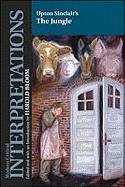

Upton Sinclair's The jungle edited and with an introduction by Harold Bloom.
Series Modern critical interpretationsDetalles de publicación: Philadelphia Chelsea House Publishers c2002.Descripción: vii, 176 p. 25 cmISBN:- 0791063410 (alk. paper)
- 813.52 U71 21
- PS3537.I85 J973 2002
| Imagen de cubierta | Tipo de ítem | Biblioteca actual | Biblioteca de origen | Colección | Ubicación en estantería | Signatura topográfica | Materiales especificados | Info Vol | URL | Copia número | Estado | Notas | Fecha de vencimiento | Código de barras | Reserva de ítems | Prioridad de la cola de reserva de ejemplar | Reservas para cursos | |
|---|---|---|---|---|---|---|---|---|---|---|---|---|---|---|---|---|---|---|
| Libro | Biblioteca Encarnación Valdés Colección General bev | 813.52 U71 (Navegar estantería(Abre debajo)) | Disponible | 80000002203522 |
Descripciones mejoradas de Syndetics:
A critical overview of the work features the writings of Morris Dickstein, Timothy Cook, R.N. Mookerjee, Emory Elliott, Michael Brewster Folsom, and other scholars.
Includes bibliographical references (p. 163-165) and index.
Introduction / Harold Bloom -- The muckraker / Jon A. Yoder -- Upton Sinclair's escape from The jungle: the narrative strategy and suppressed conclusion of America's first proletarian novel / Michael Brewster Folsom -- Introduction to The jungle / Morris Dickstein -- Upton Sinclair's The jungle and Orwell's Animal farm: a relationship explored / Timothy Cook -- Muckraking and fame: The jungle / R. N. Mookerjee -- Afterword to The jungle / Emory Elliott -- The call of the wild and The jungle: Jack London's and Upton Sinclair's animal and human jungles / Jacqueline Tavernier-Courbin -- What a beating feels like: authorship, dissolution and masculinity in Sinclair's The jungle / Scott Derrick -- The two lives of Jurgis Rudkus / Matthew J. Morris.
Extracto provisto por Syndetics
Reseñas proporcionadas por Syndetics
Library Journal Review
This angry novel created a furor when it was originally published in 1906. The author painfully details the sorrows of a Lithuanian immigrant family working in Chicago's meat-packing plants during the bad old days before worker's compensation and disability, unemployment insurance, social security, fair labor practices, and court-appointed lawyers. In addition to losing their home, the family endure the deaths of a grandfather, an uncle, a child, a mother and her second child (in childbirth), the older children (to the streets), and finally the cherished firstborn son. By exposing the horribly unsanitary practices in the plants, this novel prompted federal legislators to protect the public from unsafe meat. While this story is emotionally draining to listen to, the audio version provides an excellent production of a classic novel. Reader George Guidall turns in another fine performance. Recommended.-Luana Ellis, Jamestown Community Coll. Lib., Olean, N.Y. (c) Copyright 2010. Library Journals LLC, a wholly owned subsidiary of Media Source, Inc. No redistribution permitted.School Library Journal Review
Gr 6-12-The video provides background information as well as video clips of Upton Sinclair's The Jungle. Initially Sinclair had published an article in the newspaper, Appeal to Reason. Editors asked him to do additional research on labor in the meat industry. Disguised as a worker, Sinclair was appalled at what he discovered. He combined the tragedies he found into those experienced by one fictional family. The novel, as well as Sinclair's continued fight, resulted in the Meat Inspection Act of 1906. In addition to a brief description of the book's characters and plot, the program gives biographical information about Sinclair. Commentary by consumer and industry advocates as well as labor historians explain why the book had such a major impact. The use of film clips and "snapshots" is well done. Lots of valuable information is packed into a short time, but is more than cursory. Discussion questions appear onscreen at the end of the video. It could be used prior to a class reading of The Jungle or in classes in American history at the secondary level where muckraking is covered.-Kathy Akey, Clintonville Senior High School, WI (c) Copyright 2010. Library Journals LLC, a wholly owned subsidiary of Media Source, Inc. No redistribution permitted.Notas de autor provistas por Syndetics
Upton Sinclair, a lifelong vigorous socialist, first became well known with a powerful muckraking novel, The Jungle, in 1906. Refused by five publishers and finally published by Sinclair himself, it became an immediate bestseller, and inspired a government investigation of the Chicago stockyards, which led to much reform. In 1967 he was invited by President Lyndon Johnson to "witness the signing of the Wholesome Meat Act, which will gradually plug loopholes left by the first Federal meat inspection law" (N.Y. Times), a law Sinclair had helped to bring about. Newspapers, colleges, schools, churches, and industries have all been the subject of a Sinclair attack, analyzing and exposing their evils. Sinclair was not really a novelist, but a fearless and indefatigable journalist-crusader. All his early books are propaganda for his social reforms. When regular publishers boycotted his work, he published himself, usually at a financial loss. His 80 or so books have been translated into 47 languages, and his sales abroad, especially in the former Soviet Union, have been enormous.(Bowker Author Biography)