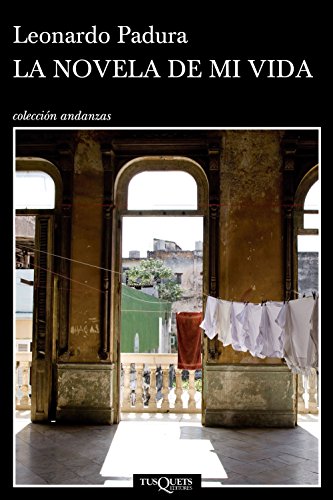
Imagen de portada de Amazon
Imagen de Amazon.com
Imagen de cubierta Syndetics
Portada de Syndetics
Imagen de OpenLibrary

La novela de mi vida Leonardo Padura.

Por: Series Coleccion Andanzas ; 470Detalles de publicación: Barcelona Tusquets Editores 2002.Edición: 1. edDescripción: 345 p. 23 cmISBN:
  • 8483101998
Tema(s): Clasificación CDD:
  • Cu 863.64 P125n 21
Clasificación LoC:
  • PQ7390.P32 N68 2002
Valoración
    Valoración media: 0.0 (0 votos)
Existencias
Imagen de cubierta Tipo de ítem Biblioteca actual Biblioteca de origen Colección Ubicación en estantería Signatura topográfica Materiales especificados Info Vol URL Copia número Estado Notas Fecha de vencimiento Código de barras Reserva de ítems Prioridad de la cola de reserva de ejemplar Reservas para cursos
Libro Biblioteca Encarnación Valdés Colección General bev Cu 863.64 P125n (Navegar estantería(Abre debajo)) Disponible 80000002164583
Total de reservas: 0

Descripciones mejoradas de Syndetics:

"Delatado a la policia, expulsado de su puesto en la universidad y tras dieciocho anos en el exilio, Fernando Terry decide volver por un mes a La Habana, atraido por la posibilidad de dar al fin con la autobiografia desaparecida, La novela de mi vida, del "

Reseñas proporcionadas por Syndetics

Publishers Weekly Review

A Cuban literary critic, scriptwriter, and journalist, Padura is known for his award-winning series of detective novels, Las cuatro estaciones (The Four Seasons). In the latest of his mystery novels he dwells on the famous Cuban patriot and poet Jos Maria Heredia (1803-39) and on Fernando Terry, a fictional Cuban professor exiled in Spain who returns to Cuba prompted by the recent discovery of proof that Heredia had produced an autobiographical novel. Padura follows three plot lines: Heredia's short, convoluted life, which forced him into unwanted exile in the United States and Mexico; his son's efforts to hide the novel and protect his father's reputation; and Terry's search for political asylum. Compared with Heredia's, though, Terry's reasons for seeking political asylum seem bland and devoid of historical analysis. Nevertheless, Padura's original approach to the poet's biography and his revisionist reading of the role slavery played during Cuba's struggle for political freedom will appeal to Latin Americanists. The novel also brings color to accounts of Cuba's premier thinkers and political leaders, such as Domingo del Monte and Jos Antonio Saco, who, like Terry, found themselves involved in a convoluted political scene. Latino readers will also find Padura's insightful analysis of Heredia's tribulations in exile interesting. Recommended for bookstores and libraries with a Cuban-American collection. Rafael Ocasio, Agnes Scott Coll., Decatur, GA (c) Copyright PWxyz, LLC. All rights reserved
Compartir
logopucpr-y-vive

Contáctanos

¡Queremos saber de ti!

Tel. 787.841.2000 Ext. 1801

bibliotecavaldes@pucpr.edu

⁣Búscanos en las redes

© 2026 Desarrollado por Ignite Online • All Rights Reserved • Powered by Koha.