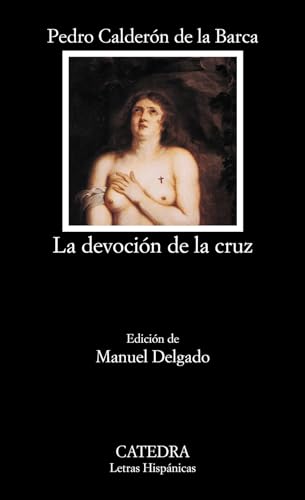

La devoción de la cruz Pedro Calderón de la Barca ; edición de Manuel Delgado.
Series Letras hispánicas ; 489Detalles de publicación: Madrid Ediciones Cátedra 2000.Descripción: 269 p. ill. 18 cmISBN:- 843761841X
- 862/.3 21
- PQ6287 .D4 2000
| Imagen de cubierta | Tipo de ítem | Biblioteca actual | Biblioteca de origen | Colección | Ubicación en estantería | Signatura topográfica | Materiales especificados | Info Vol | URL | Copia número | Estado | Notas | Fecha de vencimiento | Código de barras | Reserva de ítems | Prioridad de la cola de reserva de ejemplar | Reservas para cursos | |
|---|---|---|---|---|---|---|---|---|---|---|---|---|---|---|---|---|---|---|
| Libro | Biblioteca Encarnación Valdés Colección General bev | 862 C146dd 2000 (Navegar estantería(Abre debajo)) | Disponible | 80000002128273 |
Descripciones mejoradas de Syndetics:
La devocion de la cruz refleja y sintetiza, mejor que muchas otras obras de la epoca, la cultura de la Espana del Barroco y las convenciones teatrales del siglo XVII. Esta edicion restaura el texto mas cercano al autor y recrea el sistema estetico, cultural e ideologico, asi como la forma de representar, de la epoca.
Includes bibliographical references (p. 111-121).
Notas de autor provistas por Syndetics
Pedro Calderón de la Barca was born in Madrid, Spain on January 17, 1600. He was educated at the Jesuit College in Madrid. He was a dramatist, poet and writer of the Spanish Golden Age.He wrote more than 120 plays and over 70 allegorical religious plays with subjects from mythology and the Old and the New Testaments. Calderón's debut as a playwright was Amor, Honor y Poder, performed at the Royal Palace. His other plays include La Selva Confusa, Los Macabeos, El Magico Prodigioso, El Alcalde de Zalamea, La Vida Es Sueno, and La Estatua de Prometeo. Calderón gained popularity in the court, and was made a knight of the order of Santiago by Philip IV, who had already commissioned from him a series of plays for the royal theatre in the Buen Retiro palace.
Calderón became a tertiary of the order of St Francis in 1650, and then finally joined the priesthood. He was ordained in 1651, and became a priest at San Salvador at Madrid. He was appointed honorary chaplain to Philip IV in 1663, and continued as chaplain to his successor. In his eighty-first year he wrote his last secular play, Hado y Divisa de Leonido y Marfisa, in honor of Charles II's marriage to Maria Luisa of Orléans. He died on May 25, 1681.
(Bowker Author Biography)