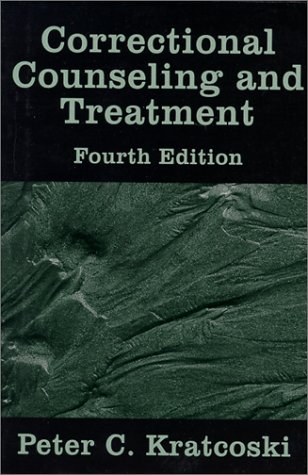

Correctional counseling and treatment Peter C. Kratcoski.
Detalles de publicación: Prospect Heights, Ill. Waveland Press c2000.Edición: 4th edDescripción: xiii, 698 p. ill. 23 cmISBN:- 1577660870
- 365.66 K899c4 21
- HV9304 .K7 2000
| Imagen de cubierta | Tipo de ítem | Biblioteca actual | Biblioteca de origen | Colección | Ubicación en estantería | Signatura topográfica | Materiales especificados | Info Vol | URL | Copia número | Estado | Notas | Fecha de vencimiento | Código de barras | Reserva de ítems | Prioridad de la cola de reserva de ejemplar | Reservas para cursos | |
|---|---|---|---|---|---|---|---|---|---|---|---|---|---|---|---|---|---|---|
| Libro | Biblioteca Encarnación Valdés Colección General bev | 365.66 K899c4 (Navegar estantería(Abre debajo)) | c.2 | Disponible | 80000002542853 | |||||||||||||
| Libro | Biblioteca Encarnación Valdés Colección General bev | 365.66 K899c4 (Navegar estantería(Abre debajo)) | Disponible | 80000002121658 |
Descripciones mejoradas de Syndetics:
Presents information on treatment techniques in wide use in American corrections, both in the juvenile justice system and with adults, in institutional and community settings. This latest edition discusses current research in areas including anger management, juvenile offenders, mediation, and the characteristics and unique problems of people who work in corrections. The author is a social worker and Kent State U. criminologist. Annotation c. Book News, Inc., Portland, OR (booknews.com)
Includes bibliographical references.
Introduction -- Evaluation of correctional treatment -- Correctional personnel -- Crime prevention, restorative justice, and diversion -- Classification for correctional treatment -- Casework counseling and crisis intervention -- Reality therapy and responsibility training -- Behavior modification -- Group counseling in corrections -- Special areas of correctional treatment -- Correctional treatment: past, present and future.
Tabla de contenidos provista por Syndetics
- Preface(p. xi)
- Introduction: The Scope and Purposes of Correctional Treatment(p. 1)
- Section I Evaluation of Correctional Treatment(p. 9)
- 1. Evaluating Interventions with Violent Offenders: A Guide for Practitioners and Policymakers(p. 16)
- 2. Evaluating Intensive Supervision Probation/Parole: Results of a Nationwide Experiment(p. 37)
- Section II Correctional Personnel: Past, Present, and Future(p. 61)
- 3. The Correctional Worker Concept: Being Connected in the '90s(p. 73)
- 4. Reflections on the Education Factor in the Correction Officer Role(p. 78)
- 5. A New Look at Officers' Role Ambiguity(p. 97)
- 6. Burnout: Avoiding the Consequences of On-the-Job Stress(p. 104)
- Section III Crime Prevention, Restorative Justice, and Diversion(p. 109)
- 7. Day Treatment: Community-Based Partnerships for Delinquent and At-Risk Youth(p. 113)
- 8. What's "New" about the Balanced Approach?(p. 126)
- 9. Communications in a Teen Court: Implications for Probation(p. 161)
- 10. The Mediation Process(p. 179)
- 11. A Manual for Mediators(p. 194)
- 12. Holding Juvenile Offenders Accountable: A Restorative Justice Perspective(p. 212)
- Section IV Classification for Correctional Treatment(p. 229)
- 13. The Functions of Classification Models in Probation and Parole: Control or Treatment-Rehabilitation?(p. 233)
- 14. The Case Management System Experience in Ohio(p. 250)
- 15. Functional Unit Management: An Unsung Achievement(p. 269)
- 16. Case Managing Multiproblem Offenders(p. 276)
- Section V Casework Counseling and Crisis Intervention(p. 291)
- 17. Stages of Counseling(p. 296)
- 18. Recognizing and Utilizing Ethnic and Cultural Diversity in Counseling Approaches(p. 330)
- 19. The Nature of Interviewing(p. 342)
- 20. What Do We Know about Anger Management Programs in Corrections?(p. 350)
- 21. Conflict Resolution: A Primer for Correctional Workers(p. 377)
- Section VI Reality Therapy and Responsibility Training(p. 389)
- 22. Reality Therapy: Issues and a Review of Research(p. 392)
- 23. Probation and Cognitive Skills(p. 411)
- 24. Brief Solution-Focused Work: A Strength-Based Method for Juvenile Justice Practice(p. 420)
- Section VII Behavior Modification(p. 435)
- 25. Behavior Modification: Perspective on a Current Issue(p. 437)
- Section VIII Group Counseling in Corrections(p. 483)
- 26. The Process of Group Counseling(p. 489)
- 27. The Use of Groups(p. 516)
- Section IX Special Areas of Correctional Treatment(p. 535)
- 28. Drug Courts: Issues in Planning and Implementation(p. 545)
- 29. Family Drug Court: Another Permanency Perspective(p. 553)
- 30. Counseling Alcoholic Clients: A Microcounseling Approach to Basic Communication Skills(p. 558)
- 31. Treatment of the Sex Offender(p. 601)
- 32. Northwest Treatment Associates: A Comprehensive Community Based Education and Treatment Program for Adult Sex Offenders(p. 617)
- 33. Treatment in Transition: The Role of Mental Health in Correctional Facilities(p. 634)
- 34. Older Inmates: Special Programming Concerns(p. 648)
- Section X Correctional Treatment: Past, Present, and Future(p. 663)
- 35. Mandatory Literacy(p. 671)
- 36. Home Confinement: A '90s Approach to Community Supervision(p. 677)
- 37. Privatizing Discretion: "Rehabilitating" Treatment in Community Corrections(p. 682)