Imagen de Amazon.com

Portada de Syndetics
Imagen de OpenLibrary
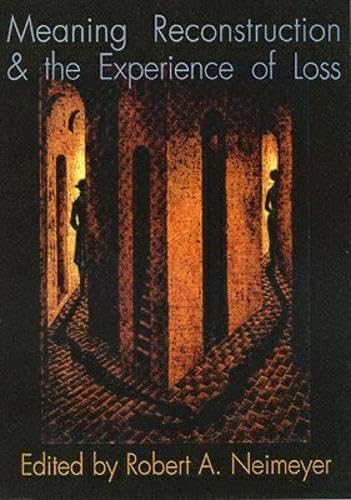
Meaning reconstruction and the experience of loss Robert A. Neimeyer, editor.
Detalles de publicación: Washington, DC American Psychological Association 2000.Descripción: xiii, 359 p. ill. 26 cmISBN:- 1557987424
- 21 155.937 M4831
| Imagen de cubierta | Tipo de ítem | Biblioteca actual | Biblioteca de origen | Colección | Ubicación en estantería | Signatura topográfica | Materiales especificados | Info Vol | URL | Copia número | Estado | Notas | Fecha de vencimiento | Código de barras | Reserva de ítems | Prioridad de la cola de reserva de ejemplar | Reservas para cursos | |
|---|---|---|---|---|---|---|---|---|---|---|---|---|---|---|---|---|---|---|
| Libro | Biblioteca Encarnación Valdés Colección General bev | 155.937 M4831 (Navegar estantería(Abre debajo)) | Disponible | 80000002112061 |
Total de reservas: 0
Descripciones mejoradas de Syndetics:
Debunking the notion that an invariant sequence of stages of grief occurs among all who experience the death of a loved one, this groundbreaking volume clearly demonstrates that highly individual processes of meaning-making are at the heart of grief dynamics. Leading the reader through earlier conceptions of grief and mourning in which successful grieving is viewed as withdrawal of psychic energy from the deceased, the healthy role of continued symbolic bonds is stressed as well as appreciation of life-enhancing growth as one integrates the lessons of loss.
Includes bibliographical references and indexes.
Tabla de contenidos provista por Syndetics
- Contributors(p. ix)
- Preface(p. xi)
- Introduction: Meaning Reconstruction and Loss(p. 1)
- Part I Breaking Ground: Toward a Fresh Theory of Grieving
- Chapter 1 Beyond Decathexis: Toward a New Psychoanalytic Understanding and Treatment of Mourning(p. 13)
- Chapter 2 Relearning the World: Making and Finding Meanings(p. 33)
- Chapter 3 Meaning Making in the Dual Process Model of Coping With Bereavement(p. 55)
- Part II Re-Establishing Relationships: Context and Connection
- Chapter 4 The Inner Representation of the Dead Child in the Psychic and Social Narratives of Bereaved Parents(p. 77)
- Chapter 5 Family Construction of Meaning(p. 95)
- Chapter 6 The Death of a Child With a Developmental Disability(p. 113)
- Part III Transcending Trauma: Growth After Loss
- Chapter 7 The Tormented and the Transformed: Understanding Responses to Loss and Trauma(p. 137)
- Chapter 8 Posttraumatic Growth: The Positive Lessons of Loss(p. 157)
- Chapter 9 Spiritual Resources Following a Partner's Death From AIDS(p. 173)
- Chapter 10 Positive Outcomes of Losing a Loved One(p. 191)
- Part IV Healing Stories: Research and Reflexivity
- Chapter 11 Shattered Beliefs: Reconstituting the Self of the Trauma Counselor(p. 213)
- Chapter 12 Embracing Their Memory: The Construction of Accounts of Loss and Hope(p. 231)
- Chapter 13 Research as Therapy: The Power of Narrative to Effect Change(p. 245)
- Part V Renegotiating the World: Meaning Making in Grief Therapy
- Chapter 14 The Language of Loss: Grief Therapy as a Process of Meaning Reconstruction(p. 261)
- Chapter 15 Construing Stress: A Constructivist Therapeutic Approach to Posttraumatic Stress Reactions(p. 293)
- Chapter 16 Trauma, Grief, and Surviving Childhood Sexual Abuse(p. 311)
- Chapter 17 Videography: Re-Storying the Lives of Clients Facing Terminal Illness(p. 331)
- Subject Index(p. 345)
- Author Index(p. 351)
- About the Editor(p. 359)