Imagen de portada de Amazon
Imagen de Amazon.com
Imagen de cubierta Syndetics
Portada de Syndetics
Imagen de OpenLibrary

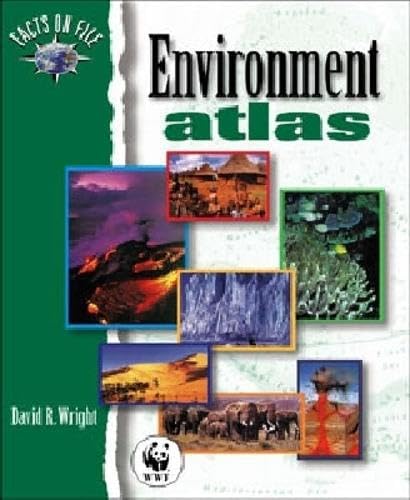
Facts on file : enviromental atlas / David R. Wright.

Por: Detalles de publicación: New York, N.Y. : Facts on File , 1997.Edición: Rev. edDescripción: 96 p. ill. col. maps 30 cmTipo de contenido:
Tipo de medio:
Tipo de soporte:
ISBN:
  • 0816037159
Otro título:
  • Environment Atlas
Tema(s):
Valoración
    Valoración media: 0.0 (0 votos)
Existencias
Imagen de cubierta Tipo de ítem Biblioteca actual Biblioteca de origen Colección Ubicación en estantería Signatura topográfica Materiales especificados Info Vol URL Copia número Estado Notas Fecha de vencimiento Código de barras Reserva de ítems Prioridad de la cola de reserva de ejemplar Reservas para cursos
Libro Biblioteca de Mayagüez Sala de Referencia mb G1046 .G3 W754 1997 (Navegar estantería(Abre debajo)) Disponible 50000002101698
Total de reservas: 0

Descripciones mejoradas de Syndetics:

Combining geography, natural history, and ecology, Facts On File Environment Atlas introduces young readers to the different landscapes that exist in every region of the world--wildscapes, farmscapes, and townscapes. Filled with striking photographs, this title introduces the people, land, oceans, and climate of Earth, as well as global environmental problems, such as desertification, pollution, and the greenhouse effect. Case histories provide young readers with ideas on how to protect and preserve the environment.

Detailed close-ups of more than 20 separate nations and regions throughout the Earth's continents:

Acquaint readers with the area using concise background information Explore the unique environment of each area Reveal the environmental hazards currently affecting each nation or region.

Exceptional full-color maps and striking illustrations of people, places, and animals around the world appear on every page, along with an accessible text and numerous learning aids. Questions throughout the text and end-of-book quizzes reinforce understanding for all young readers and promote awareness of the beauty of the Earth and the dangers which threaten it.

First published in Great Brittain in 1992 by George Philip Limited p.3.

Cartography by Philip's p.3.

Scales differ.

Reseñas proporcionadas por Syndetics

Booklist Review

These atlases, suitable for grade four and up, are revisions of titles first published in Great Britain in 1992. The format of the wildlife and environment volumes are similar: introductory material followed by a continent-by-continent survey and an index. Both books are copiously illustrated with maps, color photos, drawings, and reproductions of postage stamps. Facts On File Environment Atlas was published in association with the World Wide Fund for Nature (the World Wildlife Fund in the U.S.). Earth's environment is presented first in three major areas: wildscapes, farmscapes, and townscapes. Two pages each are devoted to such topics as the world's lands, oceans, climate, and people; the fragility of the earth; pollution; energy resources; and the greenhouse effect. Following these sections, consideration is given to each continent and its specific regions. A vegetation map introduces each continent, and there is a geographic map for each region. Most areas are covered in two pages except for the U.S., which is covered in six pages. Also considered are the Pacific and the Arctic. The volume concludes with a look at the world's environmental future and with an index, which includes only place names. The capsule information is accurate and up to date. Emphasis is on awareness, protection, and conservation. Some human efforts, such as the Aswan High Dam and economic development in China, are presented with opposing viewpoints. Endeavors of the World Wildlife Fund are stressed. Some sidebars with brief facts are labeled Did You Know? Many pages incorporate either a puzzle picture or a special question, answers to which are provided on a page following the index. Some see references are used. The first 20 pages of the Facts On File Wildlife Atlas briefly describe the different types of world wildlife, their habitats, their evolution, and their danger of extinction. The term wildlife refers to both wild animals and wild plants. It does not include those domesticated or introduced to areas by people. The next pages cover, usually in two pages each, specific areas of the world grouped by continent. The larger maps, which introduce each continent, picture the native wild animals. For individual regions there are geographic maps. See references are used in the text, and there is an index to places and an index to plants and animals. There are other atlases designed for children that cover similar ground. The format and general content of the Facts On File Environment Atlas are similar to those in The Endangered World, part of Chelsea House's Using and Understanding Maps series (1993). However, the Facts On File volume has more information on a few subjects, such as the greenhouse effect. Atlas of the Environment (Raintree/Steck-Vaughn, 1993) has a selective group of articles by different contributors showing their viewpoints on environmental matters. An atlas that concentrates on the U.S. is The Scholastic Environmental Atlas of the United States (Scholastic, 1993). The Rand McNally Children's Atlas of World Wildlife (1993) offers briefer information than the Facts On File Wildlife Atlas. The Children's Animal Atlas by David Lambert (Millbrook, 1991) is similar in page format and has many illustrations, but is arranged by habitat instead of geographic region. Though neither Facts On File volume is an in-depth reference, each one offers an attractive, informal introduction. Recommended for school and public libraries that need more material on these subjects.
Compartir
logopucpr-y-vive

Contáctanos

¡Queremos saber de ti!

Tel. 787.841.2000 Ext. 1801

bibliotecavaldes@pucpr.edu

⁣Búscanos en las redes

© 2026 Desarrollado por Ignite Online • All Rights Reserved • Powered by Koha.