Imagen de Amazon.com

Portada de Syndetics
Imagen de OpenLibrary
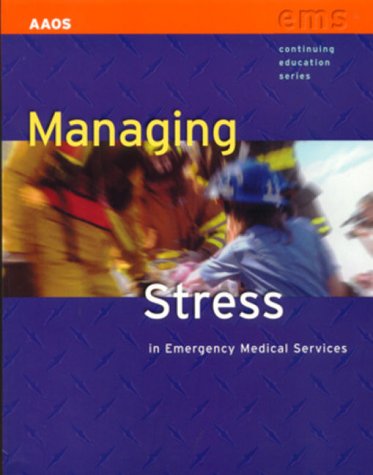
Managing stress in emergency medical services Brian Luke Seaward.
Series Continuing education seriesDetalles de publicación: Sudbury, Mass. Jones and Bartlett Publishers 2000.Descripción: viii, 88 p. col. ill. 28 cmISBN:- 0-7637-1008-3 (softcover)
- 21 362.18 S442m
| Imagen de cubierta | Tipo de ítem | Biblioteca actual | Biblioteca de origen | Colección | Ubicación en estantería | Signatura topográfica | Materiales especificados | Info Vol | URL | Copia número | Estado | Notas | Fecha de vencimiento | Código de barras | Reserva de ítems | Prioridad de la cola de reserva de ejemplar | Reservas para cursos | |
|---|---|---|---|---|---|---|---|---|---|---|---|---|---|---|---|---|---|---|
| Libro | Biblioteca Encarnación Valdés Colección General bev | 362.18 S442m (Navegar estantería(Abre debajo)) | Disponible | 80000002100942 |
Total de reservas: 0
Descripciones mejoradas de Syndetics:
.
Includes bibliographical references (p. 82-84) and index.
Tabla de contenidos provista por Syndetics
- Chapter 1 The Stress of EMS(p. 2)
- A Closer Look at Stress(p. 3)
- Good Stress and Bad Stress(p. 4)
- Acute Stress(p. 4)
- Chronic Stress(p. 5)
- The Stress Response(p. 5)
- Fear: The Flight Response(p. 6)
- Use the Fight or Flight Response for its Intended Purpose(p. 8)
- The Role of the Ego(p. 8)
- Critical Incident Stress Debriefing(p. 8)
- CISD Dynamics During an Incident(p. 9)
- CISD Dynamics After an Incident(p. 9)
- Let's Talk about Burnout(p. 9)
- Stress Strategies(p. 11)
- Identifying Your Stressors
- Looking at Your Job Stress
- Chapter 2 Negative Effects of Stress(p. 13)
- Emotional Stress(p. 14)
- Post-Traumatic Stress Disorder(p. 14)
- Symptoms of PTSD(p. 14)
- Post-Traumatic Stress Relief for EMS Professionals(p. 14)
- Stages of Death and Grieving(p. 15)
- General Fatigue(p. 16)
- Anger and Frustration: The Fight Response(p. 17)
- Boredom(p. 20)
- Low Self-Esteem(p. 20)
- Physical Effects of Stress(p. 22)
- Aches and Pains(p. 23)
- Stomach Troubles(p. 24)
- Nervous Anxiety(p. 24)
- Disease and Illness(p. 25)
- Stress Strategies(p. 26)
- Recognizing Anger
- Appraising Self-Esteem
- Checking Physical Symptoms
- Chapter 3 Effective Coping Skills(p. 30)
- Personal Coping Skills(p. 31)
- Reframing Stressful Thoughts(p. 31)
- Toxic Thoughts(p. 32)
- Comic Relief: Humor Therapy(p. 34)
- Hobbies(p. 35)
- Journal Writing and Art Therapy(p. 36)
- Creative Problem Solving(p. 36)
- Dream Therapy(p. 40)
- Time Management(p. 40)
- Interpersonal Coping Skills(p. 42)
- Communication Skills(p. 42)
- Assertiveness Skills(p. 45)
- Conflict Resolution Skills(p. 47)
- Developing Support Networks(p. 48)
- Stress Strategies(p. 49)
- Reframing a Problem
- Creating Solutions
- Expressing It Without Words
- Writing About It
- Delving into Dreams
- Managing Your Time
- Asserting Yourself
- Identifying Your Support Network
- Chapter 4 Relaxation Techniques(p. 55)
- Physical Relaxation Techniques(p. 56)
- Diaphragmatic Breathing(p. 56)
- Progressive Muscular Relaxation(p. 58)
- Autogenic Training(p. 59)
- Physical Exercise and Nutrition(p. 61)
- Music Therapy(p. 66)
- Other Relaxation Techniques(p. 66)
- Mental Relaxation(p. 67)
- Meditation(p. 67)
- Mental Imagery(p. 69)
- Stress Strategies(p. 72)
- Breathing Clouds
- Relaxing Your Muscles
- Trying Autogenic Training
- Making Exercise Work for You
- Looking at Eating
- Relaxing to Music
- Floating Your Worries Away
- Rising Above Your Burdens
- Creating Mental Images to Relax
- Chapter 5 A Healthier Lifestyle(p. 77)
- The Big Picture(p. 77)
- Purpose in Life(p. 78)
- Letting Go of Stress: How to Maintain a Healthy Lifestyle(p. 78)
- Stress Strategies(p. 81)
- Looking Within
- References and Resources(p. 82)
- Credits(p. 84)
- Index(p. 85)