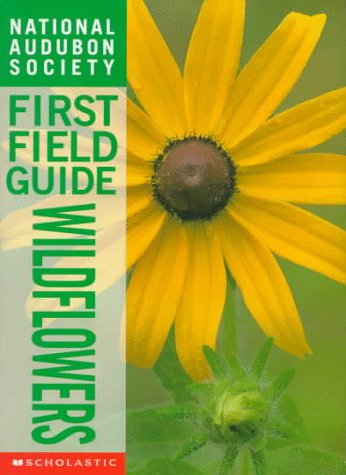
Provides an overview of wildflowers and where they grow, with specific information about individual species.
Provides an overview of wildflowers and where they grow, with specific information about individual species.
Includes bibliographical references (p. 152-153) and index.
Reseñas proporcionadas por Syndetics
School Library Journal Review
Gr 5 Up-These handsome books, illustrated with vibrant, full-color photographs, have a lot to offer, but calling them "first field guides" is somewhat misleading. They assume some previous knowledge and background vocabulary, and are not designed to give users quick reference to found items. Instead, they introduce their respective subjects and offer tips on equipment and observation. "How to look" sections give the basic science behind the fields of study. Then come the actual guides, which contain photographs of 50 common wildflowers or rocks and other similar species or formations. Boxed inserts detail the specific information. In Wildflowers, each entry lists what to look for, leaves, height, when the flower blooms, habitat, range, and cautions (when applicable). For Rocks, the boxed inserts give the mineral composition, texture, color, and environment. Each book concludes with an illustrated glossary; Wildflowers includes pictures of the 50 state flowers. Both titles have current lists for further reading that cover a wide range of reading levels and include Web sites. These are attractive and useful additions, but are not stand-alone field guides, per se.-Kathryn Kosiorek, Cuyahoga County Public Library, Brooklyn, OH (c) Copyright 2010. Library Journals LLC, a wholly owned subsidiary of Media Source, Inc. No redistribution permitted.
Booklist Review
Gr. 4^-6. These books, from the First Field Guide series, offer a great deal of information in a handy format. From the long introductory section in Birds, readers can learn basic facts such as how to tell birds apart and how they fly. The rest of the book consists of two-page spreads on 50 common birds of North America. Similarly, Wildflowers begins with a section that discusses topics such as the parts, names, and habitats of wildflowers, followed by a field guide to 50 common North American species. Large, beautifully colored photos of each bird or plant, accompanied by a few smaller pictures of its kin, make these books visually appealing; the good presentation of information makes them useful as well. Check this issue's Series Roundup for field guides to insects and to rocks and minerals. Solid choices for the school or public library. --Carolyn Phelan