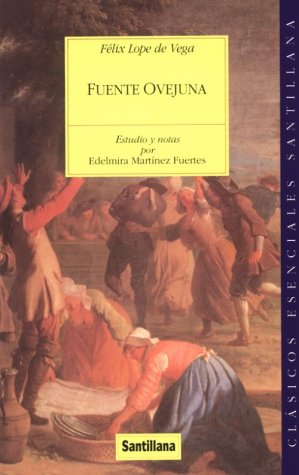
Imagen de Amazon.com

Portada de Syndetics
Imagen de OpenLibrary
Fuente Ovejuna Lope de Vega ; estudio y notas por Edelmira Martínez Fuertes.
Detalles de publicación: Madrid Editorial Santillana, S.A. 1996.Descripción: 127 p. 21 cmISBN:- 84-294-4888-8
- 21 862 V422f 1996
- PQ6439 .F75 1978
| Imagen de cubierta | Tipo de ítem | Biblioteca actual | Biblioteca de origen | Colección | Ubicación en estantería | Signatura topográfica | Materiales especificados | Info Vol | URL | Copia número | Estado | Notas | Fecha de vencimiento | Código de barras | Reserva de ítems | Prioridad de la cola de reserva de ejemplar | Reservas para cursos | |
|---|---|---|---|---|---|---|---|---|---|---|---|---|---|---|---|---|---|---|
| Libro | Biblioteca Encarnación Valdés Colección General bev | 862 V422f (Navegar estantería(Abre debajo)) | 1996 | Disponible | 80000002098716 |
Total de reservas: 0
Descripciones mejoradas de Syndetics:
Fuente Ovejuna (C.1613) is the most famous and frequently performed play by the creator of Spanish theatre, Lope de Vega (1562-1635). Astonishingly for its period, it celebrates the murder in 1476 of a nobleman, the Grand Commander of the Military Order of Calatrava, by the peasants he had oppressed, and their subsequent solidarity under torture. Fuente Ovejuna, however, is less a history lesson or political tract than an optimistic moral fable.
Notas de autor provistas por Syndetics
Lope de Vega was born in Madrid, Spain on November 25, 1562. He was taught Latin and Castilian in 1572-1573 by the poet Vicente Espinel, and the following year he entered the Jesuit Imperial College, where he learned the rudiments of the humanities. He was the author of as many as 1,800 plays and several hundred shorter dramatic pieces. His plays include El Maestro de Danzar, Peribáñez y el Comendador de Ocaña, Fuente Ovejuna, El Caballero de Olmedo, and El Niño inocente de La Guardia. He died on August 27, 1635.(Bowker Author Biography)