
| Imagen de cubierta | Tipo de ítem | Biblioteca actual | Biblioteca de origen | Colección | Ubicación en estantería | Signatura topográfica | Materiales especificados | Info Vol | URL | Copia número | Estado | Notas | Fecha de vencimiento | Código de barras | Reserva de ítems | Prioridad de la cola de reserva de ejemplar | Reservas para cursos | |
|---|---|---|---|---|---|---|---|---|---|---|---|---|---|---|---|---|---|---|
| Libro | Biblioteca Mons. Iñaki Mallona (Arecibo) Colección General ab | 808.83 W286s (Navegar estantería(Abre debajo)) | Disponible | 60000001890208 |
Descripciones mejoradas de Syndetics:
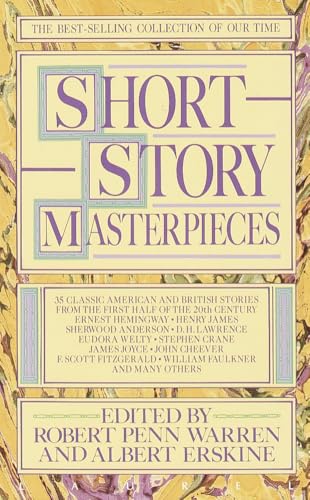
A truly exceptional collection of thirty-five great stories from some of the most celebrated writers of the first half of the twentieth century
Short stories can be funny, pathetic, frightening, uplifting, nostalgic, beautiful--and it is just this variety that makes them the popular and satisfying reading they are. Here are thirty-five of the best stories by British and American writers in the first half of the twentieth century, in an outstanding anthology that ranges in kind from the humor of James Thurber and Ring Lardner to the irony of Ernest Hemingway and James Joyce.
Each story is different from every other--but each bears the stamp of unmistakable greatness, including:
* "The Bride Comes to Yellow Sky" by Stephen Crane
* "The Horse Dealer's Daughter" by D. H. Lawrence
* "Barn Burning" by William Faulkner
* "The Sojourner" by Carson McCullers
* "The Open Window" by Saki
* "Flowering Judas" by Katherine Anne Porter
* "The Boarding House" by James Joyce
* "Soldier's Home" by Ernest Hemingway
* "The Tree of Knowledge" by Henry James
* "Why I Live at the P.O." by Eudora Welty
Editors Robert Penn Warren and Albert Erskine selected stories that broke new ground and challenged the imagination with their style, subject matter, or tone: the unforgettable, enduring works that shaped the literature of our time.
Notas de autor provistas por Syndetics
Ernest Miller Hemingway was born in the family home in Oak Park, Ill., on July 21, 1899. In high school, Hemingway enjoyed working on The Trapeze, his school newspaper, where he wrote his first articles. Upon graduation in the spring of 1917, Hemingway took a job as a cub reporter for the Kansas City Star.After a short stint in the U.S. Army as a volunteer Red Cross ambulance driver in Italy, Hemingway moved to Paris, and it was here that Hemingway began his well-documented career as a novelist. Hemingway's first collection of short stories and vignettes, entitled In Our Time, was published in 1925. His first major novel, The Sun Also Rises, the story of American and English expatriates in Paris and on excursion to Pamplona, immediately established him as one of the great prose stylists and preeminent writers of his time. In this book, Hemingway quotes Gertrude Stein, "You are all a lost generation," thereby labeling himself and other expatriate writers, including F. Scott Fitzgerald, T.S. Eliot, and Ford Madox Ford.
Other novels written by Hemingway include: A Farewell To Arms, the story, based in part on Hemingway's life, of an American ambulance driver on the Italian front and his passion for a beautiful English nurse; For Whom the Bell Tolls, the story of an American who fought, loved, and died with the guerrillas in the mountains of Spain; and To Have and Have Not, about an honest man forced into running contraband between Cuba and Key West. Non-fiction includes Green Hills of Africa, Hemingway's lyrical journal of a month on safari in East Africa; and A Moveable Feast, his recollections of Paris in the Roaring 20s. In 1954, Hemingway won the Nobel Prize in Literature for his novella, The Old Man and the Sea.
A year after being hospitalized for uncontrolled high blood pressure, liver disease, diabetes, and depression, Hemingway committed suicide on July 2, 1961, in Ketchum, Idaho.
(Bowker Author Biography)