Imagen de Amazon.com

Portada de Syndetics
Imagen de OpenLibrary
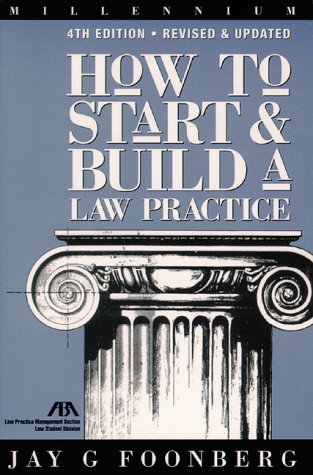
How to start and build a law practice Jay G. Foonberg.
Detalles de publicación: Chicago, Ill. American Bar Association, Law Student Division, Section of Law Practice Management c1999.Edición: Millennium 4th edDescripción: xx, 607 p. 23 cmISBN:- 1570736510
| Imagen de cubierta | Tipo de ítem | Biblioteca actual | Biblioteca de origen | Colección | Ubicación en estantería | Signatura topográfica | Materiales especificados | Info Vol | URL | Copia número | Estado | Notas | Fecha de vencimiento | Código de barras | Reserva de ítems | Prioridad de la cola de reserva de ejemplar | Reservas para cursos | |
|---|---|---|---|---|---|---|---|---|---|---|---|---|---|---|---|---|---|---|
| Libro | Biblioteca de Derecho Mons. Fremiot Torres Oliver Colección General biblioteca derecho | KF 300 .F66 1999 (Navegar estantería(Abre debajo)) | Disponible | 70000000590724 |
Total de reservas: 0
Descripciones mejoradas de Syndetics:
A Classic ABA Bestseller, you'll find 128 chapters packed with techniques for getting started, finding clients and the right location, setting fees, managing your office, maintaining an ethical responsible practice, mazimizing availabe resources.
Includes index.
Tabla de contenidos provista por Syndetics
- Preface to the First and Second Editions(p. xi)
- Preface to the Third Edition(p. xiii)
- Preface to the Millennium Fourth Edition(p. xv)
- Acknowledgments(p. xix)
- Part I Getting Started
- Why Has This Book Been Written?(p. 3)
- Have Confidence--You Can Do It: An Historical Perspective(p. 6)
- Should You Start Your Own Practice? (You Can Do It)(p. 8)
- Should You Work on a Job "for Experience" before Starting Your Practice?(p. 14)
- Being a Contract Lawyer to Get Experience and Money While Building Your Practice(p. 16)
- Earning a Living between Graduation and Opening Your Practice(p. 21)
- Should You Start with Another New Lawyer?(p. 31)
- Practicing with Your Spouse(p. 34)
- Should You Practice Another Business or Profession While Starting Your Law Practice?(p. 35)
- Should You Specialize?(p. 38)
- Naming Your Law Firm(p. 40)
- Sole Practice v. Partnership v. Shared Office(p. 42)
- The Written Business Plan(p. 44)
- Managing Your Student Loan(p. 48)
- Part II Getting Located
- Where Is the Best Place to Open Your Office? (From a Client-Getting Point of View)(p. 55)
- Where Should You Locate Your Office for Your First Year or Two? (From a Cost Point of View)(p. 59)
- Should You Trade "Space for Services"?(p. 62)
- How Do You Get the Best Space Arrangement?(p. 65)
- Practicing in a Law Suite(p. 67)
- Practicing from Your Home(p. 72)
- Part III Getting Equipped
- How Much Cash Do You Need to Start Your Practice?(p. 81)
- How to Get a Rich Relative or Friend to Finance Your Start-up Costs by Offering Tax Advantages(p. 84)
- Checklists of Needs for New Law Office(p. 86)
- Office Supplies and Procedures(p. 90)
- Personal Computers, Word Processing, and Office Technology(p. 99)
- Should You Do Your Own Word Processing?(p. 121)
- Should Your Office Furnishings Be Lavish?(p. 123)
- Announcements, Stationery and Professional Cards, Christmas Cards, and "Mailing Lists"(p. 125)
- Part IV Getting Clients
- How to Handle Friends and Relatives(p. 135)
- How to Market Your Services(p. 138)
- Cost-Effective Media Advertising(p. 140)
- The Importance of Accepting and Promptly Returning Telephone Calls(p. 147)
- Managing Written Communication(p. 151)
- Can You Get Clients from Organizations?(p. 161)
- Cold Calling to Get Clients(p. 162)
- Insurance Claims Adjusters: A Source of Clients(p. 164)
- Shmooze Your Vendors(p. 166)
- How to Accept Personal Injury Cases(p. 168)
- How to Communicate Settlement Offers to Clients(p. 174)
- Can You Get Clients by Running for Political Office?(p. 176)
- Getting Paid Work from Lawyer Referral Services(p. 178)
- Getting Legal Fees and Work from the Government(p. 180)
- Getting Legal Work and Fees from Other Lawyers(p. 182)
- Minority Work and Money(p. 185)
- How to Get More Legal Work from Existing Clients(p. 188)
- How to Recognize and Handle Conflicts of Interest(p. 191)
- How to Keep Clients(p. 199)
- How to Lose Clients(p. 201)
- Cases and Clients That Should Be Turned Down(p. 202)
- The Prospective Client File(p. 206)
- How to Say "No" to a Client or Case(p. 208)
- Damage Control If You Are Fired(p. 213)
- Part V Setting Fees
- The Fee and Representation Letter (The Engagement Letter)(p. 219)
- Engagement Letters, Nonengagement Letters, and Disengagement Letters(p. 225)
- Balancing the Public's Need for Legal Services and the New Lawyer's Need to Eat(p. 230)
- How to Set Your Fees(p. 232)
- Don't Quote Fees or Give Legal Advice over the Telephone to New Clients(p. 239)
- Getting Money Up Front from New Clients(p. 241)
- Cash Fees(p. 243)
- Client Costs(p. 244)
- The Importance of Cash Up Front for Survival (Also Known as "Foonberg's Rule")(p. 246)
- Getting Paid by Client Credit Card(p. 247)
- Financing Your Practice with Bank Credit Cards(p. 249)
- How to Get Cash Up Front to Reduce Bad Debts and Increase Cash Flow and Avoid Going Under(p. 256)
- How to Word Invoices That Clients Are Happy to Pay(p. 258)
- The Importance of Monthly Billing(p. 263)
- Final Billing on Completion of a Matter(p. 265)
- How to Make Clients Happy to Pay Legal Fees by Selling Them Stationery(p. 268)
- How to Make Money by Reading Advance Sheets and Technical Journals(p. 271)
- Typical Client Costs(p. 273)
- Can You or Should You Pay or Receive "Forwarding Fees" or Referral Fees?(p. 274)
- "Bedside Manner" in Setting Fees(p. 278)
- Alternate Dispute Resolution(p. 280)
- When and How to Withdraw from a Nonpaying Matter(p. 282)
- Part VI Managing the Law Office
- Management of the Law Office--General Comments(p. 291)
- Organizing Your Day to Make More Money(p. 292)
- Managing Telephone Communications(p. 297)
- Organizing Your Desk to Make More Money(p. 304)
- How to Keep Time Records to Make More Money and to Preserve Evidence of Work Done(p. 307)
- Getting Ready for Your First Clients(p. 312)
- Typical Court Forms(p. 319)
- Sample Generic Checklists and Forms(p. 325)
- Your First Court Appearances(p. 332)
- How to Interview a Client(p. 339)
- How to Conduct a Meeting(p. 345)
- Preceptors and Internships(p. 349)
- The MacCrate Report(p. 352)
- Negotiating Skills(p. 354)
- How to Maintain Bank Accounts(p. 357)
- How to Maintain a Trust Account to Avoid Disbarment(p. 361)
- Insurance Needs of the New Lawyer(p. 366)
- Don't Forget Taxes and Licenses(p. 374)
- Why You Need a Personnel Manual(p. 376)
- Bookkeeping and Accounting Systems(p. 380)
- The Office Cash Flow Survival Budget(p. 384)
- Paper and Computer Document Management(p. 387)
- Organizing Your Computer Files(p. 392)
- Simple Hard-Copy Filing Systems for the New Lawyer(p. 395)
- When and How to Close a File(p. 400)
- Fondling the Files(p. 404)
- How to Build a Good Form File(p. 410)
- Library Needs and Costs(p. 416)
- How to Buy Law Books (If You Buy Them at All)(p. 429)
- Saving Money on Postage and Express Delivery Services(p. 431)
- Squeezing Extra Hours into the Day to Make More Money(p. 434)
- Timely Delivery of Work(p. 440)
- Should You Use a Telephone Receptionist, Telephone Exchange, Mechanical Answering Device, Telephone Company Service, or Voice Mail?(p. 442)
- Why You Should Use Investigators(p. 444)
- Part VII Ethics and Professional Responsibility
- Professional Responsibility and Practice Management(p. 447)
- Fifty-One Ways to Win or Avoid the Ethics War(p. 450)
- What Are the Consequences of "Violating" the Canons of Professional Ethics, the Code of Professional Responsibility, or the Model Rules of Professional Conduct?(p. 477)
- Ten Rules for Avoiding Disciplinary Complaints(p. 480)
- Practicing Professional Responsibilities(p. 483)
- A Short History of Our Ethics(p. 485)
- The ABA Model Code of Professional Responsibility and the ABA Model Rules of Professional Conduct(p. 487)
- Ten Commandments of Good Trust Accounts(p. 491)
- Part VIII Resources and Advice
- Where to Go for Help(p. 499)
- Getting Free Management Help from Your Local Law Practice Management Advisor(p. 502)
- The Importance of Continuing Education(p. 507)
- The Wheel Has Been Invented(p. 511)
- How to Manage and Collect Accounts Receivable(p. 513)
- Where to Get Cost-Effective Help to Build and Expand Your Practice(p. 520)
- Foonberg's Short Course in Good Client Relations(p. 524)
- The Importance of Doing It Right(p. 528)
- Checklist for Opening Your First Law Office(p. 530)
- Part IX The Foonberg Management Checklist
- The Foonberg Management Checklist(p. 543)
- What Every Law Office Should Have to Be a Functioning Law Office(p. 544)
- Part X Quality of Life
- Quality of Life--Dealing with Difficult People(p. 587)
- Quality of Life for the Lawyer Starting a Practice(p. 589)
- Epilogue: Proof That This Book Works(p. 593)
- Index(p. 595)
- About the Author(p. 607)