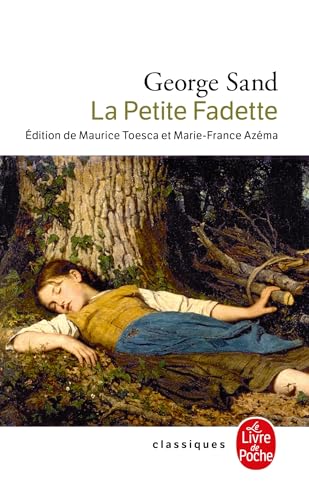

La petite Fadette George Sand.
Series Notre livre club pour la jeunesseDetalles de publicación: Paris Librairie Generale Francaise 1984.Descripción: 277 pISBN:- 2253003743
| Imagen de cubierta | Tipo de ítem | Biblioteca actual | Biblioteca de origen | Colección | Ubicación en estantería | Signatura topográfica | Materiales especificados | Info Vol | URL | Copia número | Estado | Notas | Fecha de vencimiento | Código de barras | Reserva de ítems | Prioridad de la cola de reserva de ejemplar | Reservas para cursos | |
|---|---|---|---|---|---|---|---|---|---|---|---|---|---|---|---|---|---|---|
| Libro | Biblioteca Encarnación Valdés Colección General bev | 843 S213p (Navegar estantería(Abre debajo)) | Disponible | 80000002041559 |
Descripciones mejoradas de Syndetics:
This is an EXACT reproduction of a book published before 1923. This IS NOT an OCR'd book with strange characters, introduced typographical errors, and jumbled words. This book may have occasional imperfections such as missing or blurred pages, poor pictures, errant marks, etc. that were either part of the original artifact, or were introduced by the scanning process. We believe this work is culturally important, and despite the imperfections, have elected to bring it back into print as part of our continuing commitment to the preservation of printed works worldwide. We appreciate your understanding of the imperfections in the preservation process, and hope you enjoy this valuable book.
Notas de autor provistas por Syndetics
George Sand began life as Aurore Dupin, the daughter of a count and a dressmaker. Educated both on her aristocratic grandmother's estate and in a Parisian convent, at 18 she married Casimer Dudevant, a provincial gentleman whose rough temperament was the opposite of her own, and from whom she obtained a separation several years later.At 31 she moved to Paris, where she changed her name and plunged into the bohemian world of French romanticism. Frequently dressed in men's clothing, she participated actively in literary debates, cultural events, and even the revolution of 1848. Sand was friend and correspondent with many of the major artists and writers of her age, including Balzac, Flaubert, and Liszt. Her love affairs with the poet Musset and the composer Chopin were the stuff of legend, chronicled in her own Story of My Life.
Sand's immensely popular novels ranged from sentimental stories of wronged women, to utopian socialist fictions, such as her masterpiece in Consuelo, 1842, to explorations of pastoral themes written when she retired, late in life, to her estate in Berry. Though frequently dismissed as overblown or too sentimental, Sand's fiction has recently undergone a revaluation, emerging as an influential body of women's writing. As both a writer and an intellectual personality, Sand is a central figure in nineteenth-century French cultural life.
George Sand died in 1876
(Bowker Author Biography)