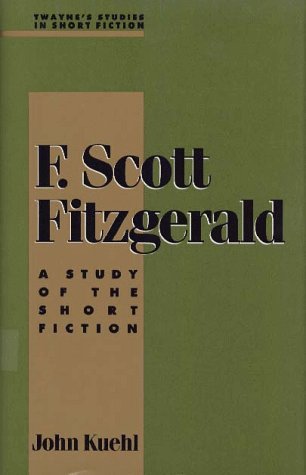
Series Editors: Gary Scharnhorst, University of New Mexico and Eric Haralson, State University of New York, Stony Brook. This is the only series to provide in-depth critical introductions to major modern and contemporary short story writers worldwide. Each volume offers: a comprehensive overview of the artists short fiction-including detailed analyses of every significant story; interviews, essays, memoirs and other biographical materials -- often previously unpublished; a representative selection of critical responses; and a comprehensive primary bibliography, a selected bibliography of important criticism, a chronology of the artists life and works and an index.
Includes bibliographical references (p. 184-192) and index.
Reseñas proporcionadas por Syndetics
CHOICE Review
Editor of The Apprentice Fiction of F. Scott Fitzgerald, 1907-1917 (CH, Jul'65) and coeditor of Dear Scott, Dear Max: The Fitzgerald-Perkins Correspondence (1971), Kuehl (New York University) reviews Fitzgerald's short fiction from earliest efforts at narration and dialogue in "Thoughtbook" (1910-11) through the Pat Hobby stories on which Fitzgerald was working at the time of his death. Kuehl recalls that, though Fitzgerald dismissed stories as hackwork, he was paid increasingly substantial amounts for them, by the Saturday Evening Post alone a total of nearly $200,000. Kuehl divides his study into three sections; the first and longest focuses on the stories; the second is an expanded version of "Scott Fitzgerald's Critical Opinions," originally published in Modern Fiction Studies; and the third consists of excerpts from essays by other critics. Closely examined are the formal elements: point of view, imagery, theme, all dealt with in straightforward, systematic ways. There are detailed analyses of eight stories, including "The Ice Palace," "The Diamond as Big as the Ritz," "Babylon Revisited," and "Crazy Sunday." Kuehl links stories and novels to show how Fitzgerald painstakingly applied lessons learned in one mode to the other, and he traces the counterpoint between ballooning romantic vision and hard-edged dissection of social reality as it plays first through the stories and is refined in the novels. Kuehl has more to say than space to say it; at times his argument is too compressed to be persuasive. Useful bibliography and index. Intended for undergraduates. -D. Laird, California State University, Los Angeles
Booklist Review
Kuehl, a professor of contemporary literature at NYU, here closely analyzes the works of short fiction that made F. Scott Fitzgerald, according to the author, one of the "few modern American masters of the form." The insights Kuehl shares with readers bring a richness and new dimension to our understanding of Fitzgerald's fiction and of the writer himself. Although Kuehl's approach is decidedly scholarly and his main concern is literary (i.e., to examine the "technical and thematic patterns" contained in Fitzgerald's short stories), there's plenty of fascinating biographical material here to interest the informed nonscholar. We learn, for instance, about Fitzgerald's finances and life-style and how they influenced his decision to continue writing in a format he deplored (i.e., the short story); the elements of his life that went into his tales, which, argues Kuehl, are largely autobiographical; and the roots of Fitzgerald's interest in the motion picture. A lucid and cogent examination of an ignored body of important works. ~--Mary Banas