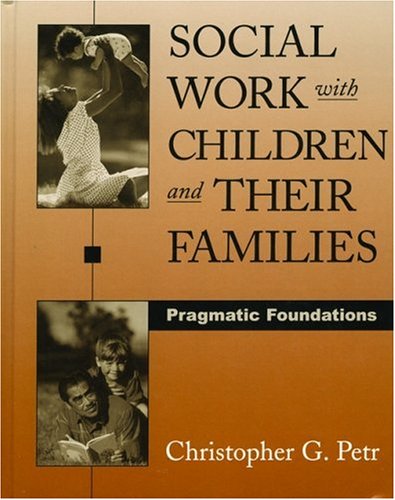

Social work with children and their families pragmatic foundations Christopher G. Petr.
Detalles de publicación: New York, N.Y. Oxford University Press 1998.Descripción: xv, 311 p. illISBN:- 0195106075
- HV741 .P47 1998
| Imagen de cubierta | Tipo de ítem | Biblioteca actual | Biblioteca de origen | Colección | Ubicación en estantería | Signatura topográfica | Materiales especificados | Info Vol | URL | Copia número | Estado | Notas | Fecha de vencimiento | Código de barras | Reserva de ítems | Prioridad de la cola de reserva de ejemplar | Reservas para cursos | |
|---|---|---|---|---|---|---|---|---|---|---|---|---|---|---|---|---|---|---|
| Libro | Biblioteca de Mayagüez Colección General mb | HV741 .P47 1998 (Navegar estantería(Abre debajo)) | Disponible | 50000002083599 |
Descripciones mejoradas de Syndetics:
This textbook focuses on the practical foundational knowledge required to practice social work with children and their families in today's quickly changing world. The core organizing framework consists of eight pragmatic perspectives: combating adultcentrism; family-centered practice; the strengths perspective; respect for diversity and difference; the least restrictive alternative; the ecologica perspective; organization and financing; and achieving outcomes. Unlike most texts which focus on either direct practice or on policy, Social Work with Children and Their Families uses these eight perspectives to integrate both current policy, including recent reform efforts, and the best practices. Each pragmatic perspective serves as a lens through wich clients and their problems are viewed. Unit One presents and describes the eight perspectives, and illustrates the relevance of each with numerous case vignettes. Students will gain a deep appreciation for how direct social work practice is linked to and guided by contemporary policy initiatives and the values that underscore those initiatives. Units Two and Three are devoted specifically to the fields of child welfare and children's mental health. In each of these units, there is an overview of the laws, policies, practices, and terminology extant in that setting, as well as a discussion of the importance and relevance of the eight prespectives within that setting. These lessons are bolstered by in-depth case illustrations of how typical client situations can be successrfully addressed within the context of the eight pragmatic perspectives.
Includes index.
Includes bibliographical references (p. 295-306).
Tabla de contenidos provista por Syndetics
- Unit 1 Overview of the Systems of Care for Children and Their Families(p. 1)
- Chapter 1 Introduction to Social Work in Child and Family Settings(p. 3)
- General Status of Children and Families in the United States
- Brief History of Social Work with Children and Families
- Social Work in Child and Family Settings Today
- Eight Pragmatic Perspectives
- Chapter 1 Summary
- Chapter 2 Social Work in Child Welfare Settings(p. 18)
- Introduction to the Field
- Protection of Children
- Overview
- Physical Abuse
- Sexual Abuse
- Child Neglect
- Investigation of Abuse and Neglect
- Preservation of Families
- P.L. 96-272: The Adoption Assistance and Child Welfare Act of 1980
- Prevention of Placement
- Reunification
- Permanency Planning
- P.L. 96-272 and Permanency Planning
- Foster Care
- Adoption
- Family Preservation and Support Services, Omnibus Reconciliation Act of 1993
- Public Law 105-89: The Adoption and Safe Families Act of 1997 (ASFA)
- ASFA and Protection of Children
- ASFA and Preservation of Families
- ASFA and Permanency Planning
- Chapter 2 Summary
- Chapter 3 Social Work with Children and Families in Children's Mental Health Settings(p. 51)
- Background and Context of Services
- Purpose and Scope
- Historical Background
- Important Federal Legislation and Initiatives
- Assessment and Treatment in Mental Health Settings
- Overview
- Definition and Prevalence
- Common Diagnostic Categories for Children
- Common Psychological Tests and Assessment Tools
- Use of Medications to Treat Emotional and Behavioral Disorders
- Common Types of Therapy Utilized in Mental Health Settings
- Adolescent Suicide
- Mental Health Needs and Services in the Juvenile Justice System
- Special Education for Children with Emotional and Behavioral Disorders
- History of Social Work in Schools
- Federal Legislation: Individuals with Disabilities Education Act (IDEA) 1997 Amendments to IDEA
- Chapter 3 Summary
- Unit 2 Eight Pragmatic Perspectives in Social Work with Children and Their Families(p. 83)
- Chapter 4 Pragmatic Perspective 1: Combating Adultcentrism(p. 85)
- Adultcentrism in Social Work Practice with Children
- Introduction and Background
- Adultcentrism in Child Development Theory
- Adultcentrism in Social Work Assessments and Interventions
- Recommendations for Combating Adultcentrism
- Pragmatic Connections: How to Combat Adultcentrism When Engaging and Interviewing Young Children
- Creating a Climate for Engagement
- Engaging and Clarifying
- Listening, with Caution, to the Language of Metaphor
- Open-Ended Questions
- Pragmatic Connections: How to Combat Adultcentrism When Engaging and Interviewing Adolescents
- What Is Important to Adolescents?
- Pragmatic Principles for Engaging and Interviewing Adolescents
- Combating Adultcentrism in Child Welfare
- Combating Adultcentrism in Intake and Investigation
- Combating Adultcentrism in Foster Care
- Combating Adultcentrism in Adoption
- Combating Adultcentrism in Mental Health
- Adultcentrism in Assessment and Treatment
- Informed Consent for Children
- Empowering the Voice of Youth
- Chapter 4 Summary
- Chapter 5 Pragmatic Perspective 2: Family-Centered Practice(p. 117)
- What Is Family-Centered Practice?
- Family as the Unit of Attention
- Informed Family Choice
- Strengths Perspective
- Pragmatic Connection: Case Illustration of Family-Centered Practice
- Summary of Essential Elements of Family-Centered Practice
- Pragmatic Connections: How to Engage and Interview Families
- Family-Centeredness in Policy and Research
- Family-Centeredness at the Community and State Levels
- Family-Centeredness at the Organizational Level
- Family-Centeredness in Research
- Family-Centered Practice in Child Welfare
- Family-Centeredness in Family Preservation
- Family-Centeredness in Foster Care
- Family-Centeredness in Adoptions
- Family-Centered Practice in Children's Mental Health
- Perpetuation of Blaming
- Genograms
- Family-Centeredness in Policy and Programs
- Family-Centeredness in Special Education
- Chapter 5 Summary
- Chapter 6 Pragmatic Perspective 3: Strengths Perspective(p. 142)
- Strengths Perspective: Introduction
- Strengths Perspective in Direct Practice
- Overview and Guidelines for Strengths Practice
- Solution-Focused Model
- Strengths Perspective in Group Work
- Strengths Perspective and Resilience in Children
- Strengths Perspective in Policy Development
- Strengths Perspective in Child Welfare
- Strengths Perspective with Parents of Abused and Neglected Children
- Strengths Perspective with Children Who Have Been Abused and Neglected
- Strengths Perspective in Children's Mental Health
- The Disability Model
- Systematic Assessment of Strengths
- Avoiding Blame
- Chapter 6 Summary
- Chapter 7 Pragmatic Perspective 4: Respect for Diversity and Difference(p. 156)
- Overview of the Problem of Prejudice and Discrimination
- Dynamics of Powerlessness
- Cultural Competence
- Cultural Mapping
- Understanding Gay and Lesbian Adolescents
- Gender Bias
- Respect for Diversity and Difference in Child Welfare
- Race and Child Welfare Services
- The Indian Child Welfare Act of 1978, P.L. 95-608
- African American Kinship Care and Transracial Adoptions
- Child-Rearing and Discipline Practices
- Gay and Lesbian Youth in Foster Care
- Respect for Diversity and Difference in Children's Mental Health
- Racial, Social Class, and Gender Bias in Assessments and Treatment
- Cultural Competence in Mental Health
- Identity Issues for Biracial Youth
- Chapter 7 Summary
- Chapter 8 Pragmatic Perspective 5: Least Restrictive Alternative (LRA)(p. 175)
- Least Restrictive Alternative: Definition, History, Scope
- Continuum of Care
- Critique of LRA and Continuum of Care Concepts
- Connections/Relevance of LRA to Other Pragmatic Perspectives
- Least Restrictive Alternative in Child Welfare
- Child Safety and LRA
- Foster Care Placement and LRA
- Permanency Planning and LRA
- Least Restrictive Alternative in Children's Mental Health
- Continuum of Care
- Guidelines for Appropriate Hospitalization of Youth
- Chapter 8 Summary
- Chapter 9 Pragmatic Perspective 6: Ecological Perspective(p. 187)
- Ecological Perspective: Introduction and Overview
- Ecomaps
- Case Management
- Community Involvement and Ownership
- Interagency Collaboration and Family-Centered Practice
- Advocacy for Systems Change
- Pragmatic Implications: Collaboration and Teamwork
- Pragmatic Implications: The Danger of Triangulation
- Ecological Perspective in Child Welfare
- Ecomaps and Case Management
- Community Involvement
- Advocacy in Child Welfare
- Ecological Perspective in Children's Mental Health
- Interagency Collaboration and Service Integration
- Advocacy in Children's Mental Health
- School-Linked Mental Health Services
- Chapter 9 Summary
- Chapter 10 Pragmatic Perspective 7: Organization and Financing(p. 204)
- Organization and Financing: Introduction and Overview
- Privatization
- Managed Care
- Service Integration
- Organization and Financing in Child Welfare
- Iowa Decategorization
- Kansas Privatization Using Managed Care Principles
- Organization and Financing in Children's Mental Health
- Nationwide System Reform
- The Ventura Planning Model
- Managed Care in Children's Mental Health
- Chapter 10 Summary
- Chapter 11 Pragmatic Perspective 8: Achieving Outcomes(p. 225)
- The Complex Process of Outcome Measurement
- Resistance among Providers
- Distinguishing Process Outcomes from Final Outcomes
- Potential Conflict between Individual and Systems Goals
- Deciding Which Outcomes Are Most Important to Track
- Difficulty and Costs of Measuring and Interpreting Outcomes
- Relationship of Funding to Outcome
- Prevention versus Treatment
- Pragmatic Connections to Practice
- Achieving Outcomes in Child Welfare
- Prevention versus Treatment
- Kansas Privatization Initiative
- National Outcomes for Child Welfare System after ASFA
- Achieving Outcomes in Children's Mental Health
- Goals of the Children's Mental Health System
- The Ventura Planning Model's Approach to Outcomes
- The Fort Bragg Evaluation Project
- Consumer Satisfaction
- Current Challenges
- Chapter 11 Summary
- Unit 2 Conclusion(p. 243)
- Unit 2 Summary
- Suggested Assignments and Learning Activities
- Unit 3 Extensive Case Examples(p. 249)
- Chapter 12 Connections: Case Examples from Child Welfare(p. 251)
- Case Example 1 The Sloan Family
- Narrative (Reprint of "Consultation Corner" in Family Networker)
- Commentary and Analysis: The Eight Pragmatic Perspectives
- Case Example 2 Victor
- Narrative
- Commentary and Analysis: The Eight Pragmatic Perspectives
- Chapter 13 Connections: Case Examples from Children's Mental Health(p. 276)
- Case Example 1 Bill
- Overview and Narrative
- Commentary and Analysis: The Eight Pragmatic Perspectives
- Case Example 2 Sharon
- Overview and Narrative
- Commentary and Analysis: The Eight Pragmatic Perspectives
- References(p. 303)
- Index(p. 317)