Imagen de Amazon.com

Portada de Syndetics
Imagen de OpenLibrary
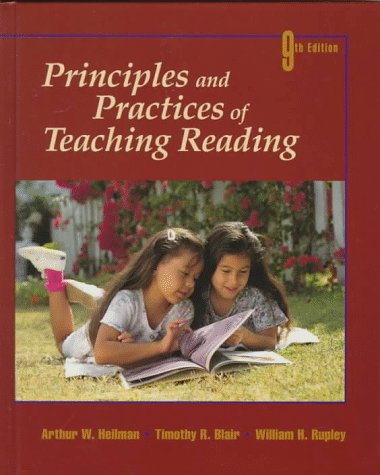
Principles and practices of teaching reading Arthur W. Heilman.
Detalles de publicación: New Jersey Merrill Pub. Co. 1998.Edición: 9th edDescripción: xiv, 589 p. ill. (some col.) 24 cmISBN:- 0132678578
- 372.4 20
- LB1573 .H325 1994
| Imagen de cubierta | Tipo de ítem | Biblioteca actual | Biblioteca de origen | Colección | Ubicación en estantería | Signatura topográfica | Materiales especificados | Info Vol | URL | Copia número | Estado | Notas | Fecha de vencimiento | Código de barras | Reserva de ítems | Prioridad de la cola de reserva de ejemplar | Reservas para cursos | |
|---|---|---|---|---|---|---|---|---|---|---|---|---|---|---|---|---|---|---|
| Libro | Biblioteca Mons. Iñaki Mallona (Arecibo) Colección General ab | 372.4 H466p9 (Navegar estantería(Abre debajo)) | c.2 | Disponible | 60000003082796 |
Total de reservas: 0
Descripciones mejoradas de Syndetics:
An updated edition (last, 1994) of a text providing elementary school teachers with guidance to literacy education. New features include incorporation of strategies for teaching students with special needs in the classroom and end-of-chapter assignments and portfolio entries focusing on the chapter
Includes bibliographical references and index.
Tabla de contenidos provista por Syndetics
- Part I Foundations of Literacy Instruction(p. 2)
- Chapter 1 Principles of Reading Instruction(p. 4)
- A Message to Teachers-in-Training(p. 6)
- The Reading Process(p. 6)
- Underlying Theories(p. 9)
- What Constitutes a Balanced Literacy Program?(p. 10)
- What Are the Stages of Reading Development?(p. 12)
- Principles of Reading Instruction(p. 13)
- Summary(p. 24)
- Bibliography(p. 26)
- Chapter 2 Teacher Effectiveness in a Balanced Literacy Program(p. 30)
- Historical Overview(p. 32)
- Major Efforts: Converging Evidence(p. 32)
- Characteristics of Effective Literacy Instruction(p. 34)
- Assessing Students' Reading(p. 35)
- Explicit/Direct Instruction(p. 37)
- Opportunity to Learn(p. 41)
- Attention to Learning Tasks(p. 43)
- Teacher Expectations(p. 47)
- Classroom Management(p. 49)
- Decision Making in Reading Instruction(p. 49)
- Summary(p. 52)
- Bibliography(p. 53)
- Chapter 3 Language: The Key to Literacy(p. 56)
- Language and Reading and Writing(p. 58)
- Recognizing Words(p. 58)
- Constructing Meaning(p. 59)
- Oral Language and Reading(p. 59)
- Balanced Reading Instruction That Builds on Oral Language(p. 60)
- Contextualized Language(p. 60)
- Structure of Language(p. 63)
- Terms Associated with Phonology(p. 63)
- Terms Associated with Meaning Features of Language(p. 63)
- Terms Associated with Structural Features of Language(p. 63)
- Language Variations(p. 64)
- Culturally and Linguistically Diverse Learners(p. 64)
- The Reading and Writing Connection(p. 65)
- Interactive Features of Reading and Writing in Constructing Meaning(p. 69)
- Considerations for a Language-rich Classroom Environment(p. 73)
- Classroom Centers(p. 75)
- Reading Activities and Instructional Opportunities in a Language-rich Environment(p. 77)
- Writing Activities and Instructional Opportunities in a Language-rich Environment(p. 80)
- Summary(p. 86)
- Bibliography(p. 87)
- Chapter 4 Emergent Literacy(p. 90)
- The Concept of Emergent Literacy(p. 93)
- Characteristics of Emergent Literacy(p. 93)
- Variations in Children's Literacy Experiences(p. 94)
- Acquiring Concepts About Print: Home-School Connections(p. 95)
- Environmental Print(p. 98)
- Art and Play Activities(p. 99)
- Print Concepts Associated with Decontextualized Language(p. 100)
- Print Is Meaningful(p. 101)
- Language Used to Talk About and Teach Literacy(p. 101)
- Phonemic Awareness(p. 102)
- Instructional Features of Early Literacy and Beginning Literacy Programs(p. 104)
- Language-Based Reading and Writing Instruction(p. 105)
- Play and Learning Centers(p. 106)
- Reading and Writing Centers(p. 107)
- Thematic Units for Writing and Reading Activities(p. 108)
- Literature, Book, and Writing Activities(p. 110)
- Poetry in the Literacy Program(p. 115)
- Reading Aloud and Telling Stories(p. 118)
- Explicit/Direct Instructional Activities(p. 120)
- Guided Reading(p. 120)
- Listening Capabilities(p. 122)
- Visual Discrimination(p. 124)
- Phonemic Awareness(p. 125)
- Visual and Auditory Integration(p. 126)
- Phonics(p. 127)
- Building Background Knowledge and Fostering Reading Comprehension(p. 132)
- Assessing Emergent Literacy(p. 134)
- Information from Parents(p. 136)
- Observing Children's Literacy Behaviors(p. 136)
- Classification Scheme for Assessment of Emergent Reading and Writing(p. 140)
- Language-Based Assessment Techniques(p. 140)
- Using Assessment Information(p. 141)
- Summary(p. 142)
- Bibliography(p. 143)
- Part II Teaching Students to Become Strategic Readers(p. 146)
- Chapter 5 Word Identification(p. 148)
- Word-Identification Strategies(p. 150)
- Integration in Authentic Reading Situations(p. 151)
- Five Major Instructional Tasks(p. 152)
- Sight Vocabulary(p. 154)
- Names(p. 156)
- Picture Dictionaries(p. 158)
- Reporters' Questions(p. 159)
- Position Words(p. 160)
- Words Often Confused(p. 161)
- Scrambled Sentences(p. 162)
- Classification(p. 162)
- Phonics(p. 163)
- Importance of Phonic Instruction(p. 163)
- Tasks in Phonics(p. 165)
- Phonic Instruction(p. 167)
- Teaching Methods(p. 168)
- Explicit/Direct Teaching of Phonics(p. 169)
- Word Sorts(p. 185)
- Developing Fluency(p. 186)
- Practical Techniques for Developing Automaticity or Fluency(p. 187)
- Repeated Readings(p. 187)
- Phrase Reading(p. 187)
- Readers Theatre(p. 188)
- Structural Analysis(p. 188)
- Inflectional Endings(p. 190)
- Prefixes and Suffixes(p. 193)
- Compound Words(p. 194)
- Contextual Analysis(p. 196)
- Syntactic Clues(p. 198)
- Semantic Clues(p. 198)
- Contextual-Analysis Instruction(p. 199)
- Dictionary Instruction(p. 200)
- Summary(p. 202)
- Bibliography(p. 204)
- Chapter 6 Meaning Vocabulary(p. 206)
- Vocabulary Knowledge and Reading(p. 208)
- Language Development and Word Meanings(p. 208)
- Vocabulary Growth(p. 209)
- Vocabulary and Concept Development(p. 210)
- Explicit Vocabulary Instruction(p. 210)
- Concept Wheel/Circle(p. 211)
- Semantic Mapping(p. 212)
- Concept of Definition(p. 214)
- Webbing(p. 216)
- Semantic-Features Analysis(p. 218)
- Teaching Relationships Among Words(p. 219)
- Word-Association Vocabulary Instruction(p. 221)
- Contextual Approaches(p. 225)
- Modeling Application/Contribution of Context to Word Meaning(p. 226)
- Different Meanings for the Same Word(p. 228)
- Homonyms(p. 230)
- Language-Based Approaches(p. 231)
- Independent Reading Programs(p. 231)
- Poetry Writing(p. 232)
- Writing: Journals, Diaries, and Response Journals(p. 235)
- Student-Compiled Dictionaries(p. 236)
- Summary(p. 241)
- Bibliography(p. 243)
- Chapter 7 Comprehension(p. 244)
- Conceptualizations of Reading Comprehension(p. 246)
- The Interactive View(p. 246)
- Schema Theory(p. 247)
- What to Teach(p. 253)
- Determining Importance(p. 253)
- Summarizing Information(p. 254)
- Drawing Inferences(p. 254)
- Generating Questions(p. 254)
- Monitoring Comprehension(p. 254)
- Questioning Strategies to Promote Comprehension and Understanding(p. 255)
- Literal Questions(p. 255)
- Inferential Questions(p. 256)
- Helping Students Develop Comprehension Strategies (Question-and-Answer Relationships)(p. 257)
- Teacher Responses/Wait-Time(p. 259)
- Explicit/Direct Comprehension Instruction(p. 261)
- Rethinking Explicit/Direct Instruction(p. 261)
- Modeling(p. 261)
- Scaffolding(p. 264)
- Effective Explicit/Direct Comprehension Instruction Guidelines(p. 264)
- Example of Explicit/Direct Comprehension Instruction(p. 265)
- Determining What Is Important(p. 266)
- Modifying Explicit/Direct Reading Instructional Activities(p. 267)
- Anticipation Guides(p. 269)
- Developing Fluency(p. 269)
- Story Schema(p. 272)
- Setting(p. 272)
- Theme(p. 273)
- Plot(p. 273)
- Resolution(p. 273)
- Guidelines for Teaching Story Structure(p. 274)
- Story Mapping(p. 275)
- Visual Displays of Texts(p. 275)
- Discussion Webs(p. 275)
- Reciprocal Teaching(p. 278)
- Literature Circles(p. 280)
- Oral Language, Readers' Theater, and Visual Arts(p. 281)
- Oral-Language Interactions(p. 281)
- Readers' Theater(p. 281)
- Visual Arts(p. 283)
- The Reading and Writing Connection(p. 283)
- Probable Passages(p. 283)
- Thinking and Writing About What Students Read(p. 284)
- Developing the Reader-Writer Relationship(p. 287)
- Comprehension Activities(p. 288)
- Summary(p. 293)
- Bibliography(p. 294)
- Part III Implementing a Literacy Program(p. 298)
- Chapter 8 Instructional Approaches for Teaching Literacy(p. 300)
- Knowing Multiple Ways to Teach for a Balanced Approach(p. 302)
- Background Knowledge(p. 302)
- Basal Readers(p. 302)
- Design and Content(p. 305)
- Advantages of Basal Series(p. 307)
- Today's Newer Basals(p. 308)
- Teacher's Editions(p. 310)
- Practice Materials(p. 310)
- Guided Reading(p. 312)
- Guided Reading Plan(p. 313)
- A Critical View(p. 314)
- Going Beyond the Basal(p. 352)
- Instructional Procedures(p. 355)
- The Language-Experience Approach (LEA)(p. 355)
- Features of the LEA(p. 358)
- Expansions and Variations of the Language-Experience Approach(p. 360)
- Use of Technology in Literacy Instruction(p. 363)
- Software Programs(p. 365)
- Computer-Based Multimedia(p. 368)
- Software Evaluation(p. 370)
- Instructional Principles(p. 372)
- Summary(p. 372)
- Bibliography(p. 375)
- Chapter 9 Literature-Based Reading Programs(p. 378)
- Literature-Based Reading Programs(p. 380)
- The Literature and Reading Connection(p. 381)
- Selecting Literature(p. 383)
- Sources(p. 383)
- Evaluation Criteria(p. 384)
- Developing Literary Enjoyment and Appreciation(p. 388)
- Oral Reading to Students(p. 388)
- Recreational-Reading Groups(p. 390)
- Reader Response Groups(p. 392)
- Developing Reading Skills Through Literature(p. 393)
- Using Predictable Books(p. 393)
- Increasing Vocabulary Knowledge Through Literature(p. 394)
- Semantic Mapping and Vocabulary Development(p. 396)
- Developing Understanding of Literary Elements(p. 396)
- Semantic Mapping(p. 397)
- Plot Structures(p. 400)
- Modeling Literary Analysis(p. 401)
- Summary(p. 407)
- Bibliography(p. 408)
- Chapter 10 Content-Area Reading(p. 412)
- Major Goals and Trends in Content Reading(p. 414)
- Content-Oriented Literature(p. 414)
- Integrating Writing in the Content Areas(p. 414)
- Integrating Comprehension Strategies(p. 415)
- Primary-Grade Emphasis(p. 416)
- Expository Text(p. 416)
- Organizational Structures(p. 418)
- Readability(p. 418)
- Components of Content Reading(p. 422)
- Vocabulary Development(p. 423)
- Studying Strategies(p. 426)
- Reading and Study Skills(p. 433)
- Collecting, Analyzing, and Criticizing Data(p. 437)
- Summary(p. 444)
- Bibliography(p. 446)
- Chapter 11 Literacy Assessment(p. 448)
- Meeting Individual Needs(p. 450)
- Differentiated Instruction(p. 450)
- Forms of Assessment(p. 451)
- Standardized Tests(p. 451)
- Typical Features(p. 452)
- Norm-Referenced Tests(p. 453)
- Criterion-Referenced Tests(p. 455)
- Diagnostic Tests(p. 455)
- Cautions About Standardized Tests(p. 456)
- Informal Assessment(p. 456)
- Teacher Observation/Kid Watching(p. 458)
- Assessment Materials That Accompany Published Reading Materials(p. 458)
- Informal Reading Inventories(p. 461)
- Running Records(p. 466)
- Cloze Procedure(p. 474)
- Authentic Assessment/Performance-Based Assessment(p. 476)
- Rubrics(p. 480)
- Anecdotal Records(p. 481)
- Response Journals(p. 482)
- Portfolios(p. 487)
- Summary(p. 490)
- Bibliography(p. 492)
- Chapter 12 Classroom Management and Organization(p. 494)
- The Importance of Classroom Management(p. 496)
- Preventative Classroom Management(p. 496)
- Grouping for Instruction(p. 499)
- Large Groups(p. 500)
- Small Groups(p. 500)
- Paired/Peer Groups(p. 501)
- Skill Groups(p. 502)
- Interest Groups(p. 502)
- Research Groups(p. 502)
- Cooperative Groups(p. 502)
- Ability Groups(p. 505)
- Organizing a Class for Instruction(p. 508)
- Alternative Management Approaches(p. 510)
- The Ungraded School(p. 510)
- The Integrated Unit(p. 512)
- Individualized Reading(p. 517)
- Practices(p. 517)
- Problems(p. 519)
- Applications(p. 523)
- Summary(p. 523)
- Bibliography(p. 525)
- Chapter 13 Focus on All Learners(p. 528)
- Accepting Difference(p. 530)
- Cultural and Linguistic Diversity(p. 530)
- Early Reading Approaches for Culturally and Linguistically Diverse Students(p. 531)
- Academic Early Reading Intervention(p. 532)
- Approaches to Teaching Reading and Writing to Culturally and Linguistically Diverse Students(p. 536)
- The Language-Experience Approach(p. 537)
- An Integrated Language Approach(p. 538)
- The Literature-Based Reading Approach: Integrating Multiethnic Literature(p. 541)
- The Oral Reading Approach(p. 547)
- The Basal Reader Approach(p. 549)
- The Dual-Language Reading Approach(p. 550)
- Expanding and Developing Meaning Vocabulary(p. 550)
- Special Students(p. 551)
- Mainstreaming(p. 551)
- Inclusion(p. 553)
- The Individualized Education Plan(p. 555)
- Attention-Deficit Hyperactivity Disorder(p. 560)
- Gifted Students(p. 563)
- Summary(p. 566)
- Bibliography(p. 568)
- Appendix(p. 571)
- Glossary(p. 581)
- Index(p. 585)