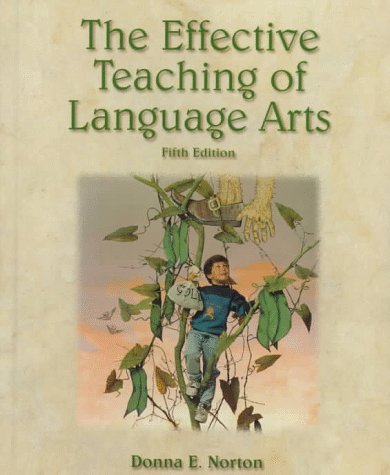
Imagen de portada de Amazon
Imagen de Amazon.com
Imagen de cubierta Syndetics
Portada de Syndetics
Imagen de OpenLibrary

The effective teaching of language arts Donna E. Norton.

Por: Detalles de publicación: Upper Saddle River, N.J. Merrill c1997.Edición: 5th edDescripción: xvii, 590 p. ill. (some col.) 25 cmISBN:
  • 013507195X
Tema(s): Clasificación CDD:
  • 372.6/044 20
Clasificación LoC:
  • LB1576 .N84 1997
Valoración
    Valoración media: 0.0 (0 votos)
Existencias
Imagen de cubierta Tipo de ítem Biblioteca actual Biblioteca de origen Colección Ubicación en estantería Signatura topográfica Materiales especificados Info Vol URL Copia número Estado Notas Fecha de vencimiento Código de barras Reserva de ítems Prioridad de la cola de reserva de ejemplar Reservas para cursos
Libro Biblioteca Mons. Iñaki Mallona (Arecibo) Colección General ab 372.6 N883e5 (Navegar estantería(Abre debajo)) Disponible 60000001980462
Total de reservas: 0

Descripciones mejoradas de Syndetics:

Providing readers with a background in language arts, this text covers assessment and instruction in speaking, listening, writing and reading. The work offers methodologies and lessons, and uses children's language samples to illustrate ways literature can enhance language arts skills.

Includes bibliographical references and indexes.

Tabla de contenidos provista por Syndetics

  • 1 Introduction to the Language Arts
  • 2 Language and Cognitive Development
  • 3 Literature
  • 4 Reading and Literature
  • 5 Oral Language Development
  • 6 Listening
  • 7 Linguistically Different Children and Muticultural Education
  • 8 Handwriting
  • 9 Spelling
  • 10 Grammar, Usage, and the Mechanics of Writing
  • 11 Composition: The Writing Process
  • 12 Composition: Expressive, Imaginative, and Expository Writing
  • 13 Library and Reference Skills

Extracto provisto por Syndetics

Effective teaching of language arts requires commitment to excellence on the part of classroom teachers. The language arts include speaking, listening, reading, and writing. Excellence cannot be attained without thorough knowledge of the language arts and understanding of methods that develop language arts abilities in children. Because teachers are accountable to the children they teach, to the administrators of the school, and to the parents, they must have knowledge about their students. Diagnostic procedures are suggested for evaluating children's strengths, weaknesses, and interests. This test includes numerous formal and informal assessment strategies that will improve the teaching of the language arts. Diagnosis is worthless, however, without research-based knowledge about learning environments, motivation, objectives, instructional procedures, grouping, and teacher effectiveness. Because effective teaching is built on a solid knowledge base, the latest research citations have been added to this edition. In addition, examples of lesson plans, instructional/thematic units, and learning centers demonstrate how theory can inform classroom practice. The successful use of these ideas with children is indicated by the inclusion of examples of children's oral and written responses. For preservice teachers needing experience planning lessons, evaluating language arts abilities, or teaching a lesson, activities designed to help students apply these abilities are included throughout each chapter and at the conclusion of each chapter. All of the "For Your Development" activities have been used with college language arts classes or as inservice presentations with experienced teachers. The professor and the students may choose as many of these activities as they wish in order to develop the objectives of the chapter and to explore effective teaching strategies. Each chapter in this text contains features geared to the development of effective language arts instruction. At the beginning of each chapter, chapter objectives are listed to provide an overview of content, preview the materials to be covered, and stress the major concepts to be mastered. The chapters on tools for writing--grammar and mechanics, handwriting, and spelling--have been maintained and updated. There is currently an increased interest in improving children's abilities in all of these areas. Changes to This Edition This new edition of The Effective Teaching of Language Arts includes the following: A "Best Practices" table has been added to Chapter 1, which lists the chapters in the book that deal with the instructional strategies developed around these best practices for teaching based on recent research. A significant amount of new children's literature titles have been added throughout the book, including a variety of new uses and activities with which to use these latest works. Chapter 5 goes into detail regarding the recent research on "best practices" for teaching, as well as reviewing approaches that increase phonemic awareness and phonics and vocabulary understanding. Assessing students' reading abilities is also covered. Chapter 8 offers a new section on the authentication of literature, including projects and activities for use with students to help them learn this valuable skill. A new section on using literature models of effective sentences and paragraphs for teaching is included in Chapter 10. Chapter 11 offers the latest on handwriting research, including a list of guidelines for effective handwriting instruction and new lesson plan ideas. The newest titles in multicultural literature have been incorporated into Chapter 12, as well as the latest research on teaching English as a second language. An updated and greatly expanded section on multicultural education has been added as well, including new lesson plans geared toward integrating Latino, African American and other cultures into teaching. Developing a multicultural storytelling festival for the classroom is also detailed. The goal of this text is to provide support, motivation, and knowledge for the classroom teacher who is responsible for the effective teaching of all children. This goal can be achieved if we can instill in teachers a commitment to excellence. Excerpted from The Effective Teaching of Language Arts by Donna E. Norton All rights reserved by the original copyright owners. Excerpts are provided for display purposes only and may not be reproduced, reprinted or distributed without the written permission of the publisher.
Compartir
logopucpr-y-vive

Contáctanos

¡Queremos saber de ti!

Tel. 787.841.2000 Ext. 1801

bibliotecavaldes@pucpr.edu

⁣Búscanos en las redes

© 2026 Desarrollado por Ignite Online • All Rights Reserved • Powered by Koha.