Reseñas proporcionadas por Syndetics
Library Journal Review
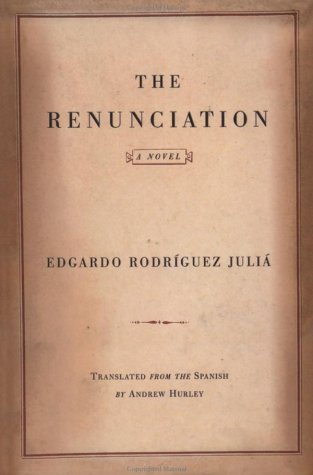
A self-serving bishop persuades Baltasar Montañez, the son of a famous black leader in 18th-century Puerto Rico, to marry under pretense the white daughter of a government leader and thereby avert racial bloodshed. Baltasar goes along with the plan for a while, then turns on the officials. Tagged a subversive, he is excommunicated and incarcerated. When the bishop later tries to convince him to denounce the church in order to stem the slave revolt that occurred anyway, Baltasar refuses to collaborate. Thus, the hero is confronted with not one but a series of renunciations: his race, his ideals, and his power. In a literary tour de force, the narration of this apocryphal figure's life is encapsulated within three supposed academic lectures delivered by the narrator, a pseudoscholarly device that would make Borges proud. Letters, chronicles, and other documents all help lend an air of veracity. Recommended for public and academic libraries.Lawrence Olszewski, OCLC Lib., Dublin, Ohio (c) Copyright 2010. Library Journals LLC, a wholly owned subsidiary of Media Source, Inc. No redistribution permitted.
Publishers Weekly Review
Attempting to maintain racial peace in 18th-century Puerto Rico, a cunning bishop contrives the marriage of the secretary of state's white daughter, Josefina Prats, to Balthasar Montañez, the heroic son of a martyred slave leader. That's the bold, unlikely premise behind Juliá's lyrical English-language debut. Not surprisingly, Balthasar's and Josefina's marriage of convenience is ice-cold (the only frisson comes when she watches his rather conventional orgies through a peep-hole in her bedroom), but the plan pays off and the island enjoys a period of unprecedented social tranquillity until the Inquisition catches up with Balthasar and convicts him of atrocities committed against political enemies. This ironic morality tale is written as a series of academic lectures, with the unidentified narrator presenting letters, state records, diary entries and prose poems that trace Balthasar's progress from poverty to decadence to madness. After many footnotes and self-deprecatory asides, the narrator ends by unwittingly revising his thesis: paradoxically, it is the crooked white bishop, not the bitter Balthasar, who most clearly exemplifies the condition humaine. Juliá's antiqued prose can be tedious, but his insights are often fine, as when he charts the evolution of Balthasar's own writing style or makes his distracted hero observe that his people "pass through life bearing their small domestic and civil tragedieswhich are slavery, pain, and general silence." (Oct.) (c) Copyright PWxyz, LLC. All rights reserved
CHOICE Review
Puerto Rican Edgardo Rodriguez Julia uses an experimental format to question the validity of the "official story," as he fictionalizes an episode of his nation's history. His narrator delivers three lectures on Baltasar Monta^D nez, the son of a slave martyred for leading a revolt against plantation owners in the mid 1700s. Used by the Bishop of San Juan, Monta^D nez marries into a prominent white family to assuage unrest. The Machiavellian scheme, however, is thwarted when Monta^D nez becomes obsessed with power and goes mad. Violence from both parties and hopeless racial strife result. This short work succeeds in shedding light on complicated political and psychological issues and personalities. Through an intertextual structure (included are documents, letters, diaries, chronicles, scenes from plays, and the poetic musings of another author), the story takes the reader from the real to the surreal, from actual events to the hero's tortured psyche. Moreover, the historian emerges as a complex character who contradicts his own earlier versions. Andrew Hurley's translation flows smoothly, and his footnotes appropriately eludicate problems found in a text that relies heavily on written sources. An introduction to the main historical figure and to Alejandro Julia Marin, the much-cited author of the plays and poetry, would have been helpful additions for the unfamiliar reader. All academic and general collections. S. T. Clark California State University, San Marcos
Booklist Review
This historical novel is set amidst the racial tensions between Spanish colonialists and African slaves, political tensions between church and state, and the personal struggles between opportunity and integrity in eighteenth-century colonial Puerto Rico. Balthazar Montanez, Puerto Rican hero and son of the leader of a notorious slave revolt, is at the center of a Machiavellian plot hatched by the Catholic Church: marry Montanez to the daughter of a Spanish nobleman and pacify the slaves with an illusion of harmony and social mobility. But Montanez refuses, cleverly seizing the initiative from the island's burghers, thwarting their pacification plans, and plunging the island into racial violence. Juliaalso adds a postmortem twist: the influence of texts in recounting history. To great effect, he delivers the narrative in the guise of three lectures. The story is colored with different anecdotes and perspectives from imaginary diaries and letters from Montanez's contemporaries. An excellent novel, providing an accurate portrayal of history and a stimulating, creative narrative to boot. --Ted Leventhal