Imagen de Amazon.com

Portada de Syndetics
Imagen de OpenLibrary
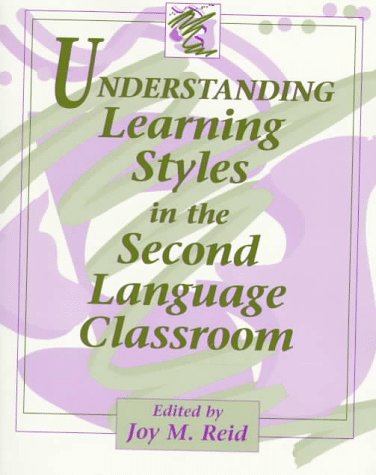
Understanding learning styles in the second language classroom edited by Joy M. Reid.
Detalles de publicación: Upper Saddle River, New Jersey Prentice Hall 1998.Descripción: xiv, 207 p.: illISBN:- 0132816369
- PE1128 .A2 U52 1998
| Imagen de cubierta | Tipo de ítem | Biblioteca actual | Biblioteca de origen | Colección | Ubicación en estantería | Signatura topográfica | Materiales especificados | Info Vol | URL | Copia número | Estado | Notas | Fecha de vencimiento | Código de barras | Reserva de ítems | Prioridad de la cola de reserva de ejemplar | Reservas para cursos | |
|---|---|---|---|---|---|---|---|---|---|---|---|---|---|---|---|---|---|---|
| Libro | Biblioteca de Mayagüez Colección General mb | PE1128 .A2 U52 1998 (Navegar estantería(Abre debajo)) | Disponible | 50000002076239 |
Total de reservas: 0
Descripciones mejoradas de Syndetics:
This anthology of essays by internationally-known ESL/EFL teachers and researchers addresses the ways in which students learn and in which teachers can respond to various learning styles to help student succeed. Includes correlative tables and charts that help clarify learning styles and techniques. For teachers and teacher-trainers.
Includes index.
Includes bibliographical references (p. 191-204).
Tabla de contenidos provista por Syndetics
- Tables and Figures
- Preface
- Theory and Practice
- Chapter 1 An Introduction to Multiple Intelligence Theory and Second Language Learning
- Chapter 2 Teachers as Perceptual Learning Styles Researchers
- Chapter 3 The Triune Brain and Learning: Practice Insight for the Classroom
- Chapter 4 Learning Style Diversity and the Reading Class: Curriculum Design and Assessment
- Chapter 5 Computers and Collaboration: Adapting CALL Materials to Different Learning Styles
- Chapter 6 Learning Styles and Strategies of a Partially Bilingual Student Diagnosed as Learning Disabled: A Case Study
- Chapter 7 Filed Independence, Field Dependence, and Field Sensitivity in Another Light
- Practice and Theory
- Chapter 8 "Keep the Fire in Me": Teaching Advanced ESL Learners Through Their Learning Styles
- Chapter 9 Bridging the Gap Between Teaching Styles and Learning Styles
- Chapter 10 Designing ESL Classroom Collaboration to Accommodate Diverse Work Styles
- Chapter 11 Developing a Survey for Multiple Intelligences: A Collaborative ESL Class Project
- Chapter 12 Teaching Modals to Multistyle Learners
- Chapter 13 Transforming Text Through Graphic Responses
- Chapter 14 Adult Learning Styles and Individual Writing Processes in the ESL/EFL Composition Classroom
- Chapter 15 Expanding the Learning Styles of Japanese Analytic Learners
- Chapter 16 Encouraging Learner Independence
- Appendices
- Appendix 1 Multiple Intelligence Inventory for Teachers
- Appendix 2 Student-Generated Inventory for Secondary and Young Adult Learners
- Appendix 3 Perceptual Learning Style Preference Survey
- Appendix 4 The Tyacke Profile
- Appendix 5 Motivation and Strategies Questionnaire
- Appendix 6 Academic Work Style Survey
- Appendix 7 Instructor Self-Assesment Form: Group Work Design and Implementation
- Appendix 8 Style Analysis Survey (SAS): Assessing Your Own Learning and Working Styles
- Contributors
- References