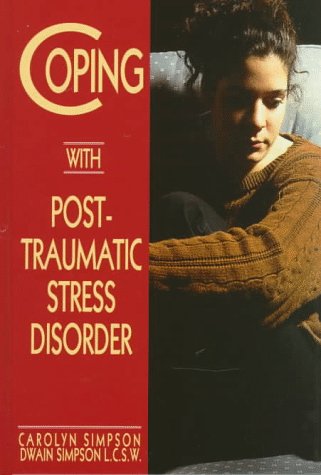
Imagen de portada de Amazon
Imagen de Amazon.com
Imagen de cubierta Syndetics
Portada de Syndetics
Imagen de OpenLibrary

Coping with post-traumatic stress disorder Carolyn Simpson and Dwain Simpson.

Por: Colaborador(es): Series CopingDetalles de publicación: New York Rosen Pub. Group 1997.Edición: 1st edDescripción: 129 p. 24 cmISBN:
  • 0823920801 (lib. bdg.)
Otro título:
  • Post-traumatic stress disorder
Tema(s): Clasificación CDD:
  • 616.85/21 21
Clasificación LoC:
  • RC552.P67 S456 1997
Resumen: Discusses such situations as physical abuse, natural disasters, wars, and violence, that can cause stressful responses and describes ways of dealing with these delayed reactions to trauma.
Valoración
    Valoración media: 0.0 (0 votos)
Existencias
Imagen de cubierta Tipo de ítem Biblioteca actual Biblioteca de origen Colección Ubicación en estantería Signatura topográfica Materiales especificados Info Vol URL Copia número Estado Notas Fecha de vencimiento Código de barras Reserva de ítems Prioridad de la cola de reserva de ejemplar Reservas para cursos
Libro Biblioteca Encarnación Valdés Colección General bev 616.8521 S612c (Navegar estantería(Abre debajo)) Disponible 80000002001108
Total de reservas: 0

Descripciones mejoradas de Syndetics:

Accelerated Reader is a program based on the fact that students become more motivated to read if they are tested on the content of the books they have read and are rewarded for correct answers. Students read each book, individually take the test on the computer, and receive gratification when they score well. Schools using the Accelerated Reader program have seen a significant increase in reading among their students.

This collection of titles was created to increase awareness among the teenage population. The test disk will help your students remember the important information imparted here.

Includes bibliographical references (p. 124) and index.

Discusses such situations as physical abuse, natural disasters, wars, and violence, that can cause stressful responses and describes ways of dealing with these delayed reactions to trauma.

Reseñas proporcionadas por Syndetics

School Library Journal Review

Gr 7 Up‘A practical and well-organized overview. The Simpsons first examine the situations that can cause post-traumatic stress disorder (PTSD), such as natural disasters, rape, sexual and physical trauma, war, and captivity; they then focus on treatment, including both negative and positive ways of coping with PTSD, support systems, and therapy. The authors use many real-life events, such as Hurricane Andrew and the bombing of the Federal building in Oklahoma City, to illustrate their discussions. They identify the primary signs of PTSD and discuss its consequences on individuals and their families and friends. The treatment section addresses many questions that young people might find difficult to ask, such as: What is therapy really like? How can I get on with my life? How can I help my friend who suffers from PTSD? These questions and many others are competently answered in a supportive, straightforward, and encouraging manner. Both the content and approach are similar to that in Kay Marie Porterfield's Straight Talk About Post-Traumatic Stress Disorder (Facts on File, 1996); however, the Simpsons include more specific information about treatment and recovery. A readable and easy-to-use addition.‘Sheila G. Shellabarger, Fordham Health Sciences Library, Wright State University, Dayton, OH (c) Copyright 2010. Library Journals LLC, a wholly owned subsidiary of Media Source, Inc. No redistribution permitted.
Compartir
logopucpr-y-vive

Contáctanos

¡Queremos saber de ti!

Tel. 787.841.2000 Ext. 1801

bibliotecavaldes@pucpr.edu

⁣Búscanos en las redes

© 2026 Desarrollado por Ignite Online • All Rights Reserved • Powered by Koha.