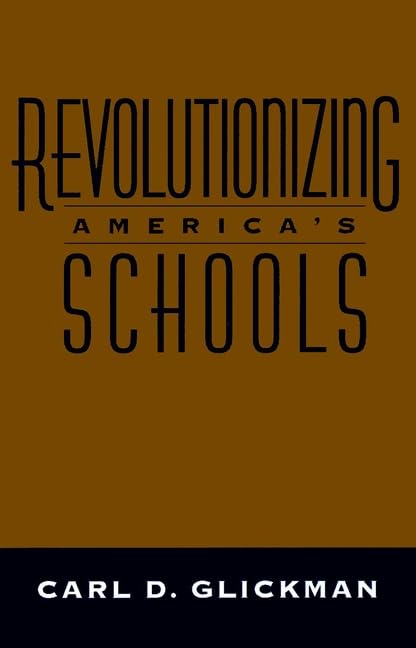

Revolutionizing America's schools Carl D. Glickman.
Series The Jossey-Bass education seriesDetalles de publicación: San Francisco, Ca. Jossey-Bass c1998.Descripción: xiii, 207 p. 24 cmISBN:- 0787909440 (cloth : acid-free paper)
- 370/.973 21
- LA217.2 .G57 1998
| Imagen de cubierta | Tipo de ítem | Biblioteca actual | Biblioteca de origen | Colección | Ubicación en estantería | Signatura topográfica | Materiales especificados | Info Vol | URL | Copia número | Estado | Notas | Fecha de vencimiento | Código de barras | Reserva de ítems | Prioridad de la cola de reserva de ejemplar | Reservas para cursos | |
|---|---|---|---|---|---|---|---|---|---|---|---|---|---|---|---|---|---|---|
| Libro | Biblioteca Encarnación Valdés Colección General bev | 370.973 G559r (Navegar estantería(Abre debajo)) | Disponible | 80000002012865 |
Descripciones mejoradas de Syndetics:
Revolutionizing America's Schools is provocative, personal, and right on the mark. It should be read by anyone who believes our schools can better educate our young and who is committed to making the effort to improve them.
-- Paul Schwarz, Principal of the Jackie Robinson Complex, and Co-director of Central Park East Secondary School, East Harlem, New York City
With this insightful, practical collection of personal essays, Glickman tackles education's most urgent questions. Who should govern schools? Whose values should schools represent? How should teachers teach? How does democratic change occur? Glickman directly addresses issues of race, culture, gAnder, and religion and reveals how understanding these issues can contribute to purposeful change, and he connects democratic rhetoric to action -- covering such practicalities as student grouping, curriculum selection, and school leadership.
Introduction: A Vision of Democracy
Part One: On Democracy
1. Democracy -- What Is It?
2. Democracy and Education
3. Ambiguity and Informed Minds
Part Two: On Pedagogy
4. Powerful Learning
5. School Structures for Teaching
6. Teacher Education and Public Schools
7. Governing for the Future
Part Three: On Getting Beyond
8. Wealth and Welfare
9. Isms and Reasons
10. Religion, Secular Humanism, and Geese
11. Who Owns the Child?
12. Constitutional Hope for Education
Part Four: On Differences
13. Race and Education
14. Suffrage, GAnder, and Listening
15. From Our Ancestors
Part Five: On Change
16. Finding Room for School Change
17. Listening to Students
18. Leadership for Democracy
Conclusion: Democracy as Education
Includes bibliographical references (p. 183-195) and index.
Introduction : vision of democracy -- On democracy. Democracy : what is it? Democracy and education. Ambiguity and informed minds -- On pedagogy. Powerful learning. School structures for teaching. Teacher education and public schools. Governing for the future -- On getting beyond. Wealth and welfare. Isms and reasons. Religion, secular humanism, and ?geese. ?Who owns the child? Constitutional hope for education -- On differences. Race and education. Suffrage, gender, and listening. From our ancestors -- On change. Finding room for school change. Listening to students. Leadership for democracy -- Conclusion : democracy as education.
Tabla de contenidos provista por Syndetics
- Introduction: A Vision of Democracy
- On Democracy
- 1 Democracy -- What Is It?
- 2 Democracy and Education
- 3 Ambiguity and Informed Minds
- On Pedagogy
- 4 Powerful Learning
- 5 School Structures for Teaching
- 6 Teacher Education and Public Schools
- 7 Governing for the Future
- On Getting Beyond
- 8 Wealth and Welfare
- 9 Isms and Reasons
- 10 Religion, Secular Humanism, and Geese
- 11 Who Owns the Child?
- 12 Constitutional Hope for Education
- On Differences
- 13 Race and Education
- 14 Suffrage, Gender, and Listening
- 15 From Our Ancestors
- On Change
- 16 Finding Room for School Change
- 17 Listening to Students
- 18 Leadership for Democracy
- Conclusion: Democracy as Education