Reseñas proporcionadas por Syndetics
Library Journal Review
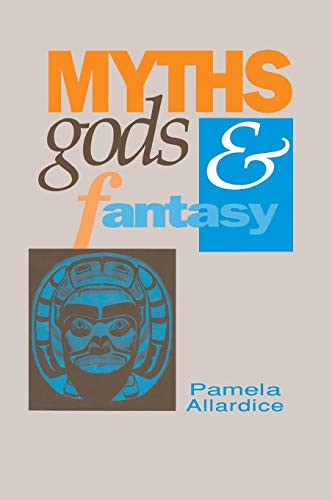
This is an alphabetically arranged dictionary of gods, spirits, and creatures of myth. Its thorough core of Greek and British (Irish, English, Scottish, and Welsh) legends is bolstered by coverage of mythology from around the world: Japanese, Russian, Chinese, Eskimo, Native American, Australian Aboriginal, Egyptian, Mayan, Micronesian, African, and more. The entries are concise and informative, making this a good, solid addition to any reference collection, particularly those needing to supplement material on European myth.-- Gail Wood, Montgomery Coll. Lib., German town, Md. (c) Copyright 2010. Library Journals LLC, a wholly owned subsidiary of Media Source, Inc. No redistribution permitted.
CHOICE Review
One has to admire an attempt to produce a dictionary, identifying gods, characters, and creatures from the world's mythologies in about "500 carefully selected entries." Annotations for each entry are ample, yet one wonders at Allardice's choices, omissions, and the reliability of her sources. Included are entries for Morgan le Fay and Nim"ue from the Arthur cycle and yet Merlin is omitted (this is surprising for in many versions it is Nim"ue who entices him). Freya (Freyja) instead of the more accepted Frigg, is cited as the wife of Odin; Frigg is only mentioned as a name under "Aesir"). True, confusion existed between the two, who may have once shared identity, yet Freya cries tears of gold for her husband Od, not Odin; and Frigg, the mother of Balder, figures prominently in his myth (her role is not mentioned by Allardice). The stated source for the entry under "Fafnir" is Wagner, a well-known distorter of myth. Under "shaman" (why is this included?) the example is Hiawatha, again a literary romanticization of Ojibwa stories. The same entry calls the Midewiwin, which is the curative ceremony of the Medicine Lodge Society of the Ojibwa, an "evil guild" (the word "Ojibwa" is never mentioned in the entry). On the whole, most entries seem fine, so the work is recommended with caution to be used in conjunction with other sources. Other popular one-volume works are Richard Carlyon's A Guide to the Gods (1982) and Pierre Grimal's Larousse World Mythology (1965).-C. Larry, Northern Illinois University
Booklist Review
This second edition of The National Directory of Chiropractic provides access to the chiropractic profession with listings for providers of supplies and services, chiropractic colleges, practitioners, and state boards of examiners and professional associations. All the information has been verified by telephone, so the directory is current. It has three color-coded sections. The yellow pages contain advertisements for providers of supplies and services. The index of subject headings that begins the section has adequate see references, for example, "Electrostimulators See Physiotherapy Equipment/Supplies." The final part of this section is an alphabetical list of the providers by name with address and telephone and/or fax numbers. All the chiropractic colleges in the U.S. are listed in this section. The white pages list chiropractors. The main part of this section is arranged by state and city. Entries include name, address, telephone number, school attended, year of graduation, and techniques used. Using this section, one can find, for instance, a chiropractor in Berkeley, California, who uses the activator method. There is also an alphabetical list of practitioners by name with city and state. The blue pages provide state-by-state information about the chiropractic profession, current as of March 1991. The listings include scope of practice, state board examination prerequisites and information, licensing reciprocity policies, state societies and organizations, and chiropractor distribution comparison. The National Directory of Chiropractic fills a gap in the health reference collection. There are numerous biographical sources for medicine and dentistry, but chiropractic receives scant coverage. This directory is easy to use and offers current information about the profession and its practitioners. It is a useful addition for public libraries and health science collections. (Reviewed Oct. 15, 1991)