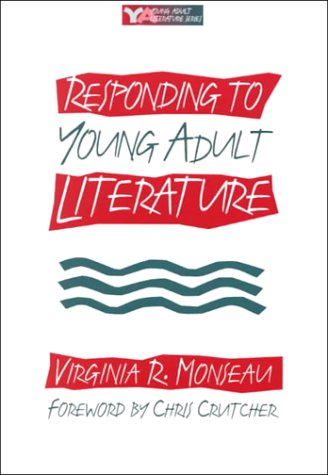

Responding to young adult literature Virginia R. Monseau.
Series Young adult literature seriesDetalles de publicación: Portsmouth, NH Boynton/Cook Publishers c1996.Descripción: xvi, 103 p. 23 cmISBN:- 086709401X (acid-free paper)
- 809/.89283 20
- 809/.89283 20
- PN1009.A1 M66 1996
| Imagen de cubierta | Tipo de ítem | Biblioteca actual | Biblioteca de origen | Colección | Ubicación en estantería | Signatura topográfica | Materiales especificados | Info Vol | URL | Copia número | Estado | Notas | Fecha de vencimiento | Código de barras | Reserva de ítems | Prioridad de la cola de reserva de ejemplar | Reservas para cursos | |
|---|---|---|---|---|---|---|---|---|---|---|---|---|---|---|---|---|---|---|
| Libro | Biblioteca Encarnación Valdés Colección General bev | 809.89283 M897r (Navegar estantería(Abre debajo)) | Disponible | 80000001935389 |
Descripciones mejoradas de Syndetics:
For too long, there has been a stigma attached to young adult literature: the assumption that because it appeals to adolescents, it can't possibly be worthy of a place in the language arts curriculum. Attempts to legitimize the genre, furthermore, have concentrated only on the literature, not on how readers respond to it.
In Responding to Young Adult Literature , Virginia Monseau uncovers the power of young adult literature to evoke the kind of literary experiences that will keep students reading and lead them to a deeper understanding of literature in general and the relationship between literature and life in particular. The book serves two purposes: to describe and discuss the oral and written response of adolescents and adults to young adult literature; and to explore the significance of this knowledge to the study of literature in the classroom.
Many of the books and articles written about student response to literature focus on techniques or methods that teachers can use to evoke response. In this book, Monseau concentrates on the readers themselves. What would happen if advanced students, who might consider young adult literature beneath them, read this literature in their classes? What would occur if reluctant readers and advanced students got together to respond to a young adult novel? How do adolescent readers respond to the kinds of young adult literature that they read for enjoyment? Can this out-of class response inform literary study in the classroom?
As someone who has read, taught, and written about young adult literature extensively, Monseau can help other teachers better understand what happens when the reader meets the text.
Includes bibliographical references.
Notas de autor provistas por Syndetics
Virginia Monseau is Professor Emerita of English at Youngstown State University, where she taught graduate and undergraduate courses in young adult literature, children's literature, composition, and English methods. She has published numerous books, articles, and reviews on young adult literature and the teaching of literature. A former high school teacher, she is a past editor of English Journal and a past president of ALAN, NCTE's Assembly on Literature for Adolescents. The series editor of Heinemann's Young Adult Novels in the Classroom Series, Monseau is also the author of Teaching the Selected Works of Robert Cormier (2007).