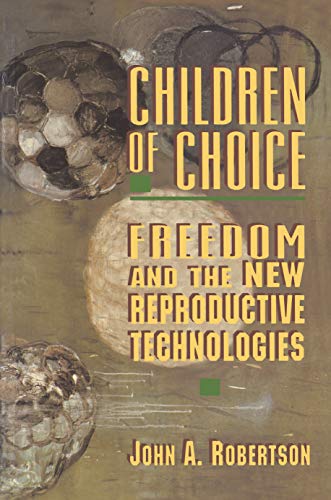
Imagen de portada de Amazon
Imagen de Amazon.com
Imagen de cubierta Syndetics
Portada de Syndetics
Imagen de OpenLibrary

Children of choice freedom and the new reproductive technologies John A. Robertson.

Por: Detalles de publicación: Princeton Princeton University Press c1994.Descripción: x, 281 p. 25 cmISBN:
  • 0691033536
Tema(s): Clasificación CDD:
  • 176 20
Clasificación LoC:
  • RG133.5 .R63 1994
Clasificación NLM:
  • 1994 G-246
  • WQ 205
Valoración
    Valoración media: 0.0 (0 votos)
Existencias
Imagen de cubierta Tipo de ítem Biblioteca actual Biblioteca de origen Colección Ubicación en estantería Signatura topográfica Materiales especificados Info Vol URL Copia número Estado Notas Fecha de vencimiento Código de barras Reserva de ítems Prioridad de la cola de reserva de ejemplar Reservas para cursos
Libro Biblioteca Mons. Iñaki Mallona (Arecibo) Colección General ab 176 R651c (Navegar estantería(Abre debajo)) Disponible 60000001868550
Total de reservas: 0

Descripciones mejoradas de Syndetics:

Cloning, genetic screening, embryo freezing, in vitro fertilization, Norplant, RU486--these are the technologies revolutionizing our reproductive landscape. Through the lens of procreative liberty--meaning both the freedom to decide whether or not to have children as well as the freedom to control one's reproductive capacity--John Robertson, a leading legal bioethicist, analyzes the ethical, legal, and social controversies surrounding each major technology and opens up a multitude of fascinating questions: Do frozen embryos have the right to be born? Should parents be allowed to select offspring traits? May a government force welfare recipients to take contraceptives? Robertson's arguments examine the broad range of consequences of each reproductive technology and offers a timely, multifaceted analysis of the competing interests at stake for patients, couples, doctors, policymakers, lawyers, and ethicists.

Includes bibliographical references (p. [237]-277) and index.

Tabla de contenidos provista por Syndetics

  • Preface(p. ix)
  • Children of Choice(p. 1)
  • Chapter 1 Introduction Technology, Liberty, and the Reproductive Revolution(p. 3)
  • Chapter 2 The Presumptive Primacy of Procreative Liberty(p. 22)
  • Abortion and Contraception(p. 43)
  • Chapter 3 Abortion, Contragestion, and the Resuscitation of Roe V. Wade(p. 45)
  • Chapter 4 Norplant, Forced Contraception, and Irresponsible Reproduction(p. 69)
  • Assisted Reproduction(p. 95)
  • Chapter 5 IVF, Infertility, and the Status of Embryos(p. 97)
  • Chapter 6 Collaborative Reproduction Donors and Surrogates(p. 119)
  • Quality Control(p. 147)
  • Chapter 7 Selection and Shaping of Offspring Characteristics Genetic Screening and Manipulation(p. 149)
  • Chapter 8 Preventing Prenatal Harm to Offspring(p. 173)
  • Extensions and Limitations(p. 195)
  • Chapter 9 Farming the Uterus Nonreproductive Uses of Reproductive Capacity(p. 197)
  • Chapter 10 Class, Feminist, and Communitarian Critiques of Procreative Liberty(p. 220)
  • Notes(p. 237)
  • Index(p. 279)

Reseñas proporcionadas por Syndetics

Library Journal Review

Procreative freedom is ``the freedom to decide whether or not to have offspring and to control the use of one's reproductive capacity.'' Robertson, a legal bioethicist who teaches at the University of Texas at Austin's law school, argues that the principle of procreative liberty should be used to determine the ethics and legalities of the many controversial issues surrounding reproductive technology. While obviously favoring his procreative liberty approach, the author allows some discussion of conflicting viewpoints. Robertson's position may not be universally accepted, but his works are regularly cited and his perspective is given significant coverage in many books on this topic. In addition to the much-discussed issues of abortion and surrogacy, Robertson also discusses new issues such as fetal tissue transplants and prenatal genetic screening. While the basic technological facts in this book may become dated, the legal philosophy presented may serve as a foundation for future considerations. Highly recommended for academic and special libraries.-Tina Neville, Univ. of South Florida at St. Petersburg Lib. (c) Copyright 2010. Library Journals LLC, a wholly owned subsidiary of Media Source, Inc. No redistribution permitted.

CHOICE Review

Robertson champions procreative liberty in resolving the conflicts that the new reproductive technologies create. These methods enable a women to conceive, avoid pregnancy, and even control offspring characteristics. However, they open up many moral and legal questions: Does a frozen embryo have rights? Should parents select offspring traits? Does a woman have the right to abort to provide fetal tissue to help others? Robertson offers the reader a balanced analysis on most reproductive concerns that confront physicians, lawyers, and the general public. However, he does not solve the main problem, whether we have the moral right to manipulate and destroy a living human organism. Terms like "fetal status" and "contragestation" are frightening even though they attempt to modify the pro-choice position. The use of weak verbs in long sentences without illustrations tends to reduce the text's readability. Nevertheless, Robertson's broad knowledge makes this a strong book to help people understand these new ethical and legal frontiers. All levels. R. H. Davis; Pennsylvania College of Podiatric Medicine

Booklist Review

One day Robertson was struck by a newspaper story that posed all sorts of ethical questions: A wealthy couple die, leaving an estate of eight million dollars and no one to claim it except their test-tube "orphans," the frozen embryos of the couple. Are the embryos really orphans? Do they have legal claim to the money? The problem, Robertson argues, is not simply technical. Although birth was traditionally a matter for nature or God or both, reproduction is now becoming increasingly "subject to human will and technical expertise." To put all this in context, Robertson surveys the available reproductive techniques and options, from abortion and contraception to the various ways of reproducing and of screening for suitable characteristics. The individual and societal conflicts are presented for each option, with Robertson generally arguing in favor of freedom of choice. Should be of interest to students of society as well as the many prospective users of these technologies. ~--Brian McCombie

Notas de autor provistas por Syndetics

John A. Robertson is the Thomas Watt Gregory Professor in the School of Law at the University of Texas at Austin, a fellow at the Hastings Center, and a member of the American Fertility Society. He is author of The Rights of the Critically Ill.
Compartir
logopucpr-y-vive

Contáctanos

¡Queremos saber de ti!

Tel. 787.841.2000 Ext. 1801

bibliotecavaldes@pucpr.edu

⁣Búscanos en las redes

© 2026 Desarrollado por Ignite Online • All Rights Reserved • Powered by Koha.