Imagen de portada de Amazon
Imagen de Amazon.com
Imagen de cubierta Syndetics
Portada de Syndetics
Imagen de OpenLibrary

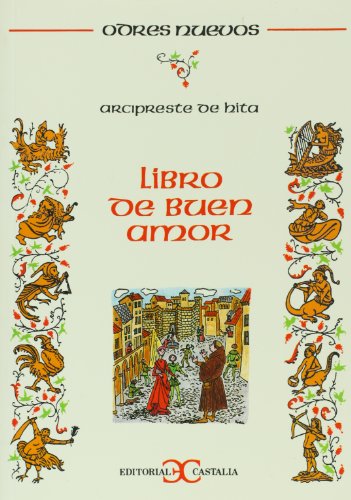
Libro de buen amor Arcipreste de Hita ; texto íntegro en versión de María Brey Mariño.

Por: Colaborador(es): Series Odres nuevosDetalles de publicación: Madrid Castalia 1987.Edición: 17. edDescripción: 275 p. 16 cmISBN:
  • 8470390260
Clasificación CDD:
  • 861/.1 19
Clasificación LoC:
  • PQ6430 .A1 1987
Valoración
    Valoración media: 0.0 (0 votos)
Existencias
Imagen de cubierta Tipo de ítem Biblioteca actual Biblioteca de origen Colección Ubicación en estantería Signatura topográfica Materiales especificados Info Vol URL Copia número Estado Notas Fecha de vencimiento Código de barras Reserva de ítems Prioridad de la cola de reserva de ejemplar Reservas para cursos
Libro Biblioteca de Mayagüez Colección General mb PQ6430 .A1 1987 (Navegar estantería(Abre debajo)) Disponible 50000001968162
Total de reservas: 0

Bibliography: p. [254]-268.

Notas de autor provistas por Syndetics

Little is known of the life of Juan Ruiz, often described as Spain's greatest writer of the Middle Ages and likened to Chaucer (see Vol. 1) and Boccaccio. In his term as archpriest of Hita, a small Castilian town east of Madrid, he apparently collected his own verses and songs into book form around 1330 and then revised and expanded it during a term in prison under sentence by the archbishop of Toledo. In the prose introduction to The Book of Good Love, Ruiz defined two categories of love: "good love" or the love of God and "crazy love" or carnal love. While avowing that his purpose was to expose the evils of worldly love and to lead his readers to the exclusive love of God, he admitted that his text may provide those who reject divine love with useful knowledge of the other sort of love. Thus the ironic tone of the book, as well as its humorous, satiric, and didactic nature, become apparent in this introduction. Juan Ruiz's self-consciousness as a writer and his awareness of the qualities of his art provide a glimpse of the Renaissance spirit. The primary literary source for The Book of Good Love is Pamphilus and Galatea, an anonymous twelfth-century play in Latin by a French poet. Americo Castro and others have suggested the possible influence of Arabic models as shown by the work's composite form, ambiguousness, and sensual elements. In its anticlerical attitudes, the book reflects the crisis of faith facing the Catholic church toward the end of the Middle Ages, a crisis complicated in Spain by the necessity of maintaining the religious fervor of the reconquest. (Bowker Author Biography)
Compartir
logopucpr-y-vive

Contáctanos

¡Queremos saber de ti!

Tel. 787.841.2000 Ext. 1801

bibliotecavaldes@pucpr.edu

⁣Búscanos en las redes

© 2026 Desarrollado por Ignite Online • All Rights Reserved • Powered by Koha.