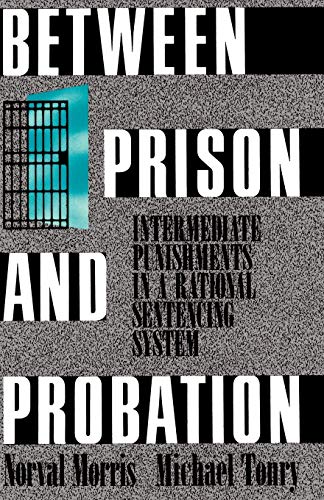

Between prison and probation intermediate punishments in a rational sentencing system Norval Morris, Michael Tonry.
Detalles de publicación: New York Oxford University Press 1991, c1990.Descripción: 283 p. illISBN:- 0195071387 (pbk)
| Imagen de cubierta | Tipo de ítem | Biblioteca actual | Biblioteca de origen | Colección | Ubicación en estantería | Signatura topográfica | Materiales especificados | Info Vol | URL | Copia número | Estado | Notas | Fecha de vencimiento | Código de barras | Reserva de ítems | Prioridad de la cola de reserva de ejemplar | Reservas para cursos | |
|---|---|---|---|---|---|---|---|---|---|---|---|---|---|---|---|---|---|---|
| Libro | Biblioteca Encarnación Valdés Colección General bev | 364.60973 M877b (Navegar estantería(Abre debajo)) | Disponible | 50000001792414 |
Descripciones mejoradas de Syndetics:
Across the country prisons are jammed to capacity and, in extreme cases, barges and mobile homes are used to stem the overflow. Probation officers in some cities have caseloads of 200 and more--hardly a manageable number of offenders to track and supervise. And with about one million people in prison and jail, and two and a half million on probation, it is clear we are experiencing a crisis in our penal system. In Between Prison and Probation, Norval Morris and Michael Tonry, two of the nation's leading criminologists, offer an important and timely strategy for alleviating these problems. They argue that our overwhelmed corrections system cannot cope with the flow of convicted offenders because the two extremes of punishment--imprisonment and probation--are both used excessively, with a near-vacuum of useful punishments in between. Morris and Tonry propose instead a comprehensive program that relies on a range of punishment including fines and other financial sanctions, community service, house arrest, intensive probation, closely supervised treatment programs for drugs, alcohol and mental illness, and electronic monitoring of movement. Used in rational combinations, these "intermediate" punishments would better serve the community than our present polarized choice. Serious consideration of these punishments has been hindered by the widespread perception that they are therapeutic rather than punitive. The reality, however, Morris and Tonry argue, "is that the American criminal justice system is both too severe and too lenient--almost randomly." Systematically implemented and rigorously enforced, intermediate punishments can "better and more economically serve the community, the victim, and the criminal than the prison terms and probation orders they supplant." Between Prison and Probation goes beyond mere advocacy of an increasing use of intermediate punishments; the book also addresses the difficult task of fitting these punishments into a comprehensive, fair and community-protective sentencing system.
"First issued as an Oxford University Press paperback, 1991"
Includes bibliographical references (p. 243-271) and index.