Imagen de Amazon.com

Portada de Syndetics
Imagen de OpenLibrary
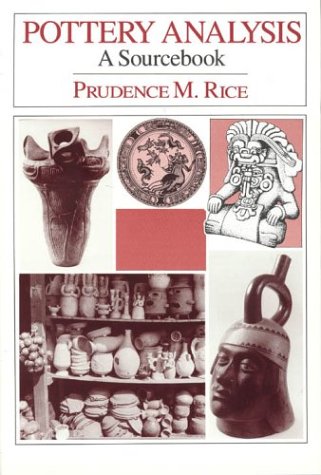
Pottery analysis a sourcebook Prudence M. Rice.
Detalles de publicación: Chicago University of Chicago Press c1987.Descripción: xxiv, 559 p. ill. 28 cmISBN:- 0226711188
- 738 19
- NK3780 .R53 1987
| Imagen de cubierta | Tipo de ítem | Biblioteca actual | Biblioteca de origen | Colección | Ubicación en estantería | Signatura topográfica | Materiales especificados | Info Vol | URL | Copia número | Estado | Notas | Fecha de vencimiento | Código de barras | Reserva de ítems | Prioridad de la cola de reserva de ejemplar | Reservas para cursos | |
|---|---|---|---|---|---|---|---|---|---|---|---|---|---|---|---|---|---|---|
| Libro | Biblioteca Encarnación Valdés Colección General bev | 738 R497p (Navegar estantería(Abre debajo)) | Disponible | 80000001750556 |
Total de reservas: 0
Descripciones mejoradas de Syndetics:
Pottery Analysis is a rich and comprehensive sourcebook that draws together diverse approaches to the study of pottery--archaeological, ethnographic, stylistic, functional, and physicochemical. Using pottery as a starting point for insights into people and culture, Prudence M. Rice examines in detail the methods for studying the fired clay vessels used worldwide from prehistoric times to present.
Includes index.
Bibliography: p. 487-542.
Tabla de contenidos provista por Syndetics
- List of Figures(p. xv)
- List of Tables(p. xix)
- Preface(p. xxi)
- Part 1 Introduction
- 1 Pottery and Its History(p. 3)
- 1.1 Pottery and Ceramics: Definitions and Products(p. 3)
- 1.2 History of Pottery and Ceramics(p. 6)
- 1.2.1 Pottery and Ceramics in the Old World(p. 10)
- 1.2.1.1 The Near East(p. 10)
- 1.2.1.2 The Far East(p. 12)
- 1.2.1.3 Europe and the Mediterranean(p. 17)
- 1.2.2 Pottery in the New World(p. 19)
- 1.3 Overview of Pottery Studies(p. 24)
- 1.4 References(p. 26)
- Part 2 The Raw Materials of Pottery Making
- 2 Clays: Their Origin and Definitions(p. 31)
- 2.1 Earth Materials(p. 31)
- 2.2 Feldspars, Weathering, and Clay Origins(p. 35)
- 2.3 Definitions of Clays(p. 36)
- 2.3.1 Depositional Situation of Clays(p. 36)
- 2.3.2 Granulometry of Clays(p. 38)
- 2.3.3 Chemical Definitions of Clays(p. 40)
- 2.3.4 Mineralogical Definitions of Clays(p. 43)
- 2.3.4.1 Phyllosilicates(p. 45)
- 2.3.4.2 Lath-Structure Clays(p. 50)
- 2.3.5 Commercial Uses of Clays(p. 50)
- 2.4 Functional Definitions of Clays(p. 51)
- 2.5 References(p. 53)
- 3 Properties of Clays I: The Clay/Water System(p. 54)
- 3.1 The Clay/Water System(p. 54)
- 3.2 Plasticity(p. 58)
- 3.2.1 Factors Influencing Plasticity(p. 58)
- 3.2.2 Measuring Plasticity(p. 60)
- 3.3 Drying and Shrinkage(p. 63)
- 3.3.1 Water in the System(p. 63)
- 3.3.2 Processes of Drying and Shrinkage(p. 65)
- 3.3.3 Drying Defects and Green Strength(p. 67)
- 3.3.4 Measuring Shrinkage(p. 71)
- 3.4 Inclusions and Impurities(p. 72)
- 3.4.1 Coarse Inclusions(p. 72)
- 3.4.2 Colloids, Ions, and Organics(p. 76)
- 3.5 References(p. 78)
- 4 Properties of Clays II: Firing Behavior(p. 80)
- 4.1 Variables of Firing(p. 80)
- 4.2 Physical and Chemical Changes in Firing(p. 86)
- 4.2.1 Loss of Volatiles(p. 87)
- 4.2.2 Changes in the Clay Minerals(p. 90)
- 4.2.3 Changes in Inclusions and Impurities(p. 93)
- 4.2.3.1 Quartz(p. 94)
- 4.2.3.2 Feldspar(p. 96)
- 4.2.3.3 Calcium(p. 97)
- 4.2.4 Glaze Formation(p. 98)
- 4.3 Summary(p. 102)
- 4.3.1 The Thermal Reaction Sequence(p. 102)
- 4.3.2 The Fired Product: Stresses and Defects(p. 104)
- 4.3.3 Some Considerations of Firing Technology(p. 107)
- 4.4 References(p. 110)
- Part 3 Pottery Manufacture and Use
- 5 Pottery Manufacturing Technology: An Ethnographic Overview(p. 113)
- 5.1 Ethnographic Pottery Studies(p. 113)
- 5.2 Obtaining and Preparing Resources(p. 115)
- 5.2.1 Tools and Techniques(p. 115)
- 5.2.2 Ethnographic Examples(p. 120)
- 5.3 Forming, Finishing, and Decorating(p. 124)
- 5.3.1 Forming: Tools and Techniques(p. 124)
- 5.3.1.1 Hand Building and Molding(p. 125)
- 5.3.1.2 Throwing(p. 128)
- 5.3.1.3 Supports and Rotational Devices(p. 132)
- 5.3.2 Finishing: Tools and Techniques(p. 136)
- 5.3.3 Forming and Finishing: Ethnographic Examples(p. 141)
- 5.3.4 Surface Enhancement(p. 144)
- 5.3.4.1 Surface Penetration or Displacement(p. 144)
- 5.3.4.2 Additions to the Surface(p. 147)
- 5.4 Drying and Firing(p. 152)
- 5.4.1 Tools and Techniques(p. 152)
- 5.4.1.1 Nonkiln Firing(p. 153)
- 5.4.1.2 Kiln Firing(p. 158)
- 5.4.1.3 Postfiring Treatments(p. 163)
- 5.4.2 Ethnographic Examples(p. 164)
- 5.5 References(p. 166)
- 6 Pottery Economics: Perspectives on Production and Distribution(p. 168)
- 6.1 Anthropology and Commodity Production(p. 168)
- 6.1.1 Economic Anthropological Literature(p. 169)
- 6.1.2 Concepts in the Study of Production(p. 170)
- 6.1.3 Ethnographic Overview: A Focus on Firing(p. 172)
- 6.1.3.1 Firing Loss Rates(p. 173)
- 6.1.3.2 Fuel Costs(p. 174)
- 6.2 Issues in the Study of Pottery Production(p. 176)
- 6.2.1 Location of Production(p. 177)
- 6.2.2 Organization of Production(p. 180)
- 6.2.2.1 Scale of Production(p. 180)
- 6.2.2.2 Mode of Production(p. 182)
- 6.2.3 Models of Production and Specialization(p. 183)
- 6.3 Distribution and Exchange(p. 191)
- 6.3.1 Ethnographic Overview(p. 191)
- 6.3.2 Archaeological Approaches and Models of Distribution(p. 197)
- 6.4 Variability in Ceramic Products(p. 201)
- 6.5 Summary and Conclusions(p. 204)
- 6.6 References(p. 205)
- 7 Vessel Function: Form, Technology, and Use(p. 207)
- 7.1 Vessel Function(p. 207)
- 7.1.1 Kinds of Vessel Functions(p. 208)
- 7.1.2 Determining Vessel Function(p. 210)
- 7.2 Vessel Form: Relating Form and Function(p. 211)
- 7.2.1 Anatomy of a Vessel(p. 212)
- 7.2.2 Description of Form(p. 215)
- 7.2.2.1 Inferred Use Classifications(p. 215)
- 7.2.2.2 Vessel Contour Classifications(p. 217)
- 7.2.2.3 Geometric or Volume Classifications(p. 219)
- 7.2.3 Reconstructing Form from Sherds(p. 222)
- 7.2.4 Use-Related Properties: Capacity, Stability, Accessibility, and Transportability(p. 224)
- 7.3 Composition and Properties: Relating Technology to Use(p. 226)
- 7.3.1 Thickness(p. 227)
- 7.3.2 Resistance to Mechanical Stress(p. 228)
- 7.3.3 Thermal Behavior(p. 228)
- 7.3.4 Permeability/Porosity/Density(p. 230)
- 7.3.5 Surface Treatment(p. 232)
- 7.4 Direct Evidence of Use(p. 232)
- 7.4.1 Identification of Contents(p. 232)
- 7.4.2 Use Wear(p. 234)
- 7.4.3 Fireclouding and Sooting(p. 235)
- 7.5 Summary: Form, Technology, and Use(p. 236)
- 7.5.1 Vessel Functions(p. 237)
- 7.5.2 Vessel Forms(p. 241)
- 7.6 References(p. 242)
- 8 Pottery Decorative Styles and Stylistic Analysis(p. 244)
- 8.1 What Is Style?(p. 244)
- 8.1.1 Origins of Styles(p. 245)
- 8.1.2 Terminology of Styles(p. 246)
- 8.1.3 Analysis and Interpretation of Decorative Styles in Pottery(p. 249)
- 8.2 Design Elements and Interaction(p. 252)
- 8.2.1 Critiques of the Interaction Theory(p. 254)
- 8.2.2 Critiques of the Element Analysis Method(p. 257)
- 8.3 Alternative Approaches to Style(p. 258)
- 8.3.1 Symmetry Analysis(p. 260)
- 8.3.2 Design Structure Analysis(p. 264)
- 8.3.3 Information, Diversity, and Symbols(p. 266)
- 8.4 Summary: Additional Considerations and Problems(p. 269)
- 8.4.1 Problems of Method(p. 269)
- 8.4.2 Problems of Interpretation(p. 270)
- 8.5 References(p. 272)
- 9 Special Topics in Archaeological, Ethnoarchaeological, and Ethnographic Pottery Studies(p. 274)
- 9.1 Pottery Classification(p. 274)
- 9.1.1 Devised Classifications(p. 275)
- 9.1.2 Folk Classifications(p. 277)
- 9.1.3 Issues in Archaeological Pottery Classification(p. 282)
- 9.1.3.1 Descriptive and Chronological Systematics(p. 282)
- 9.1.3.2 Are Types "Real" or "Artificial"?(p. 283)
- 9.1.3.3 Statistical Approaches to Classification(p. 285)
- 9.1.3.4 What Is the Purpose of Classification?(p. 286)
- 9.1.3.5 Summary(p. 287)
- 9.2 Pottery Quantification(p. 288)
- 9.2.1 Sampling(p. 289)
- 9.2.2 Counts, Weights, and Vessel Equivalents(p. 290)
- 9.3 Assemblage Composition and Site Formation Processes(p. 293)
- 9.3.1 Ceramic Assemblages(p. 293)
- 9.3.1.1 Ethnographic Ceramic Censuses(p. 293)
- 9.3.1.2 Archaeological Approaches to Assemblages(p. 300)
- 9.3.2 Site Formation Processes(p. 301)
- 9.4 References(p. 306)
- Part 4 Characterization Studies of Pottery
- 10 Ceramic Characterization: An Introduction(p. 309)
- 10.1 Characterization(p. 309)
- 10.2 Technological Ceramic Studies(p. 310)
- 10.2.1 Historical Background(p. 310)
- 10.2.2 Technological Properties(p. 313)
- 10.2.3 Ceramic Ecology(p. 314)
- 10.3 Research Design Considerations(p. 317)
- 10.3.1 Identifying Problems(p. 317)
- 10.3.2 Selecting a Sample(p. 318)
- 10.3.2.1 Sampling Resources(p. 319)
- 10.3.2.2 Sampling Sherd Collections(p. 321)
- 10.3.2.3 Sampling for Analysis(p. 324)
- 10.3.3 Selecting Methods of Analysis(p. 326)
- 10.4 Interpreting Technological and Characterization Studies(p. 327)
- 10.5 References(p. 329)
- 11 The Color of Ceramic Materials(p. 331)
- 11.1 Human Perception of Color(p. 331)
- 11.2 Source of the Property and Its Variability(p. 333)
- 11.2.1 Organic Matter(p. 334)
- 11.2.2 Iron Compounds(p. 335)
- 11.2.3 Other Colorants(p. 336)
- 11.2.4 Glaze Colorants(p. 337)
- 11.3 Measuring Color(p. 339)
- 11.4 Estimating Firing Conditions from Color(p. 343)
- 11.5 References(p. 345)
- 12 Physical, Mechanical, and Thermal Properties of Pottery(p. 347)
- 12.1 Microstructure(p. 348)
- 12.2 Porosity(p. 350)
- 12.3 Hardness and Strength(p. 354)
- 12.3.1 Hardness(p. 354)
- 12.3.2 Strength(p. 357)
- 12.4 Thermal Properties and Stresses(p. 363)
- 12.4.1 Thermal Properties(p. 364)
- 12.4.2 Factors Influencing Thermal Stress Resistance(p. 366)
- 12.4.2.1 Intrinsic Properties(p. 366)
- 12.4.2.2 Temperature(p. 367)
- 12.4.2.3 Microstructure(p. 367)
- 12.4.2.4 Shape and Design(p. 368)
- 12.5 References(p. 370)
- 13 Mineralogical and Chemical Characterization of Pottery(p. 371)
- 13.1 Objectives and Sampling: Additional Considerations(p. 371)
- 13.2 Mineralogical Analysis(p. 375)
- 13.2.1 Petrographic Characterization(p. 376)
- 13.2.1.1 Some Principles of Optical Crystallography(p. 376)
- 13.2.1.2 The Polarizing Microscope(p. 377)
- 13.2.1.3 Petrographic Methods(p. 379)
- 13.2.2 X-Ray Diffraction(p. 382)
- 13.2.3 Thermal Analysis(p. 386)
- 13.2.4 Other Methods of Mineral Identification(p. 388)
- 13.3 Chemical Analysis(p. 389)
- 13.3.1 Classical Methods(p. 391)
- 13.3.2 Physical Methods(p. 391)
- 13.3.2.1 Optical Emission Spectroscopy(p. 392)
- 13.3.2.2 X-Ray Fluorescence Spectroscopy(p. 393)
- 13.3.2.3 Atomic Absorption Spectroscopy(p. 395)
- 13.3.2.4 Neutron Activation Analysis(p. 396)
- 13.3.2.5 X-Ray Milliprobe(p. 398)
- 13.3.2.6 Proton-Induced X-Ray Emission(p. 398)
- 13.3.2.7 Mossbauer Spectroscopy(p. 398)
- 13.3.2.8 X-Ray Photoelectron Spectroscopy(p. 400)
- 13.4 Structural and Microstructural Characterization(p. 400)
- 13.4.1 Electron Microscopy(p. 400)
- 13.4.1.1 Transmission and Scanning Electron Microscopes(p. 401)
- 13.4.1.2 Electron Microprobe(p. 402)
- 13.4.2 X-Ray Radiography(p. 403)
- 13.5 References(p. 404)
- 14 Special Topics in Ceramic Characterization Studies(p. 406)
- 14.1 What Is "Temper"?(p. 406)
- 14.1.1 Problems in Terminology(p. 408)
- 14.1.2 Distinguishing Natural from Added Substances(p. 409)
- 14.1.3 Alternative Terms(p. 411)
- 14.2 Provenience Studies(p. 413)
- 14.2.1 Assumptions and Procedures(p. 413)
- 14.2.2 Confounding Issues in Provenience Studies(p. 418)
- 14.2.2.1 Selecting Elements for Analysis(p. 419)
- 14.2.2.2 Comparing Sherds and Clays(p. 421)
- 14.2.3 Provenience and Production(p. 424)
- 14.3 Archaeothermometry: Estimating Firing Temperature(p. 426)
- 14.3.1 Physical Properties(p. 427)
- 14.3.2 Chemical Analysis(p. 430)
- 14.3.3 Mineralogy(p. 430)
- 14.3.4 Thermal Analysis(p. 432)
- 14.3.5 Summary(p. 434)
- 14.4 Dating and Authentication(p. 435)
- 14.4.1 Relative Dating(p. 436)
- 14.4.2 Chronometric Dating(p. 438)
- 14.4.2.1 Radiocarbon Dating(p. 438)
- 14.4.2.2 Archaeomagnetic Dating(p. 439)
- 14.4.2.3 Thermoluminescence Dating(p. 440)
- 14.4.3 Authentication(p. 443)
- 14.5 References(p. 445)
- Part 5 Epilogue
- 15 Continuity and Change in the Modern World(p. 449)
- 15.1 Change in Pottery Systems(p. 449)
- 15.1.1 Changes in the Products: The "Arts of Acculturation"(p. 450)
- 15.1.2 Changes in the Society(p. 456)
- 15.2 Continuity in Pottery Systems(p. 459)
- 15.2.1 Continuity in the Society(p. 461)
- 15.2.2 Continuity in the Products(p. 464)
- 15.3 Implications for Archaeology(p. 466)
- 15.4 References(p. 469)
- Glossary(p. 471)
- References(p. 487)
- Index(p. 543)