Imagen de Amazon.com

Portada de Syndetics
Imagen de OpenLibrary
Capital markets and institutions [by] Herbert E. Dougall.
Series Prentice-Hall foundations of finance seriesDetalles de publicación: Englewood Cliffs, N.J. Prentice-Hall [1970]Edición: 2d edDescripción: xviii, 172 pISBN:- 0131136399
- 332.6/0973
- HG181 .D59 1970
| Imagen de cubierta | Tipo de ítem | Biblioteca actual | Biblioteca de origen | Colección | Ubicación en estantería | Signatura topográfica | Materiales especificados | Info Vol | URL | Copia número | Estado | Notas | Fecha de vencimiento | Código de barras | Reserva de ítems | Prioridad de la cola de reserva de ejemplar | Reservas para cursos | |
|---|---|---|---|---|---|---|---|---|---|---|---|---|---|---|---|---|---|---|
| Libro | Biblioteca de Mayagüez Colección General mb | HG181 .D59 1970 (Navegar estantería(Abre debajo)) | Disponible | 50000001860450 |
Total de reservas: 0
Descripciones mejoradas de Syndetics:
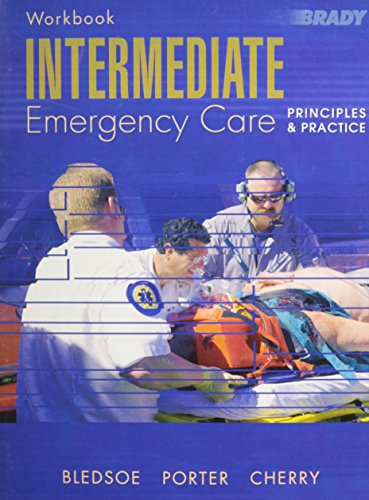
Brady's Intermediate Emergency Care presents instruction in advanced prehospital care and will prepare you to competently and confidently provide emergency care treatment in the field through assessment-based patient management. It will also help you to develop an understanding of virtually all types of medical emergencies, trauma and trauma systems, and scene safety operations. This workbook is designed to help guide you through an educational program for initial or refresher training. The workbook follows the guidelines of the 1999 United States DOT EMT-Intermediate National Standard Curriculum and can be used either in conjunction with your training program or as a self-study guide.
Bibliography: p. 159-164.
Tabla de contenidos provista por Syndetics
- Introduction to the Self Instructional Workbook
- Acknowledgements
- How to Use the Self Instructional Workbook
- Guidelines to Better Test-Taking
- I Preparatory Information
- 1 Foundations of the EMT-Intermediate
- 2 Overview of Human Systems
- 3 Emergency Pharmacology
- 4 Venous Access and Medication Administration
- 5 Airway Management and Ventilation
- II Patient Assessment
- 6 History Taking
- 7 Techniques of Physical Examination
- 8 Patient Assessment in the Field
- 9 Clinical Decision Making
- 10 Communications
- 11 Documentation
- III Trauma Emergencies
- 12 Trauma and Trauma Systems
- 13 Blunt Trauma
- 14 Penetrating Trauma
- 15 Hemorrhage and Shock
- 16 Burns
- 17 Thoracic Trauma
- 18 Trauma Management Skills
- IV Medical Emergencies
- 19 Respiratory Emergencies
- 20 Cardiovascular Emergencies
- 21 Diabetic Emergencies
- 22 Allergic Reactions
- 23 Poisonings/Overdose Emergencies
- 24 Neurological Emergencies
- 25 Non-Traumatic Abdominal Emergencies
- 26 Environmental Emergencies
- 27 Behavioral Emergencies
- 28 Gynecological Emergencies
- V Special Considerations
- 29 Obstetrical Emergencies
- 30 Neonatal Resuscitation
- 31 Pediatric Emergencies
- 32 Geriatric Emergencies
- 33 Assessment-Based Management
- 34 Responding to Terrorist Acts
- Workbook Answer Key National Registry of Emergency Medical Technicians Practical Evaluation Forms Emergency Drug Cards