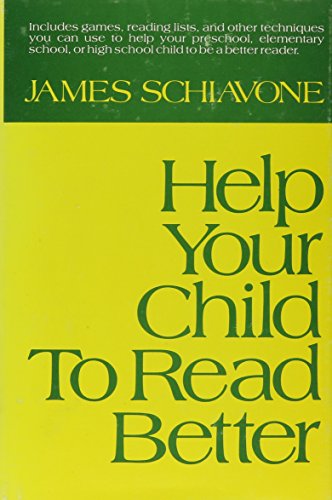

Help your child to read better James Schiavone.
Detalles de publicación: Chicago Nelson-Hall c1977.Descripción: xiv, 121 p. ill. 23 cmISBN:- 0882292218.
- 0882294644
- 372.4/3
- LB1050.5 .S29 1977
| Imagen de cubierta | Tipo de ítem | Biblioteca actual | Biblioteca de origen | Colección | Ubicación en estantería | Signatura topográfica | Materiales especificados | Info Vol | URL | Copia número | Estado | Notas | Fecha de vencimiento | Código de barras | Reserva de ítems | Prioridad de la cola de reserva de ejemplar | Reservas para cursos | |
|---|---|---|---|---|---|---|---|---|---|---|---|---|---|---|---|---|---|---|
| Libro | Biblioteca de Mayagüez Colección General mb | LB1050.5 .S29 1977 (Navegar estantería(Abre debajo)) | Disponible | 50000001873750 |
Descripciones mejoradas de Syndetics:
What parent hasn't been shocked by accounts of students entering college as functional illiterates? When newspapers publish the yearly reading scores revealing that across the nation youngsters are reading below grade level, the problem strikes very close to home and suddenly the reading difficulties of one's own first-grader become a matter of considerable importance. The author believes that the parent still has a primary responsibility for seeing that a child makes the most of his or her capabilities. Having done this, most parents can spare themselves a lot of needless anxiety if they will just relax and let their children learn to read when they are ready, as they learned to walk and talk. Reading readiness will help ease and speed the process and set the stage for learning by encouraging the child's curiosity and natural desire to learn. Obviously, the teacher's job is made easier when the child comes to school ready and eager to learn. Help Your Child to Read Better is a parents' guide to reading readiness.
Includes index.
Bibliography: p. 107-116.
Tabla de contenidos provista por Syndetics
- Acknowledgments(p. ix)
- Introduction(p. xi)
- Part I The Reading Process
- Chapter 1 The Reading Problem(p. 3)
- Your Attitudes as a Parent
- What is Dyslexia?
- Functional Behavior Problems
- How You Can Help Your Child at Home
- Questions and Answers
- Chapter 2 What is Reading?(p. 15)
- Chapter 3 Getting Ready to Read(p. 18)
- Learning to Look
- What Parents Can Do
- Learning to Walk--Physical Skills and Maturity
- Learning to Talk
- Hearing
- The Skill of Listening
- Questions and Answers
- Chapter 4 How Your Child Learns to Read(p. 30)
- Questions and Answers
- Part II Reading in the Elementary School
- Chapter 5 Reading in the Primary Grades(p. 37)
- How are Children Taught to Read?
- Reading Readiness
- Judging Reading Readiness
- Visit Your School
- How to Help Your Child Achieve Reading Readiness
- Prereading Games
- Phonics Versus the Look-Say Method
- Skills in Word Recognition
- Difficulties and Problems in the Teaching of Phonics
- How are Phonics Taught in the Schools?
- Other Primary Reading Skills
- Approaches to the Teaching of Reading
- The Basal Reader Approach
- The Language Experience Approach
- The Linguistics Approach
- The Phonetic-Alphabet Approach
- The Programmed Learning Approach
- Games to Help Your Child in Phonics
- More Word Games
- Questions and Answers
- Chapter 6 Reading in the Intermediate Grades(p. 70)
- Reading Interests
- Games to Play
- Questions and Answers
- Part III Reading in the Secondary School
- Chapter 7 The Adolescent Years(p. 83)
- Vocabulary Development
- Comprehension Skills
- Skills Used in Studying
- Reading in Mathematics, Science, and the Social Sciences
- Reading Rate
- Developmental Reading
- Corrective Reading
- Remedial Reading
- Chapter 8 Teenage Reading Problems and What to Do About Them(p. 99)
- Factors in the Home
- Problems in Reading
- The Reluctant Reader
- Poor Comprehension
- Questions and Answers
- Books for Parents(p. 107)
- Books for Children(p. 109)
- Books for Teenagers(p. 114)
- Index(p. 117)