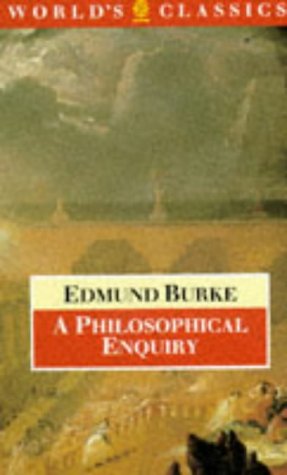

A philosophical enquiry into the origin of our ideas of the sublime and beautiful Edmund Burke ; edited with an introduction by Adam Phillips.
Series The World's classicsDetalles de publicación: Oxford [England] New York Oxford University Press 1990.Descripción: p. cmISBN:- 0192818074
- 111/.85 20
- BH181 .B8 1990
| Imagen de cubierta | Tipo de ítem | Biblioteca actual | Biblioteca de origen | Colección | Ubicación en estantería | Signatura topográfica | Materiales especificados | Info Vol | URL | Copia número | Estado | Notas | Fecha de vencimiento | Código de barras | Reserva de ítems | Prioridad de la cola de reserva de ejemplar | Reservas para cursos | |
|---|---|---|---|---|---|---|---|---|---|---|---|---|---|---|---|---|---|---|
| Libro | Biblioteca Encarnación Valdés Colección General bev | 111.85 B959p (Navegar estantería(Abre debajo)) | Disponible | 80000000165715 |
Descripciones mejoradas de Syndetics:
An eloquent and sometimes even erotic book, the Philosophical Enquiry was long dismissed as a piece of mere juvenilia. However, Burke's analysis of the relationship between emotion, beauty, and art form is now recognized as not only an important and influential work of aesthetic theory, butalso one of the first major works in European literature on the Sublime, a subject that has fascinated thinkers from Kant and Coleridge to the philosophers and critics of today.
911123
Includes bibliographical references.
Tabla de contenidos provista por Syndetics
- Introduction(p. ix)
- Note on the Text(p. xxiv)
- Select Bibliography(p. xxv)
- A Chronology of Edmund Burke(p. xxvii)
- The Preface to the First Edition(p. 1)
- The Preface to the Second Edition(p. 3)
- Introduction on Taste*(p. 11)
- Section I Novelty(p. 29)
- Section II Pain and Pleasure(p. 30)
- Section III The Difference Between the Removal of Pain and Positive Pleasure(p. 31)
- Section IV Of Delight and Pleasure, as Opposed to Each Other(p. 33)
- Section V Joy and Grief(p. 34)
- Section VI Of the Passions Which Belong to Self- Preservation(p. 35)
- Section VII Of the Sublime(p. 36)
- Section VIII Of the Passions Which Belong to Society(p. 37)
- Section IX The Final Cause of the Difference Between the Passions Belonging to Self-Preservation, and Those Which Regard the Society of the Sexes(p. 38)
- Section X Of Beauty(p. 39)
- Section XI Society and Solitude(p. 40)
- Section XII Sympathy, Imitation, and Ambition(p. 40)
- Section XIII Sympathy(p. 41)
- Section XIV The Effects of Sympathy in the Distresses of Others(p. 42)
- Section XV Of the Effects of Tragedy(p. 43)
- Section XVI Imitation(p. 45)
- Section XVII Ambition(p. 46)
- Section XVIII The Recapitulation(p. 47)
- Section XIX The Conclusion(p. 48)
- Section I Of the Passion Caused by the Sublime(p. 53)
- Section II Terror(p. 53)
- Section III Obscurity(p. 54)
- Section IV Of the Difference Between Clearness and Obscurity with Regard to the Passions(p. 55)
- Section [IV]: The Same Subject Continued (p. 56)
- Section V Power(p. 59)
- Section VI Privation(p. 65)
- Section VII Vastness(p. 66)
- Section VIII Infinity(p. 67)
- Section IX Succession and Uniformity(p. 68)
- Section X Magnitude in Building(p. 69)
- Section XI Infinity in Pleasing Objects(p. 70)
- Section XIII Magnificence(p. 71)
- Section XII Difficulty(p. 71)
- Section XIV Light(p. 73)
- Section XV Light in Building(p. 74)
- Section XVI Colour Considered as Productive of the Sublime(p. 75)
- Section XVII Sound and Loudness(p. 75)
- Section XIX Intermitting(p. 76)
- Section XVIII Suddenness(p. 76)
- Section XX The Cries of Animals(p. 77)
- Section XXI Smell and Taste. Bitters and Stenches(p. 78)
- Section XXII Feeling. Pain(p. 79)
- Section I Of Beauty(p. 83)
- Section II Proportion Not the Cause of Beauty in Vegetables(p. 84)
- Section III Proportion Not the Cause of Beauty in Animals(p. 87)
- Section IV Proportion Not the Cause of Beauty in the Human Species(p. 88)
- Section V Proportion Further Considered(p. 93)
- Section VI Fitness Not the Cause of Beauty(p. 95)
- Section VII The Real Effects of Fitness(p. 97)
- Section VIII The Recapitulation(p. 99)
- Section IX Perfection Not the Cause of Beauty(p. 100)
- Section X How Far the Idea of Beauty May Be Applied to the Qualities of the Mind(p. 100)
- Section XI How Far the Idea of Beauty May Be Applied to Virtue(p. 101)
- Section XII The Real Cause of Beauty(p. 102)
- Section XIII Beautiful Objects Small(p. 102)
- Section XIV Smoothness(p. 103)
- Section XV Gradual Variation(p. 104)
- Section XVI Delicacy(p. 105)
- Section XVII Beauty in Colour(p. 106)
- Section XIX The Physiognomy(p. 107)
- Section XVIII Recapitulation(p. 107)
- Section XX The Eye(p. 108)
- Section XXI Ugliness(p. 108)
- Section XXIII Elegance and Speciousness(p. 109)
- Section XXII Grace(p. 109)
- Section XXIV The Beautiful in Feeling(p. 110)
- Section XXV The Beautiful in Sounds(p. 111)
- Section XXVI Taste and Smell(p. 113)
- Section XXVII The Sublime and Beautiful Compared(p. 113)
- Section I Of the Efficient Cause of the Sublime and Beautiful(p. 117)
- Section II Association(p. 118)
- Section III Cause of Pain and Fear(p. 119)
- Section IV Continued(p. 120)
- Section V How the Sublime is Produced(p. 121)
- Section VI How Pain Can Be a Cause of Delight(p. 122)
- Section VII Exercise Necessary for the Finer Organs(p. 123)
- Section VIII Why Things Not Dangerous Produce a Passion like Terror(p. 124)
- Section IX Why Visual Objects of Great Dimensions Are Sublime(p. 124)
- Section X Unity Why Requisite to Vastness(p. 125)
- Section XI The Artificial Infinite(p. 126)
- Section XII The Vibrations Must Be Similar(p. 127)
- Section XIII The Effects of Succession in Visual Objects Explained(p. 128)
- Section XIV Locke's Opinion Concerning Darkness, Considered(p. 130)
- Section XV Darkness Terrible in Its Own Nature(p. 131)
- Section XVI Why Darkness is Terrible(p. 132)
- Section XVII The Effects of Blackness(p. 133)
- Section XIX The Physical Cause of Love(p. 135)
- Section XVIII The Effects of Blackness Moderated(p. 135)
- Section XX Why Smoothness is Beautiful(p. 137)
- Section XXI Sweetness, Its Nature(p. 137)
- Section XXII Sweetness Relaxing(p. 139)
- Section XXIII Variation, Why Beautiful(p. 140)
- Section XXIV Concerning Smallness(p. 141)
- Section XXV Of Colour(p. 144)
- Section I Of Words(p. 149)
- Section II The Common Effect of Poetry, Not by Raising Ideas of Things(p. 149)
- Section III General Words Before Ideas(p. 151)
- Section IV The Effect of Words(p. 152)
- Section V Examples That Words May Affect Without Raising Images(p. 153)
- Section VI Poetry Not Strictly an Imitative Art(p. 157)
- Section VII How Words Influence the Passions(p. 158)
- Explanatory Notes(p. 163)
Notas de autor provistas por Syndetics
Born in Ireland in 1729, Edmund Burke was an English statesman, author, and orator who is best remembered as a formidable advocate for those who were victims of injustice. He was the son of a Dublin lawyer and had also trained to practice law. In the 1760s, Burke was elected to the House of Commons from the Whig party.Burke spent most of his career in Parliament as a member of the Royal Opposition, who was not afraid of controversy, as shown by his support for the American Revolution and for Irish/Catholic rights. His best-known work is Reflections on the French Revolution (1790). Some other notable works are On Conciliation with the American Colonies (1775) and Impeachment of Warren Hastings (1788).
Edmund Burke died in 1797.
(Bowker Author Biography)